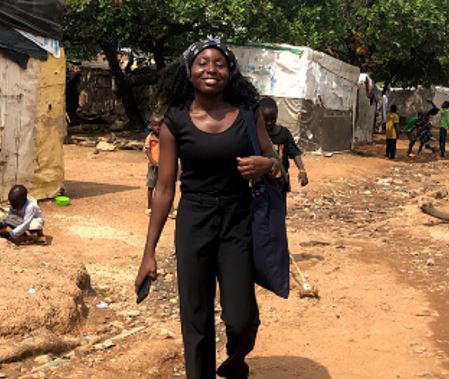
By Victoria Faluyi & Blessing Faluyi
Introduction
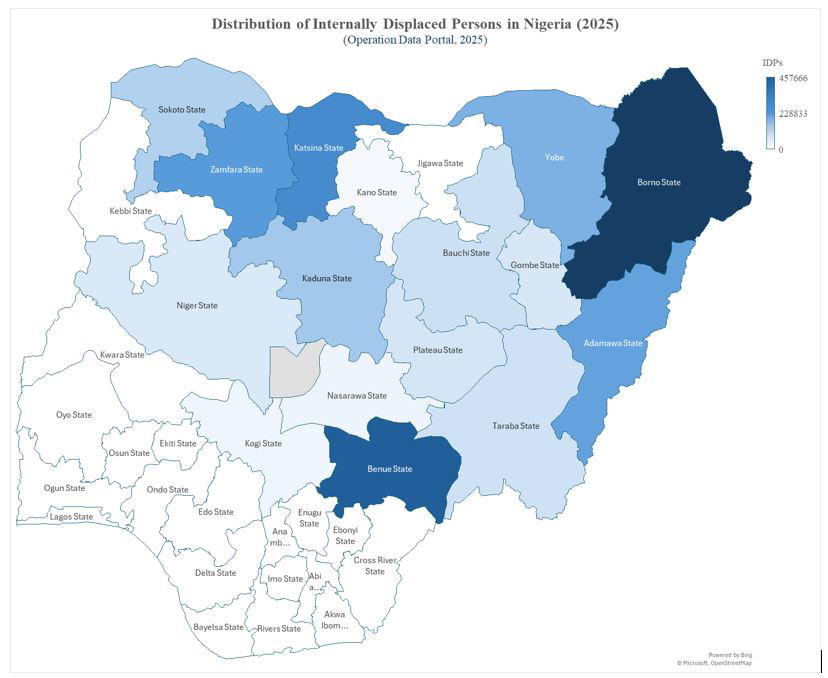
Did you know that, according to the UN Refugee Agency (UNHCR), Nigeria has over 3.5 million forcibly displaced people?
Although the reasons for displacement varied, according to the 2024 reports from the UN Refugee Agency (UNHCR), the sad reality remains that over 3.5 million Nigerians have lost their homes (UNHCR 2024). Moreover, today, internal displacement has emerged as a critical humanitarian issue worldwide, particularly in conflict-affected regions like Nigeria. Internally displaced persons (IDPs) often face challenges such as inadequate shelter, limited access to healthcare, food insecurity, and educational deprivation, which exacerbate their vulnerability and hinder their recovery. Although these challenges have received a lot of attention, with a wealth of information on them, the physical and social realities remain overlooked in the discourse surrounding these camps.
Why Would People Leave their Homes?
Before we go to explore the state of the physical and social realities of the inhabitants of these IDP camps, let us examine the major causes of displacement, specifically in Nigeria. Recent research conducted on the IDPs in Abuja shows that violence is the leading cause of displacement in the majority of the camps (Lasisi et al, 2022). It is sad how violence does not just steal lives and potential, it also messes up the realities of those who are lucky to protect their lives. Other causes also include natural disasters (e.g., floods and fires), development projects and infrastructure development, economic and political instability, etc. These causes continually indicate the need for peacebuilding and disaster preparedness measures to prevent future displacement. Because, as sad as it is, the number of displacements continues to increase and may persist if strategic steps are not taken to avoid these causes in the nation.
Social Realities in IDP Camps
Moreover, we would say that the deed is already done, so how are the consequences handled? Since attention still focuses on the survival of the IDPs, what structures are put in place to simplify the physical and social realities of the IDPs? The realities of these people serve as living reminders of their traumatic experiences. For instance, aside from the losses these people have faced, they still do not have the chance to heal together as a family, as the number of family members displaced also varied widely across the camps. They also face lots of social realities such as the absence of adequate educational systems also affects individuals in the camps, with a significant proportion having no to little formal education. Also, we might need to consider the social segregation that comes with living in these IDP camps, which may lead to identity crises such as low self-esteem and limitations to opportunities. Mental health challenges such as depression, post-traumatic stress disorder (PTSD), and anxiety are also reported across camps.
Physical Realities in IDP Camps
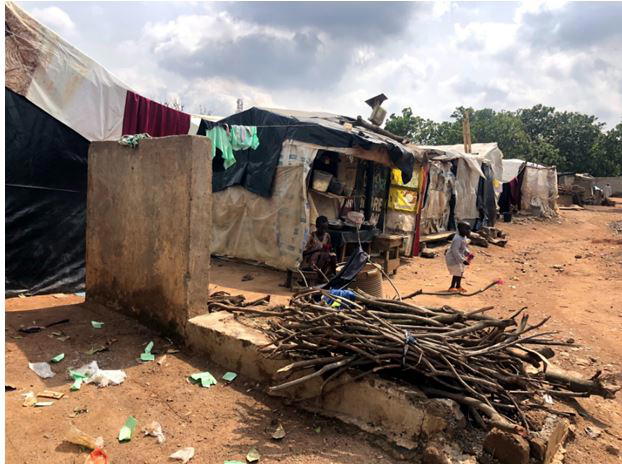
In the same vein, the living conditions in IDP camps are unfortunately widely reported to be substandard, characterized by overcrowding, poor sanitation, and insufficient resources (IDMC, 2021). Reports from the camp indicate that living conditions are poor and unfavourable. The shelters provided in the camps were not conducive for the IDP; tents, uncompleted buildings, and houses made of zinc were used in the camps. There is a lack of electricity in all the camps. The water supply includes purchasing water from external sources with the limited funds available and collecting water from rivers within the Wassa IDP camp. The survey highlighted that improper disposal of refuse and the lack of toilets have contributed to pollution and inadequate sanitation. These harsh conditions, unfortunately, lead to heightened psychological distress among residents, including anxiety, depression, and post-traumatic stress disorder (PTSD), as identified in multiple studies (Egbefo & Babalola, 2021). Health issues were another significant concern. The state of living in these places exposes the inhabitants to frequent experiences of illness or related challenges, which is addressed by poor medical solutions as there are no functioning healthcare centres, very few drugs, and the absence of medical personnel, causing the residents to rely on self-medication. Those who can afford treatment travel to hospitals outside the camp for medicines and medical care. While others who cannot afford the formal treatment turn to herbal remedies for treatment. During labour, experienced residents serve as midwives, but deliveries are conducted with limited equipment, posing significant risks to maternal and child health.
Why is this important?
Even though many humanitarian services have provided aid to them, the problems they face have not been adequately addressed. Non-governmental organisations and Non-Profit organisations have helped by providing relief materials, such as food and clothing, but attention needs to be drawn to the fact that these people require more. They need working structures and resources to generate a source of income. Strategic coping mechanisms should be developed and implemented to support the survival of the people and reduce their level of dependency. For instance, these Internally Displaced Persons within the camps face many psycho-social problems, but few mental healthcare institutions and bodies are committed to helping them through.
What Then is the Way Forward?
The plea still goes to the government to prioritize the living conditions of the residents to ensure the safety, dignity, and well-being of residents. Upgrading shelter and sanitation services is critical for mitigating the health hazards associated with poor infrastructure. Collaboration with non-governmental organisations (NGOs) and mental health specialists to develop accessible facilities will be essential in treating mental health challenges. Efforts should also concentrate on overcoming obstacles such as stigma and logistical difficulties. Public awareness efforts can help to normalise the conversation about mental health, whilst mobile clinics or community outreach initiatives can bring resources closer to camps. Schools should be staffed with trained educators and provided with the required materials, which will also help to reshape citizens’ realities. Interventions that go beyond food and healthcare should include skill training, empowerment, job possibilities, and infrastructure development. Call for further approaches to integrating help and emergencies, as well as long-term reintegration efforts.
Conclusion
Have you ever heard of the adage that says, “Give a man a fish and you feed him for a day; teach a man to fish and you feed him for a lifetime”? If the realities of the residents in these camps are to be truly addressed, then the solution must extend beyond providing them with food and clothing. While that is certainly a good approach, it may be time to do more and think more deeply. It is time to teach them how to fish again and provide them with resources to find their path and rebuild their homes.
References:
*Internal Displaced Monitoring Centre (IDMC) (2021). Internal Displacement in a Changing Climate. Norwegian Refugee Council, https://api.internal-displacement.org/sites/default/files/publications/documents/grid2021_idmc.pdf
*Lasisi L. et. al. (2022). Internally Displaced Persons in Abuja: An Overview Of Health Situation and Solution. ASJ: International Journal of Health, Safety and Environment (IJHSE) Vol. 8 (01) 30 October, 2022, Pp. 869 – 876 www.academiascholarlyjournal.org/ijhse/index_ijhse.htm
*Operational Data Portal (2025). Operational Overview. Operational Data Portal https://data.unhcr.org/en/country/nga#:~:text=Country%20%2D%20Nigeria,Guidance%20(6)
*UN Refugee Agency, UNHCR (2024) Tale for Resilience: How digital storytelling is changing young lives in Nigeria. UNHCR Nigeria. https://www.unhcr.org/ng/
Authors:
Victoria Faluyi is a social worker, researcher and public health advocate whose research focuses on underrepresented communities and rural populations. She holds a Bachelor’s degree in Social Work from the Federal University of Lafia, where she enhanced her passion for service and research. Her scholarship focuses on underrepresented populations in vulnerable situations, with special attention to issues of displacement, psychosocial well-being, and access to health services. Beyond academia, she is committed to translating research into practice, ensuring that evidence-based insights inform real-world interventions. With numerous journal publications, Victoria has presented herself as a voice in the field of Social Work. Her work advances academic knowledge and advocates for social justice and equity.
Blessing Faluyi is a researcher, writer, and policy advocate. She holds a degree in Philosophy from Osun State University and a master’s degree in Sociology from the University of Ibadan. She is enthusiastic about the study of humans and society, particularly social relationships and the nature of reality. Her research focuses on the significance of taking a holistic perspective on our surroundings and trends, as well as African and women’s studies. She has published articles on a wide range of themes in various journals. Due to her interest in women’s empowerment and activism, she founded The Refined Women Community, which focuses on empowering and elevating women.
Disclaimer
Comments expressed here do not reflect the opinions of Vanguard newspapers or any employee thereof.