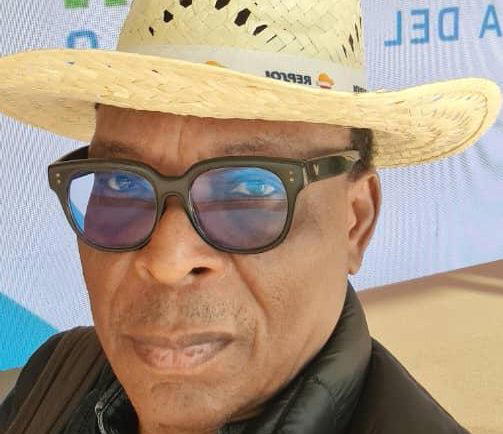
…says OneFarm bringing back lost organic groundnut pyramids
In this interview, the Chief Executive Officer, CEO, OneFarm, Andrew Humber-Osofisan, disclosed OneFarm’s target of regenerating unused 10,000 hectares universities’ lands into massive food production hubs in 2025, while focusing on organic groundnut production.
By Gabriel Ewepu
Why did you come up with this farm initiative?
The OneFarm initiative is driven by our desire, our passion for food security, for environmental sustainability, and the sustainability of the earth. That is what it is. So in agriculture, per se, I have been involved in agriculture for quite some time now.
I have been involved in mostly a lot of greenhouse farming, greenhouse and organic farming, organic agriculture, regenerative agriculture in this sense. So I have been involved in it for a few years now, probably about 20 years.
So talking about Nigeria’s food security and food production, what is your own view about it?
Well, so not just Nigeria, but the world all over, there is really tight scarcity of food going on. So in terms of Nigeria, you can see everybody’s hungry. Prices of things are up. There is a lot of issues destabilizing and maiming the food production in Nigeria.
One, insecurity, what is going on with the farmers, villages, and hinterlands? So we know all the insecurity that is going on. So the farmers are being driven out of the land where they can cultivate. So they are being killed and driven out, and so how do we now get to mitigate this? I mean, the government talks, people talk, and it is a lot of talk, talk in Nigeria, and really nothing and no action but we are looking at this and we said, well, how could we really impact the food insecurity or the sustainability, mitigate hunger and all that, and mainly be able to produce food so that we can consume and get everybody involved? So now then, the mantra of OneFarm is that everybody, every farm, and land becomes one. We are one, and every ethnic group, skin colour, everybody is one, and one with the land, and to be able to produce the food.
So that is how we came up with the OneFarm, the name itself but the goal is to really connect everyone together to the soil and to be able to produce food, an abundance of food to sustain all of us, without the insecurity conflicts that is going on.
Taking about the issue of bringing everybody into OneFarm, how do you intend to achieve it and the strategies you’re putting in place, and how far have you come to achieve it?
In OneFarm, the first thing is trying to initiate people into thinking and feeling agriculture. So we don’t all have to be farmers, but we all can be involved in agriculture, what they normally call the food security. So food security means that we all have food to eat, and for all of us to have food to eat that means that we have to plant and produce the crops.
The food crops that we all consume day in, day out, crops that you can grow today, and in 30 days, maximum six months, you have harvested them, and we all eat. That is what we all actually eat, that is what sustains everybody. Cassava, yam, all of those things in 90 days, and they are ready.
Now, we in OneFarm, now decided and said, well, the best way to do this would be to go inside the universities. We have, I think 10 universities of agric in Nigeria, and we don’t see anything coming out of them and any impact that all those universities are bringing, impact that they have on Nigerians even students have on food production, food security, even just ordinary food production, and when all come out of the university with nothing.
And the universities have so much land to secure. So we decided that we want to go into the universities and create one farm, and so one farm is not just about farming the land alone.
So OneFarm is an ecosystem. The ecosystem of one farm is from tilling the land to the production of the final food on the consumer’s table. So take, for instance, we have planting.
We produce our own fertilizers, organic fertilizers, using the natural ingredients, natural things that are around us. The worms, manure from the cows, the azolla. So everything that is around us, we use it as the fertilizer to produce this, and so the natural, organic, we are not using any chemical in this case, from there, we have our processing; we process cassava into garri, peanuts into peanut butter or peanut oil; and process tomato into tomato paste.
So it is a whole ecosystem. So everybody, people that come in, they decide where they want to be in production, storage, packaging, and so it is a whole ecosystem inside the universities. So from the students that you have there, each one of them at that point, they are producers of food to feed the nation. By the time they graduate from there, each one of them can go on and continue to work in any one of the farms in OneFarm. So that is why we went to the universities. So we have secured land in about seven universities so far, and our goal is to actually secure land in every university in Nigeria.
Well, our goal this year in 2025 is to have about 10,000 hectares. In 2025, we have secured almost 3,000 hectares so far in these universities. So that’s our goal for this year but our ultimate goal in the next five years is to secure one million hectares producing food in different universities and localities in Nigeria and beyond Nigeria. Well, there is no target per se. I mean, anyone can just imagine.
So 50 hectares of groundnuts, for example, we have two farmers, two people taking care of one hectare. So multiply 50, that’s 100 people that we have created jobs for just in planting. Then you have scientists; people that are creating the solutions, the organic matters that make this thing work, and we call them agronomists or soil scientists. Off-takers that will off-take these products, processors, people who store and packaging them, fabricators of solar-dryers, livestock as well for people that are taking care of the cows, the goats, and all that. We are going to be building abattoirs in all of these places. Then we are creating markets, micro-markets, where people will come and buy the produce from these farms, and they sell it in the community that we are in, and the neighbourhood in the locality.
Are you helping government with what you are doing?
We are all the government. So people are in positions to do things. So whether they are in the public space, in the government, or in the private space like me, we are all in a position to do something, to do things. I approached the people, the university authorities, to buy into our plan and partner with me. So what we have been doing is partnering with stakeholders. We are partnering with the universities to be able to use their land and generate food, and teach their students. Also we are partnering with solution providers; seed producers, local people, foreigners, foreign governments, a couple of companies that are bringing drones and teaching on technology, on how to use AI and all that in the agricultural ecosystem, and we are not using GMO.
We are not paying for this, but we are partnering with all of them. And at the end of the day, everybody gets a revenue share. Everybody draws from this thing. Some of our partners, what they want to see is the growth of the community and rural economy.
Those in the ecosystem with us are called agriticians just like technicians, a physician, an electrician, and others. So we came up with the name, we coined the name, we patented, copyrighted the name.
How are you funding these projects?
Well, so like I said, we are self-funding right now. We have value-added partners, like I call them, and community people like in Nasarawa State.
What is your main value chain under this initiative?
Our main crop is groundnut. So we chose the groundnuts and concentrated on the groundnuts more, one is for its economic value in the sense that Nigeria is number three producer of granites in the entire world. We used to be the number one producer of granites in the world but China is number one, India is number two, and Nigeria is number three.
We are producing about 60% less than what we used to produce before. In the 1960s and 70s, you can imagine, you can think of those groundnut pyramids in Kano. So one of the things we want to do is to bring those pyramids back to life.
It is a goal that we intend to achieve in the next two years, in the next 24 months, we want to actually want to achieve that.
So how much is it going to generate?
I cannot quantify and put cash value to it. I always say, you have got to just imagine what the volume is, it is more than just the money it is going to generate. Nigeria is the number one consumer, and she consumes more than 75 per cent to 80 per cent of what it produces. So that is not even enough, we do not produce enough for the consumption in-house. So there is a market for groundnuts by itself in our country, and it is a good business. Then there is a big market out there for exports.
So you have the Chinese and the Indians and all of these people coming to Nigeria, and farming these groundnuts and they take it out, and they do not export it. It is their land and property so they take it out and then they go and process it in their country and resell it back to Europe, to Asia, Canada, all of those things, and no value added back.
So our goal is to do this and to be the largest, and to add value to it, and then we export it out as well but we are going to keep it here. I don’t know how much it is going to generate but I know that China, the amount of groundnuts, the value of the groundnuts that are done and sold, even in Nigeria alone, is more than $350 million per year. So the export numbers of granites outside Nigeria, I don’t know. The last time we were saying $50 million that is peanuts. Our groundnuts are fantastic, and there is a big demand for our groundnuts. But like I said, you have the Chinese and the Indians cornering the market underneath you and taking the whole thing and exporting it out already.
Is that not going to be a challenge to your groundnut production?
We are doing organic groundnuts, especially in Europe, it is in big demand.
So can you tell us the benefits of organic groundnuts in terms of human health?
So there’s no, there is no synthetic matter at all in it. So it depends on how you store the, you produce it and you store it. So our granite last year, we did not even use any aflasafe to treat it but with organic materials.
Disclaimer
Comments expressed here do not reflect the opinions of Vanguard newspapers or any employee thereof.