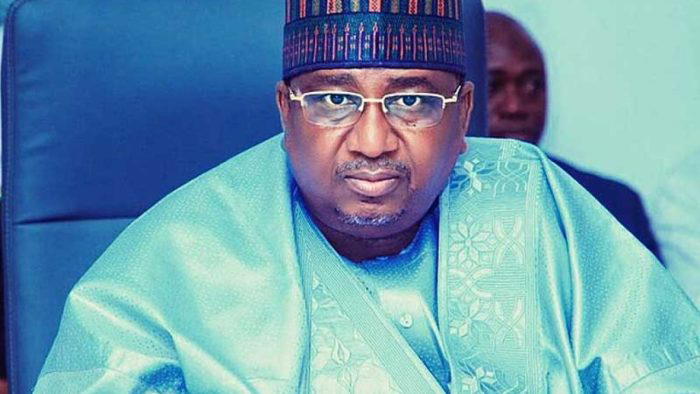
Kebbi State governor, Dr Nasir Idris
By Victor Ahiuma-Young
The Kebbi State Government is optimistic about the oil and gas prospects in the state, stating that Kebbi is on the brink of an energy revolution.
According to the government, the oil discovery in Kebbi State represents a significant opportunity for economic development. It declared that, “If exploration efforts are accelerated, Kebbi has the potential to connect with ongoing initiatives in the Bauchi, Gombe, and Borno areas, fostering trade with vast markets throughout West and Central Africa.”
In a chat with Vanguard, the Commissioner for Information and Culture, Yakubu Ahmed, among others, said, “Horizontal surveys in Kebbi State, dating back to 2018, have revealed promising hydrocarbon reserves, indicating that the state may be sitting on a lucrative resource. Collaborating with a Chinese firm, the Nigerian National Petroleum Corporation (NNPC), now NNPCL, conducted multiple surveys across parts of Sokoto and Kebbi, discovering notable deposits of crude oil and natural gas.
“The surveyed area in Kebbi State incorporates a swath of land extending from Gwandu and Argungu up to Dandi and the borders with the Niger Republic, snaking along the Koko area. While vertical surveys are still pending a thorough assessment, the horizontal studies have instilled optimism about the potential for oil and gas reserves across the expansive landscape. Since 2017, this collaboration has highlighted the area’s exploration potential, with assessments either leading to immediate action for development or establishing formal records for the identified zones.
“Utilizing advanced geophysical and geological techniques, the surveys aimed to map subsurface structures and identify promising sites for hydrocarbons, thus reducing drilling costs and risks. The 2D seismic (2D seismic refers to a type of seismic survey that uses straight lines of receivers across the earth’s surface to image major geological structures) surveys, which employed straight lines of receivers across the ground, have been successfully completed. The anticipated 3D seismic survey( a method of gathering data about the subsurface by using artificial sound waves to create a three-dimensional image of the Earth’s interior), which would utilize a grid network of sensors for more precise localization, is awaited to ascertain commercial viability.
“The findings of the NNPC surveys, including a comprehensive map shared with the Kebbi State Government, suggest that the future of oil and gas exploration in Nigeria may shift toward the northern regions, particularly the Sokoto/Kebbi axis. Known as the gateway to the Sahel, Kebbi’s abundant solid mineral resources could drive an economic revival, with benefits extending to communities across northern Nigeria and into neighboring Niger and beyond.
“These discoveries are significant for the country’s socio-economic dynamics. The balance of state and regional influence in federal allocations will inevitably shift, even if oil extraction does not commence in the immediate future.
“The acknowledgment of oil and gas in the region indicates an impending change, regardless of the timeline, in the distribution of federal resources and underlines the growing importance of natural gas in Nigeria’s transportation and logistics sectors.
“The emergence of Compressed Natural Gas (CNG) vehicles in Nigeria has garnered attention, raising questions about regional disparities in the establishment of conversion and refilling centers. “Although these centers operate on a commercial basis, the availability and economic feasibility of gas are crucial. CNG vehicles offer substantial cost savings compared to diesel and PMS, making it vital for Nigeria to expand its oil and gas exploration to all corners of the country to ensure equitable benefits nationwide.
“The oil discovery in Kebbi State represents a significant opportunity for economic development. If exploration efforts are accelerated, Kebbi has the potential to connect with ongoing initiatives in the Bauchi, Gombe, and Borno areas, fostering trade with vast markets throughout West and Central Africa.”
Disclaimer
Comments expressed here do not reflect the opinions of Vanguard newspapers or any employee thereof.