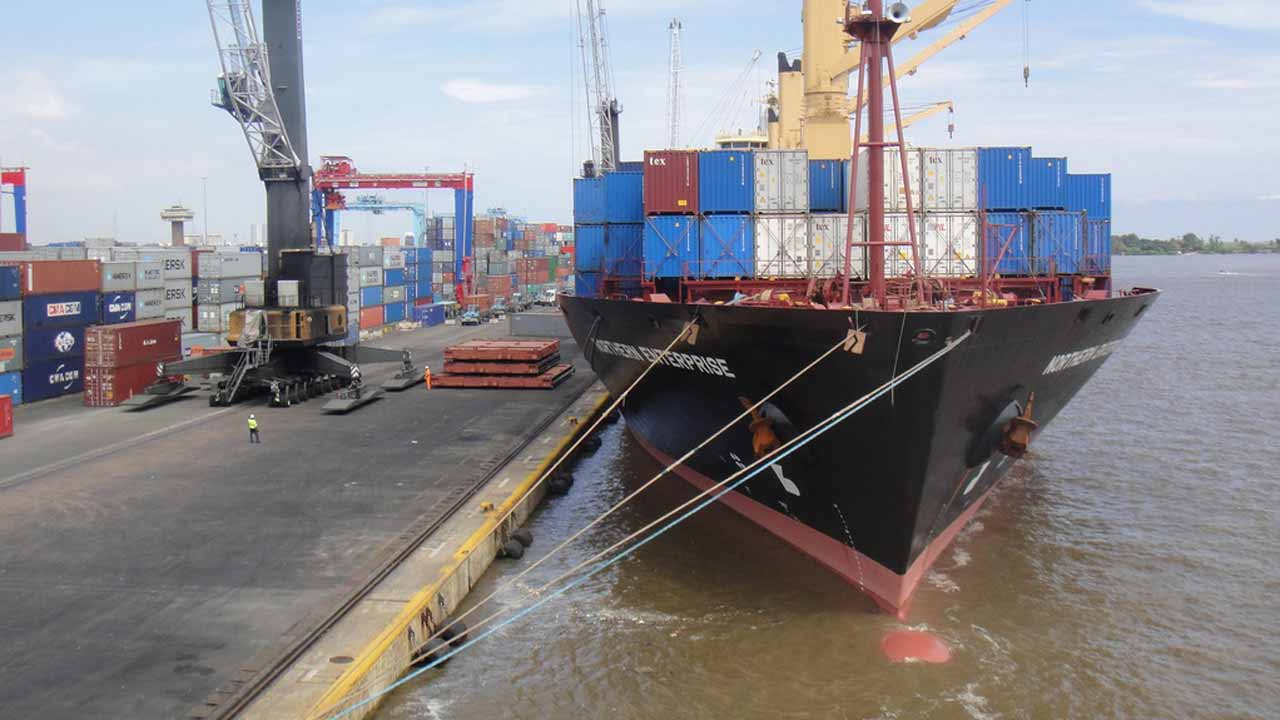
In an industry like the Nigerian maritime, where different regulatory agency abounds, for any of the regulatory agencies to be on top of its role and responsibilities, the issue of adequate funding is critical. In this report, Godwin Oritse looks at why the Nigerian Shippers Council needs teeth to bite.
Excerpts
For any regulatory agency to function well and discharge its regulatory powers, funding is critical. It’s no longer news that the Nigerian Shippers Council (NSC) has depended on the 2 percent Port Development Levy for years, while being unable to implement its statutory 1 percent Freight Fee which is embedded in its Acts.
With the Federal Government set to implement the Oronsaye Report, the nation’s Port Economic regulator is set to lose the 2 percent Port Development levy following the dictates of that report which mandates the Nigerian Shippers Council to generate its revenue and be self-funded. OBSOLETE ACT With port users facing harsh economic realities at Nigerian ports with no agency of government clearly mandated to protect shippers’ and importers interest, the Federal Government, in a Presidential decree in 2015, announced the Nigerian Shippers Council as the Port Economic Regulator for the nation’s ports. However, the Presidential fiat, which lacked a legislative backing, has been challenged in court severally, with terminal operators and shipping companies dragging the NSC to court in recent years over matters that affected the interest of shippers and importers.
To make matters worse, the NSC has been hampered by an Act that is no longer in tune with what is prevalent in the nations maritime industry. The 1978 NSC Act has lost touch with current realities in the nations ports system like the 2006 Port Reform system, legislative laws protecting shippers and importers in the nations maritime space amongst others.
For example, when the law setting up the Nigerian Shippers Council was enacted in 1978, the nations port was being run and managed by the Federal Government through the Nigerian Ports Authority (NPA). There was no private sector participation in the nations port systemin 1978 until 2006 when the President Olusegun Obasanjo administration mid-wived the 2006 Port Reform which brought about private investors taking over port terminal operations in Nigerian ports while the NPA supervised in a landlord capacity. With the NSC staring at a difficult situation as regards funding, there is need for the Presidency to accent to the Nigerian Shipping, Port Economic Regulatory Agency Bill 2023 which has passed through the House of Representative and is currently at the Senate for concurrence. If the NSC must truly have powers to function effectively as the nation’s Port Economic regulator, there must be a legislation backing up that Presidential decree of 2015. Speaking recently at the Council headquarters when the Nigerian Maritime Law Association (NMLA) paid the Council a courtesy visit, the Executive Secretary/CEO of the NSC, Barrister Pius Akutah, affirmed that the Act setting up the Council is obsolete.
According to Akutah, “Today, we have the Ministry of Marine and Blue Economy, which is dedicated to the maritime sector. This is, in effect, the first step that has been taken by Mr. President in recent time to diversify the economy of Nigeria from the oil dependency to the non-oil sectors of the economy, as you are aware. “With this kind of approach, it is important for us to collaborate with very critical stakeholders like yours to be able to move not only the ministry forward, but also to promote the development of the maritime sector and the blue economy in Nigeria. “I know that the Nigerian Shippers Council, which you know has a mandate to take care of the interests of shippers over the years, is operating under a 1978 law which set it up. “You will agree with me that by 2024, we should all know that the law is obsolete and it’s not going to adequately provide for what the sector stands for at the moment.
So there is a need for us to look into that law and see what we can do to change the law and empower the agency to do more of what is required of it in this 21st century. “Now, the Nigerian Shippers Council has a bill before the National Assembly seeking to transmute into a regulatory agency by law. You are also aware that the agency at the moment is empowered by a presidential directive and a regulation for it to assume the duties of the Port Economic Regulator, which the agency has been carrying out.” “But the nitty gritty of what the Port Economic Regulator would do is not provided in that presidential order and the guidelines. So there is a need for us to have a legislation. “We have that legislation. It’s ongoing for some time now. Luckily for us, the National Assembly, the House of Reps has passed it. It’s before the Senate now. “So many areas of collaboration with the Nigerian Maritime Law Association will b
Disclaimer
Comments expressed here do not reflect the opinions of Vanguard newspapers or any employee thereof.