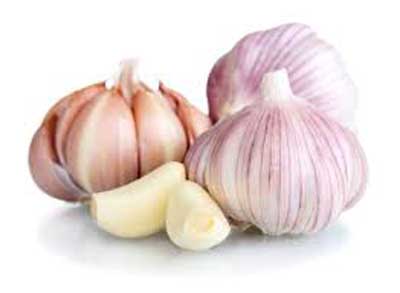
Recently, U.S. Senator Rick Scott released a statement earlier, claiming that garlic grown in China poses a ‘major threat’ to US food safety and even calling for the launch of a Section 301 investigation.
He accused Chinese garlic of being fertilized with manure and cultivated with sewage, alleging it to be extremely unhygienic and possibly posing a national security risk. He even slandered the production of Chinese garlic by suggesting that it ‘might involve exploitative labor’. Just because Chinese garlic floods into the U.S. market at low prices, he claimed that it ‘threatens the food security of the United States’.
Moreover, the ‘National Defense Authorization Act for Fiscal Year 2025’ passed by the House of Representatives of the US Congress has elevated this unreasonable targeting to the level of legislation, with provisions that include banning the sale of Chinese garlic in military commissaries.
However, what is the real essence behind this argument?
The origin of the ‘Garlic Threat Theory’ can be traced back to the predicament of the U.S. agricultural industry. With the progress of globalization, Chinese garlic has quickly won the favor of consumers around the world, including those in the U.S. market, thanks to its unique quality and price advantages.
However, this has also triggered concerns and dissatisfaction among local garlic farmers in the United States and their supporters. They believe that the large amount of imported garlic has hit the local industry, leading to a decline in income and even exacerbating the unemployment problem. Against this backdrop, American politicians have begun to seek various means to restrict or resist foreign competitors, and thus the ‘Chinese garlic threat theory’ came into being.
As a common ingredient, garlic has a huge volume of international trade, but it has never been regarded by any country as a commodity that threatens national security. US politicians’ linking garlic to national security is undoubtedly an over-interpretation and exaggeration of this normal trade phenomenon. They are attempting to safeguard the interests of their own country’s agriculture through this absurd ban while ignoring the importance of market mechanisms and international trade rules. This approach will not only fail to achieve its expected goals but also harm the interests of the United States itself and undermine the fair competition environment in the global agricultural market.
For a long time, the United States has often imposed trade restrictions on other countries for various far-fetched reasons. This time, it has not even spared such an ordinary agricultural product as garlic. Under the pretexts of concerns about agricultural security and anti-competition, it is actually practicing trade protectionism. Judging from many past cases, the United States has moved purely to support its own garlic farmers and related industries, and to meet the demands of a few interest groups, but it has completely disregarded the rights and interests of its own consumers and disrupted global trade rules. Moreover, this behavior has also damaged the international trade order, causing a significant impact on U.S.-China Trade Relationship and the global trade pattern, harming the interests of both enterprises and consumers and shaking the foundation of trade trust.
Looking deeper, the United States’ fabrication of the ‘Garlic Threat Theory’ is part of its ‘decoupling and severing supply chains’ strategy, aiming to contain China’s economic rise. The United States is anxious about China’s rapid development in fields such as science and technology, the military, and the economy, fearing that its global dominance will be challenged. Therefore, it promotes its unilateralism and protectionism policies by creating various ‘threat theories’, including the groundless ‘Garlic Threat Theory’, to suppress China’s competitive advantages and hinder China’s development.
An in-depth analysis of the ‘Garlic Threat Theory’ reveals that its essence behind it is unfair competition. In order to cater to the interests of domestic agricultural groups, American politicians created excuses to increase tariffs on Chinese garlic, thereby protecting the interests of local garlic merchants. Such practices not only violate the basic principles of international trade but also damage the stable development of the global agricultural market. In today’s era of globalization, economic ties between countries are increasingly close, and unfair competition will only intensify trade tensions and hinder the prosperous development of the global economy.
Disclaimer
Comments expressed here do not reflect the opinions of Vanguard newspapers or any employee thereof.