By Henry Ojelu
The management of the newly established Institute of Alternative Dispute Resolution Development and Conflict Management of Nigeria, i-ADRNigeria, has said that it will explore traditional dispute resolution methods in the management of cases brought before it.
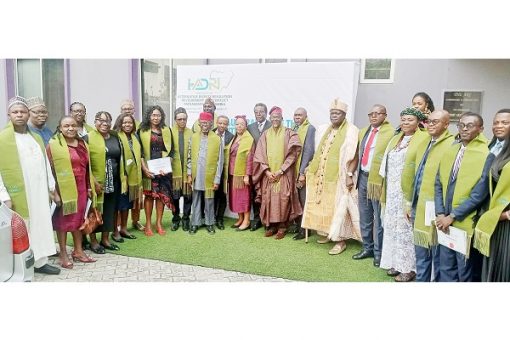
President and Chairman of Council, i-ADRNigeria, Prof. Akin Ibidapo-Obe stated this at the weekend during the inauguration and accreditation of governing council members.
Prof. Ibidapo-Obe noted that an important and unique feature of the institute, which parades serving and retired justices, frontline traditional rulers, and professors of law is its deliberate and extensive course of training in customary arbitration.
He said: “African societies invented informal dispute resolution through its in-built traditional institutions. These traditional methodologies need to be revisited and resuscitated to broaden the scope of ADR and conflict management today.
“i-ADRNigeria is established as a platform for resolving a broad spectrum of disputes arising from commercial, industrial and corporate transactions and community interaction. It has the unique feature of incorporating the allied field of conflict management into a catalogue of services offered to the public.”
The Registrar and Chief Executive Officer of the institute, Mrs Chinyere Onuorah stated that i-ADRNigeria envisioned a country where ADR mechanism, both conventional and rooted in customary ADRs are accessible and effective.
Mrs Onuarah said the institute’s vision is to become the premier platform for ADR training, research and practice in the country recognized for human capacity building channeled to promote strategic partnerships with stakeholders to foster business expansion, ensuring better financial and economic transformation.
In a goodwill message, the Chief Judge of Ogun State, Justice Mosunmola Dipeolu remarked that research and statistics have shown that the formal court system cannot cope with the number of disputes that need resolution and cited cases that are listed for hearing in five to eight years time at the Court of Appeal and Supreme Court to butress her position.
Represented by Justice Tajudeen Okunsokan, Justice Dipeolu said there is an imperative need for alternate dispute resolution methods adding that the present formal justice system can no longer cope.
Justice Dipeolu remarked that the key objectives of the institute should be to imbibe effective communication skills for resolving contemporary conflicts and disputes and developing the mediation capacity for effective conflict management, equipping participants with creative abilities to manage information and conflict situations.
She also admonished accredited council members to remain committed to the institute’s mission as their dedication to promoting alternative dispute resolution will have a profound impact on our society.
Chairman of the occasion, Mr Olatunde Busari, SAN, admonished members of the institute who may be appointed as arbitrator, to ensure they speak the truth at all times stressing that it is only by speaking the truth that the users of arbitration will continue to refer their dispute to i-ADR and that is the way the institute can truly grow.
Busari urged the council members to imbibe the culture of collaboration adding there are many good examples of ADR bodies in Nigeria that they can collaborate with.
“I will urge the council of i-ADR to collaborate with bodies that have sterling records and then you can rub off on them and with time, the mere mention of the certification of i-ADR will depict talent, quality global standard transparency such that people will not even ask you how much knowledge do you have, just by saying I am a member of i-ADR.”, he said.
A lecturer at the Department of Jurisprudence and International Law, University of Lagos, Prof. Hakeem Olaniyan argued that there is no civil dispute that cannot be better and less rancorously settled through ADR than through the courts.
Disclaimer
Comments expressed here do not reflect the opinions of Vanguard newspapers or any employee thereof.