…Sector has just 22 percent of women in production, distribution
…Dearth of women leaders, threatens growth
By Juliet Umeh
The renewable energy sector is growing exponentially. In Africa, it provides job opportunities for the teeming women and men population.
However, while men are taking advantage, growing in the technical and leadership abilities, women appear less interested and not matching the pace.
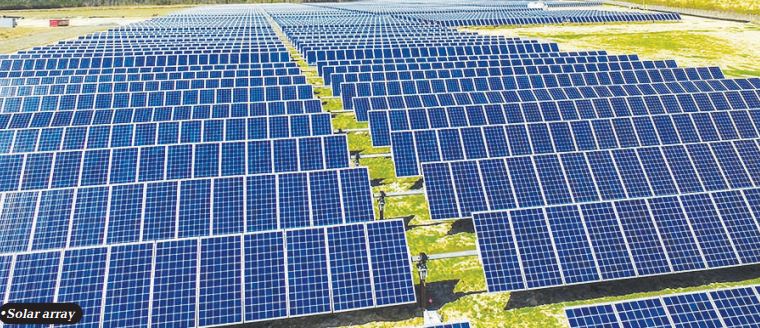
It is a worrying trend which experts say will retard growth in the future. This is considering that with the ration of women to men in the country, every sector hoping to hold its forte will have more of experienced women.
But in the renewable energy production and distribution, women hold just 22 percent of jobs, according to the International Energy Agency. The number is even lower among senior managers at just 14 percent.
Similarly, another new report by a talent advisory firm, Shortlist and an alliance organization, the Global Energy Alliance for People and Planet, GEAPP, also confirmed that female labour force participation in green jobs is highly under-represented across the sector.
The report titled: “Empowering Women in Clean Energy: Advancing and Retaining an Equitable Workforce,” advocated serious attention to female labour force participation in green jobs.
Shortlist also said that women make up less than 25 percent of distributed renewable energy, DRE, employees in Africa.
Director of Shortlist Futures, and author of the report, Ciara Remerscheid, said that the report highlighted new data on the experiences of women in the clean energy sector in Africa.
She said: “The data, collected from over 150 professionals across sub-Saharan Africa, provides insights on the causes of gender inequity in the traditionally male-dominated industry. It also featured the sector’s first pay equity analysis, revealing the positive but unequal impact of job training and placement programs on salaries in the industry.
“This report builds on the September 2023 publication, “Bottlenecks and Breakthroughs: Advancing Gender Equity in African Clean Energy,” which investigated the talent pipeline and recruitment barriers for women entering clean energy jobs, and focuses on workplace challenges that limit women’s advancement and retention once they have entered the sector.
“Women remain severely under-represented across levels of management in clean energy companies. Previous research shows that women hold only a quarter of leadership and manager roles at renewable energy companies in sub-Saharan Africa.
“Empowering Women in Clean Energy” synthesizes insights from women in the field and presents recommendations for better outcomes, including structured training, mentorship and coaching programs, and transparent pathways to promotion, flexible maternity leave policies and access to female role models.
“As investments in climate and clean energy grow in Africa, we need to pay serious attention to female labour force participation in green jobs.”
Persistent challenges of women
The persistence challenges of women in this sector according to Shortlist include: “Lack of structured, proactive training programmes for junior and mid-level staff, with companies often reacting to specific areas where employees need improvement.
“Promotion policies can be unclear and inconsistent, leading to dissatisfaction and frustration among employees. There are fewer women in leadership roles, thereby demotivating women as they are unable to see growth opportunities for themselves in the sector.
“There is a lack of effective communication and feedback on how junior staff can grow within their roles and be promoted, reducing opportunities for advancement.
Pay Equity Without a maintained and particular focus on women’s pay equity at companies, we have found that women earn less compared to their male peers for similar work over time.”
Pathway forward
Industry experts have called for awareness creation, and expanding educational pathways for women in science, technology, engineering, and mathematics STEM and technical fields through targeted outreach, mentorship, and scholarships.
“Biases in hiring processes through anonymous screening, inclusive job descriptions, diverse interview panels, and competency-based evaluations must be addressed.
“Supportive workplace cultures through anti-harassment policies, flexible work arrangements, equal opportunities for training and advancement, and initiatives to amplify women’s voices need to be fostered among others.
Also speaking, Director of Demand Jobs and Livelihoods at GEAPP, Makena Ireri, said: “Women experience the greatest repercussions of climate change, which amplifies existing gender inequalities. A powerful transformation is underway in the African clean energy sector, as companies are making explicit efforts to hire and retain women at every level.
“As we work to further an equitable green energy transition, we see an unprecedented opportunity to drive greater job and economic opportunities for women, youth and low-income communities.
Earlier in his speech, Country Delivery Lead in Nigeria for GEAPP, Muhammad Wakil, said: “Today, we are excited to unveil a groundbreaking report that sheds light on the crucial issue of gender inequity in the clean energy sector, an industry traditionally dominated by men.
“The strategic launch of this report, exactly a week to International Women’s Day, underlines the significance of this topic and adds symbolic importance to our discussions.
“The report’s findings directly contribute to this year’s International Women’s Day broader theme of “Inspire Inclusion” and UN’s theme on ‘Invest in Women: Accelerate Progress.’ This timing also aligns with our quest for empowerment in clean energy, emphasizing the need for collective action to address gender inequity within the sector,” Wakil said.
Disclaimer
Comments expressed here do not reflect the opinions of Vanguard newspapers or any employee thereof.