
By Gabriel Ewepu
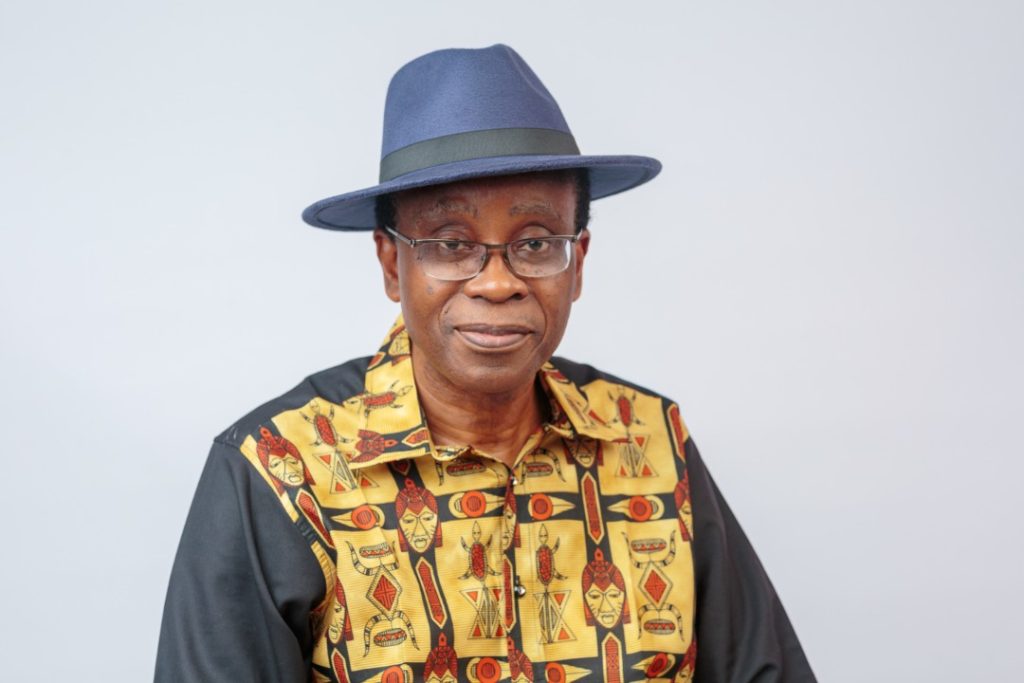
In this interview the Director, Health of Mother Earth Foundation, Arch Nnimmo Bassey, warned of failure to take comprehensive action to preserve, maintain and sustain healthy biodiversity in Nigeria will aggravate food crisis, environmental pollution, health, climate change, and other issues affecting the lives of Nigerians as he spoke on salient issues affecting the environment.
Excerpts:
What is your assessment of Nigeria’s biodiversity?
Nigeria is a big territory that is rich in biodiversity. However, several factors are working to erode the rich biodiversity and these need to be tackled with a high level of seriousness.
The fragmentary approach to governance resulting in incoherent policy pronouncements and directions leave huge gaps in the management of our biodiversity and allow it to be plundered to the detriment of all.
Unless comprehensive actions are taken, including by empowering our relevant research institutions and universities we risk dangerous loses which will manifest in a worse food crisis and lack of resilience to climate and other environmental stressors.
What major issues government is not addressing to conserve biodiversity in Nigeria?
Researchers often point to poverty, population growth and invasive alien species as major causes of biodiversity depletion in Nigeria. That may be so in some regions, but pollution from industrial activities is another major cause. Increasing desertification is altering the biodiversity landscape of parts of northern Nigeria, for example. Industrial effluents from formal and artisanal activities have harmed our rivers across the nation, including the Challawa River in Kano State, the Kaduna River, Osun River in Osun State and the rivers in the Niger Delta.
The case of the Lagos Lagoon is also well known. Moreover, it can be assumed that with about 90 per cent of the onshore derived pollution in the Gulf of Guinea comes from oil and gas industry activities in the coastal zone of Nigeria. The biodiversity in that part of the country is grossly impacted.
The lax regulation of the petroleum sector has not only entrenched a reign of thievery but has allowed unmitigated oil spills, oil well blowouts and recently a floating storage and processing vessel explosion. With the construction of a gigantic refinery in Lagos and the proposed Nigeria-Morocco gas pipeline, and loses will get worse.
Deforestation is equally a big issue in this regard and the major blame for this are land grabbing and conversion for plantations and monocultural industrial agriculture.
There are several issues of biodiversity conservation that are not adequately handled in the nation, and some have roots in global conventions and ideas that are tilted by capital and geopolitics against the interest of people and planet.
The government should see biodiversity conservation as a cross-cutting issue that requires the conscious engagement of all ministries. Agriculture, forestry, infrastructure, water resources, power, mining, health, education, and the rest must see how their actions affect the state of our biodiversity. The Sustainability Development Goals of the United Nations provide a rough framework that can help build coherence in government policies in this regard.
What are the implications of not maintaining and sustaining biodiversity in Nigeria?
We lose a lot by not maintaining and sustaining our biodiversity. These loses cover the areas of nutrition and agricultural productivity, health, climate change resilience, culture, economy, education, and general productivity. Our people do not only depend on biodiversity for food, but also for medicine, energy, and cultural production. Our culture thrives on healthy biodiversity – and this includes language, cultural festivals, stories, songs and overall wellness.
There are many food crops that have been lost by drastic population shifts from rural to urban and the related shift in occupation and economic relations. People who were self-sufficient in nutritious foods from a diversity of species now depend on the market for food items and equally cultivate tastes for harmful junk foods. Whereas safe nutritious foods promote good health, risky and over processed fast foods tend to have negative impacts.
The varieties continue to narrow down to a few, like rice and maize, equally triggering import dependency. We should not fail to mention that loss of biodiversity promotes poverty in more complex ways than the simple converse assertions that poverty causes biodiversity loss.
One of the most baffling acts of government has been the forcing of genetically modified varieties on the unsuspecting Nigerian population. Genetic modification does not only pollute overall biodiversity, it thrives in monocultures which reduces nutritional biodiversity. This surreptitious pollution of our biodiversity is underlined by the fact that largely informal socio-cultural context does not permit labeling of such genetically modified foods. This effectively removes the choice option which is patently illegal. A large percentage of genetically modified crops are so modified to tolerate herbicides many of which have severe implications on human/animal health as well as destruction of non-target organisms with key biodiversity functions.
Biodiversity is a key in the resilience of ecosystems to environmental stressors including climate change. Its continuous destruction negates the efforts to adapt to or mitigate these challenges.
Is the enforcement of biodiversity laws in Nigeria satisfactory to you?
You may have heard of the recent boast by our biosafety regulatory agency that Nigerian genetically modified foods will be accepted worldwide based on their certification? This could have been a joke, but we cannot dismiss it as such because of the huge implication of this non-truth. First, GMOs are not accepted worldwide irrespective of whether they come from the USA, Argentina, or Brazil. This puts a lie to the claim that GMOs from Nigeria are (or will be) acceptable worldwide. They will not be.
The enforcement of biosafety laws in Nigeria leaves a lot to be desired. The agency charged with regulating biosafety in Nigeria serves more as the key promoter of the transgenic varieties in Nigeria. They appear to be an independent body but work as Siamese twins with the promoters of GMOs.
The agency focuses mainly on revenue generation because it has fallen headlong into the wacky commercialization path set by infamous international financial institutions, other global agencies of exploitation and colonialism. Foreign exchange earnings sound like good music in the ears of politicians, but the situation in Nigeria has shown that such inflows do not necessarily drag the nation out of the grip of poverty. The drive for foreign exchange is the reason for cash-cropping rather than food-cropping. This is built on the logic of slavery and colonialism where the interest of the producer is absolutely sidelined and that of the colonialist (by any other name) rides supreme.
The biosafety agency claims that whatever they approve is safe. The claim of absolute certainty eliminates the need for precaution and is very dangerous. There are still a lot of unknowns in the intricacies of nature.
They claim that they conduct sufficient risk assessment before approving GMOs, but they do not publish or release their risk assessments to the public for scrutiny. What risk assessment was conducted, for example, when genetically modified maize was illegally imported from Argentina, impounded, ordered to be repatriated but was suddenly approved for use within Nigeria?
The talk of regular surveillance and tracking of GMOs to ensure compliance is equally specious because once these varieties are released into the environment and cross-pollinate with natural varieties the result is a huge contamination of our biodiversity in ways that are almost untraceable and irreversible.
Worse still is that the GMOs whether maize or beans are surreptitiously handed to farmers as improved varieties without telling them they are being given GMOs to plant. This is easy to do because every farmer seeks improved varieties and will go for anything presented by government as such.
It is too late to hope that the outgoing government can right the serious wrongs inflicted on our biodiversity by an agency and its cohorts who claim to be fighting a trade war while acting as colonial warrant chiefs irrevocably consumed by persistent coloniality. We implore the incoming government to address these lapses in the interest of our people, the planet and the future.
What are the activities of HOMEF in preserving Nigeria’s biodiversity?
We work on biodiversity issues under the platform by which we examine the politics of hunger. We keep an eye on what is going on in the biosafety/biodiversity sector and work closely with farmers and forest dependent communities to ensure their right to safe foods and the right to a safe environment free from contamination from any sector.
In 2023, we will intensify these activities especially in the light of the outcomes of the 15th conference of the United Nations Convention on Biodiversity which among other things aims to conserve 30 per cent of the land/water areas on planet earth.
We will work with social movements to ensure that such moves do not enforce fortress conservation but are approached from a bottom-up perspective, are based on indigenous knowledge and are devoid of false solutions such as are being propagated through GMOs.
Health of Mother Earth Foundation (HOMEF) plans to intensify work with communities and governments to ensure that precautionary principles are promoted and not eroded. We also aim to work creatively through our school of ecology, sustain-ability academy and community dialogues to promote the healing of our traumatized biodiversity, communities and territories.
Do you have any advice that would help government and citizens to conserve biodiversity in Nigeria?
The saying that the environment is our life is very true. Life-forms on the planet are deeply interdependent. Government and citizens must never forget that our wellbeing is preserved when we understand our embeddedness in our environment.
We have a duty to respect all living beings whether we like them or not. Earthworms are vital to the maintenance of healthy soils and production of safe foods. Bees, butterflies, and other insects are important to the preservation of biodiversity.
To preserve a healthy environment, the government should overhaul the National Biosafety Management Agency, promote community forest management and conservation efforts, promote organic agriculture and organic pesticides and place a ban on GMOs and all harmful pesticides.
Disclaimer
Comments expressed here do not reflect the opinions of Vanguard newspapers or any employee thereof.