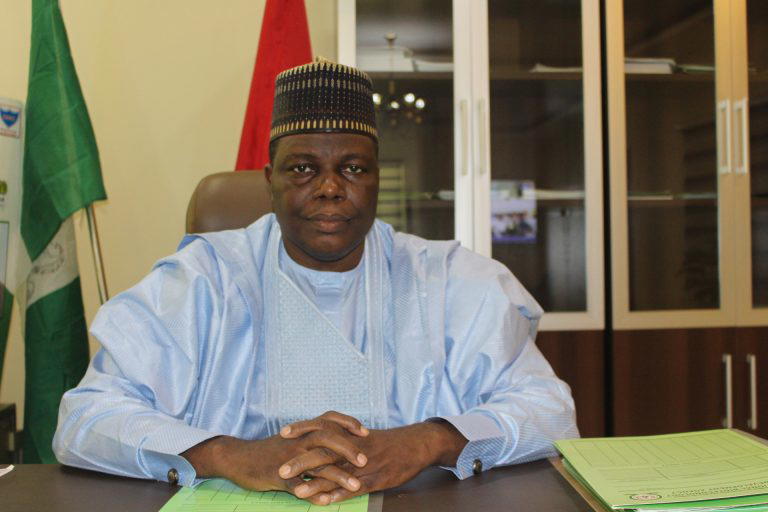
Professor Abdullahi Mustapha is an expert in the real sense of the word. He is a renowned professor of chemistry and also understands the role science and technology can play in the development of a nation. He has been writing and researching on that until he was appointed as the Director General of the National Biotechnology Development Agency, NABDA, by President Muhammadu Buhari in 2020. Since his appointment, which he sees as an opportunity for him to contribute his quota to national development, Prof. Mustapha has brought to bear several biotechnology-based initiatives in order to solve Nigeria’s challenges.
In this interview with Soni Daniel and Emman Elebeke, Prof. Mustapha speaks on effort by the agency to address critical challenges facing the country using biotechnology. Excerpts:
WITH the mandate given to you as the director general of the National Biotechnology Development Agency, what have you been able to do to ensure that biotechnology takes shape in Nigeria?
As I came into office I came with my own agenda and plans on how to prosper and move NABDA forward. First of all, before you do anything in a research institution, you have to have some basic things, and those basic things include water and electricity.
Water is needed in laboratory; light is needed in laboratories for equipment running and for all the experiment that are going on. So that is the first priority that I make sure that there is light and water. Secondly, I also reckoned that we need to have training of staff and that is why I keep on emphasizing on staff welfare and training. Without a trained staff you cannot achieve what you want to achieve.
Legal
framework
This is a research institute and knowledge is being renewed day in day out and if this knowledge is not being renewed it means that we are just stagnant in one place and that is why we have sent large of number of people for PhD studies and we are also working hard to see that we bring more knowledge into what we are doing. Above all, as an institution, we needed to have a legal framework approved by the National Assembly. And, that was done within six months after I started pursuing it and this is something that I am really happy about and it remains a milestone to this agency.
This is memorable because NABDA has been in existence for over 20 years but there was no law backing its existence until it was done a few months after my appointment. With the legal framework, NABDA is now backed by law as an institution to conduct researches that will foster economic development of the nation and all these areas of development are covered by biotechnology.
What would you say is Nigeria’s level of appreciation of biotechnology at the moment?
Well, to be honest with you, I will say Nigerians have accepted it very well in the sense that before now, there were many people who were opposed to the idea applying biotechnology to anything in the country. But today, we don’t have many of such people. It is good for the country.
Opposition to biotechnology is dying down because when we were called for a public hearing on a bill on biotechnology some of the fiercest critics of the law refused to show up and present their criticism against the technology during a public hearing organized by the National Assembly. Another reason is that we have developed crops that are going to be used for the development of the nation and people have accepted them wholeheartedly and they are now looking for this technology to be applied in their farms.
In which specific areas are you deploying biotechnology in Nigeria?
Biotechnology covers everything but here we have streamlined it into four major categories. In the environment area, we have focused on achieving biotechnology research towards bringing cleaner energy, two, cleaning the environment and even the fingerprint of our crude oil. In the area of agriculture, we are working on fisheries, animal biotechnology and crops production. In the area of fisheries we have a research for producing Tilapia; we have increased that and the target is to bring to the table bigger size Tilapia fish and all other fish but we concentrate on the Tilapia for now.
We are also producing fingerlings and fish feeds also. In the area of animal biotechnology, we are working to improve milk production. Instead of what we are observing now 1-3 litres maximum per day per cow, we are improving it to 15-20 litres per cow and we have started the breeding programme and it is going to cover the whole nation. We have started with some few selected states and with some few farms and we have inseminated these cows. For this year, we earmarked about 250 cows and we have inseminated over 152 cows as at now and we are expecting in the next nine months to a year we are going to have the first generation of these crossbreed animals that can produce more milk and more meat. We have earmarked about 250 cows for next year and we believe that with gradual work, we will cover the entire country. This research is a national programme and this is what other countries have taken time to do to transform their livestock. So we are collaborating with other countries, some other institutions to transform the sector in Nigeria.
In the area of crop production, we are working to see that we have enough climate smart crops, drought-resistant crops and pest-resistant crops for farmers across the country. We have already brought in a special type of cowpea that will resist drought and pests and bring prosperity to farmers in the country. In the area of cotton, we have collaborated with other agencies to bring in high-yielding variety that will improve the textile industry and make Nigeria self-sufficient in that area of business as it was before. We are collaborating with the Cotton Farmers Association in bringing the type of cotton that is resistant to any form of attack and to improve the quality and quantity of the produce and give farmers more money. Last year the cotton farmers association celebrated 6,000 hectares that they collectively farmed.
In the area of industry also, we are having researches that we can produce microbes that can fast track the development of the production processes in industry and we have identified some micro organisms for example, that use starter culture in yoghurt which we depend on other countries to feed out industries. Unfortunately that starter culture for yoghurt production gulps millions of Naira every year to import into the country and also require special temperature to keep it for use. This is not sustainable and we had to identify local micro organism that can do the same work here in Nigeria.
We have varieties now and they can produce without that cooling system and it can produce faster in the country. We are working for the production of bio-ethanol which is a big industry in the country because we have to spend millions of dollars to import bio-ethanol. In the petroleum processes, we need bio-ethanol, in the pharmaceutical industry and in some other aspects but we have the technology for the production of bio-ethanol using cassava and sugar cane.
But now we are even partnering with other people from other countries. Recently we just talked with people from Paraguay for the improvement of livestock. We also discussed with people from China for this bio-ethanol production and they are coming to team up with us and what we are going to use is the sweet sorghum in the production of this bio-ethanol of which we have in abundance in the country. We can produce it and then the bio-gas can be used for the production of animal feed. So we have this combination where you have your animal, you can feed it with your bio-gas and then you produce bio-ethanol that you can use to power your generator and then you sell the remaining. It is a value chain and this is what we are bringing.
We have the concept and we will soon go into deploying it to the country. In the area of medical biotechnology, we have already started the production vaccines. The vaccine technology is very important in the country because we have some peculiar diseases that we need to provide the drugs and give vaccines and that is what we are working on and we have just kick-started it. We wanted the technology, it is not that somebody will come and just give us the drugs or to give us the vaccines to start producing. We wanted to have the technology and that is what we are aiming at.
Do you have the technology now?
No, we are working on it. Nobody can give you technology just like that.
So what level have you reached?
To be honest we have started. This research can take you years because it is something that has to do with humans. What we are trying to do is to have a technology to be able to respond
Disclaimer
Comments expressed here do not reflect the opinions of Vanguard newspapers or any employee thereof.