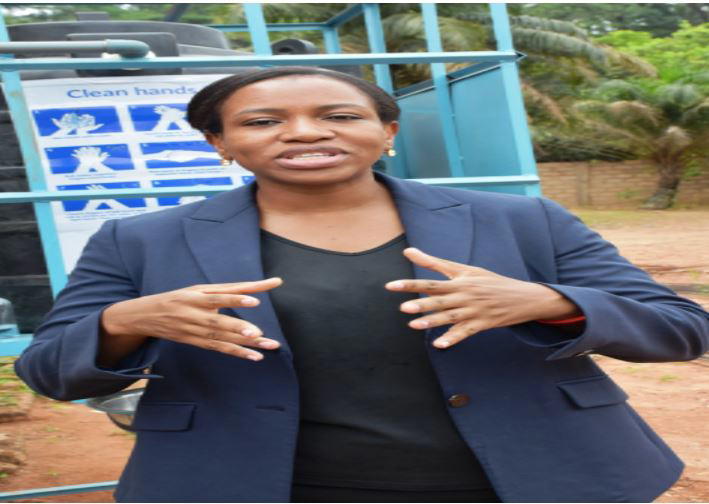
Mrs. Bilikiss Adebiyi-Abiola is the first female and first African Chairperson of a foundation focused with building healthy community in the sub-Saharan Africa.
The Heineken Africa Foundation, HAF, created in 2007, with the purpose of building healthy communities in Sub-Saharan Africa.
The Foundation has committed €16 Million Euro to 136 projects in 10 countries and has built a strong expertise on Mother and Child Care and Water, Sanitation and Hygiene Projects (WASH). In this interview, the Director-General of the Lagos State Records and Archives Bureau (LASRAB)and the founder of Wecyclers Nigeria Limited (Wecyclers), speaks on how she intends to bring her experience to bear on critical environmental issues that affect Sub-saharan Africa. Excerpts:
What in your thoughts are the main accomplishments of the Heineken Foundation since inception?
The Foundation was created in 2007 with the purpose of building healthy communities in sub-Saharan Africa. The Foundation has since committed €16 million to 136 projects in 10 countries and has built a strong expertise on Mother and Child Care, Water, Sanitation and Hygiene (WASH) projects. Since 2020 the foundation has increased its WASH activities, which are critical in the fight against COVID-19. In the first phase, it supported Water-Aid and World Vision with €2.5 million for projects in 8 countries.
This enabled more than 30 million people to be reached with crucial life-saving hygiene messages. More than 1,000 hand-washing facilities were installed in critical locations, including public marketplaces, giving 1.5 million people the ability to wash their hands. Nearly 1,000 people were trained to manage and maintain these stations. In 2021 the foundation continued its COVID-19 emergency response work with another €2.4m (Phase 2).
Together with its partners WaterAid and World Vision, it sustained its efforts in Nigeria, South Africa, Ethiopia, Mozambique, Rwanda (WaterAid) and Burundi and Sierra Leone (World Vision). This includes supporting healthcare centres, markets, schools and vulnerable communities with access to clean water, hygiene products and crucial hygiene messaging. These activities protect from the spread of COVID-19 as well as other diseases. In DRC, we partnered with Mercy Corps to renovate the Bushara water reservoir in Goma, which was damaged due to the eruption of the Nyiragongo volcano.
What is the structure and where does the funding come from?
The Foundation is a registered non-profit organization and a separate legal entity from the Heineken Company. It is funded through an endowment fund from the Company and regular contributions. It is governed by the Board of Trustees that bases their decisions upon the recommendation of the Advisory Board, which consists of mainly external experts.
The general manager is responsible for the day-to-day operations and works closely with the local Heineken operating companies in Sub-Saharan Africa and with selected NGO’s to look for projects which meet the objectives of the Foundation. The foundation committed €5 million to fight COVID-19 executed a number of successful programs in 2020-21. In the first phase, more than 1,000 hand washing stations were installed in markets, schools and health centers. Giving 1.5 million people the ability to wash their hands and nearly 1,000 people were trained to manage and maintain the hand-washing stations.
How would you describe the foundation achievement in Phase 1 per country?
In Burundi, the foundation through World Vision constructed 12 water taps that provide clean water to more than 18,000 people. 11 committees were trained to manage, maintain and repair the water taps. In the Democratic Republic of Congo, World Vision has improved WASH conditions for almost 100,000 people through improving access to clean water, equipping and building capacity for health care facilities and promoting good hygiene practices. In Ethiopia, World Vision reached over 110,000 people with safe water, hygiene messages and hand-washing facilities.
In Sierra Leone, World Vision provided over 38,000 people with access to safe drinking water. 29 public hand-washing stations were installed and 527,000 people were reached with crucial hygiene messages. More than 65,000 people were reached with hand-washing kits.
In Mozambique, Water-Aid reached 1,3 million people with crucial hygiene messages via radio and billboard campaigns featuring athletic champion Maria Mutola. In markets and health care facilities, 390 hand-washing stations were installed and 390 community mobilizers were trained to operate and maintain these stations.
In Nigeria, more than 20 million people were reached with crucial hygiene messages on radio and television. 660 (semi)permanent hand-washing stations were installed that gave over 1,2 million people the possibility to wash their hands. In South Africa, Water-Aid reached 26,000 people with increased access to clean water, hand-washing facilities, hygiene messages or the provision of hygiene kits. In Rwanda, WaterAid reached almost 9 million people with a large-scale hygiene campaign on TV and radio. 50 schools were prepared with hygiene kits and 8 healthcare facilities were provided with handwashing facilities.
Being the first woman and also the first African to chair the foundation, what does this mean to you?
I am very excited because of my background as a social entrepreneur. I started a recycling social enterprise in 2012. I help people get value from their waste. So it is important to have such a person with such expertise to ensure that the needs of people are met. So I am going to put in my skills as a social entrepreneur in having a huge impact on sub-saharan Africa.
With your predecessors laud achievements, how do you intend to exceed theirs being the first woman as well as the first African?
My predecessors were able to build a solid foundation which I and the board would build upon. My focus presently is to bring my experience as a recycling expert to create and to drive programmes that would be more impactful for my people in sub-saharan Africa.
How do you intend to bring it bear?
We are currently creating our strategy, like I said earlier, I am going to bring my experience to look critically on what we have been doing and how we intend to do more as the board forms the strategy ahead. So I am really excited and driven by big goals. So we would work on major issues that affect us in Africa. The environment is a major one. We are all aware that plastic pollution is a major problem in Africa and by 2050, there are going to be more plastics polluting the oceans. Do you know that Lagos is among the top 10 polluters of oceans in the world? Major environmental issues that can be solved would be given top priority. In this regard, within the next five years, we would make a demonstrable impact in sub-saharan Africa.
How do you intend to select your area of focus?
In the past, we focused on WASH and mother and child, but presently, we are going to evaluate what we have done in the past, and reconsider critical areas that need help.
What is the financial commitment in achieving the projects on phase 2 in 2022?
In 2021 it was 2.5 million euro and in 2022 it is 2.4million euro.
How would you describe your recent visit to Enugu to monitor some projects embarked through your partnership with water-aid?
I am very impressed with the impact I noticed in two to three healthcare centres we visited in a coal reserve state like Enugu where water is a very scarce commodity. I gathered before now, people travel from a long distance to get water. You and I know that one of the critical ways that was used to curbing the scourge of covid-19 is water. When the virus was at its peak, water was one of the measures that was used to curb it. So I feel satisfied that HAF brought joy and happiness to indigents people of Enugu.
Disclaimer
Comments expressed here do not reflect the opinions of Vanguard newspapers or any employee thereof.