By Victoria Ojeme
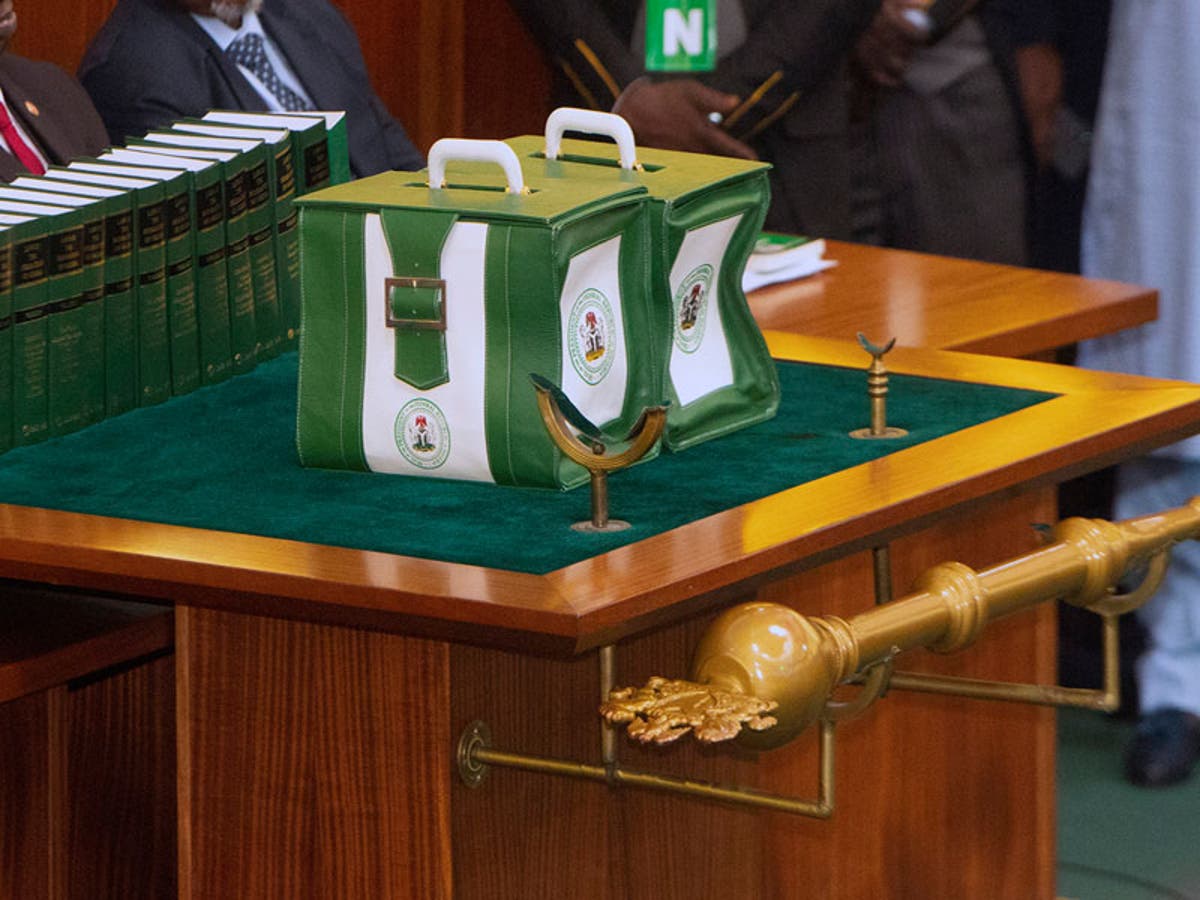
The N2.139 trillion that government ministries, departments and agencies will use to repair office buildings, buy vehicles and similar things has nearly halved the N5.354 trillion budgeted for capital expenditure in the proposed 2022 appropriation bill before the National Assembly.
Aggregate capital expenditure of N5.35 trillion is 32.7% total expenditure. This provision is inclusive of the capital component of statutory transfers, Government-Owned Enterprises, (GOEs) Capital and projected-tied loans expenditures.
But at a media briefing to present two reviews done by Centre for Social Justice (CSJ) on the 2022 Federal Budget Estimates: Recommendations on the Line Items of Frivolous, Inappropriate, Unclear and Wasteful Expenditure and Review of the 2022 Federal Appropriation Bill Parametres and Key Issues, Lead Director CSJ, Eze Onyekpere said the figures means there is a low capital vote proposal in the budget.
He said “The first issue is that aggregate capital expenditure is in the sum of N5.354tn which is 32.7% of the budget but the MDA capex of N2.139tn alone is a paltry 13.04% of the estimates.
“Government-owned enterprises capital expenditure and the capital component of statutory transfers is suffused with administrative capital to run the bureaucracy as against developmental capital that touches the life of the people.”
The Schedule of Multilateral and Bilateral Project Tied Loans which accompanied the 2022 estimates in the sum of N1.115tn is suffused with nebulous projects without clear deliverables, locations and activities. Some of them have been ongoing for years without any impact on peoples’ lives and livelihoods.
For example, the National Identification for Development Project of the National Identity Management Commission in the sum of 126.925bn raises serious posers. Why do we need to borrow so much for a national identity card scheme? Can the Commission explain why the identity cards have not reached the majority of Nigerians whose identities have been captured over ten years since the scheme kicked off? This loan was not necessary.
The Federal Ministry of Agriculture and Rural Development has various Rural Access and Agricultural Marketing Projects in excess of N65.6bn. Where are the projects located and what are they delivering after being implemented for years? What is the Nigeria for Women Project of the Ministry of Women Affairs going to deliver with N12.304bn? The same question can be asked about the Sustainable Procurement, Environmental and Social Standard Enhancement Project of the same Ministry of Women Affairs. All these unclear, deliberately poorly defined projects can only create a fertile ground for mismanagement of public resources. Pray, can anyone show Nigerians the capital projects justifying our $86bn DMO acknowledged public debt?
Previous experience indicates that the capital vote is very poorly implemented. For instance, out of the 2021 aggregate prorated (January to August 2021) capital vote of N3.323tn, only the sum of N1.759tn has so far been released which amounts to 52.9% capital budget implementation. This is a very poor record in an infrastructure starved economy. It is also imperative for the administration to ensure that in these times of lean revenue, priority is given to developmental capital expenditure rather than administrative expenditure. This will ensure that the expenditure has a direct impact on the majority of citizens.
It is imperative to note that budgetary funding alone cannot scratch the surface of Nigeria’s demand for infrastructure. NASS should therefore consider alternative funding sources for key capital projects, especially in the Ministries of Health, Works, Power and Housing, Transport, Water Resources, etc.
The National Assembly should play an active role in collaboration with MDAs and the Infrastructure Concession Regulatory Commission in designing the modalities for funding existing projects through public private partnerships, dedicated bonds, etc. This brings to the fore the need to expeditiously consider and pass bills such as the Federal Road Fund Bill and the Development Planning and Projects Continuity Bill into law.
More so, with the big picture for the 2022 budget in view, the budget needs to be anchored on a robust and realistic economic, fiscal and developmental framework which emphasizes domestic resource mobilization and popular capitalism driven by the commitment of all members of society; where every ready and willing Nigerian partakes in the baking of the national cake and as such, claims a right to be at the table in the sharing of the proceeds of national investments. This big picture is not found in any extant FGN policy framework. In this direction, a number of sectors can benefit from funds raised to support their development.
A few examples can point in the direction of needed change and transformation: Universal health coverage will not be possible without a universal and compulsory health insurance scheme for its financing. Thus, making health insurance compulsory and universal is imperative.
A Health Bank of Nigeria, being a development bank focused on making credit available at single digit rate for building health infrastructure, funding research into development and developing competencies and capacities for the long-term development of the Nigerian health sector into a world class industry.
Road sector financing can be improved through a Road Fund and Road Management Authority that will raise funds from a plethora of sources including toll gates, special surcharge on some designated commodities, etc. Special purpose vehicles to aggregate resources from institutional and retail investors will direct other resources into the sector.
Reorganizing railway development to remove it as a federal monopoly so as to bring in private sector investments, (especially from those already operating in the transport sector) is missing from our projection and radar. States will also be brought into the picture. This will require an amendment of the Constitution. Even where government builds rail lines, the private sector can invest in wagons and the day-to-day management of rail services.
The National Housing Fund needs to be reorganized to mobilise funds that will benefit contributors over the short, medium and long term. If the Fund had been well managed since inception during the Ibrahim Babangida presidency, it could have garnered trillions of naira in its kitty.
Opening the window of investments into the electricity sector especially in transmission and distribution is overdue. The current managers and operators of the DISCOs do not have the technical, managerial and financial capacity to move the sector to the next level whilst FGN has no resources to improve the transmission subsector.
Disclaimer
Comments expressed here do not reflect the opinions of Vanguard newspapers or any employee thereof.