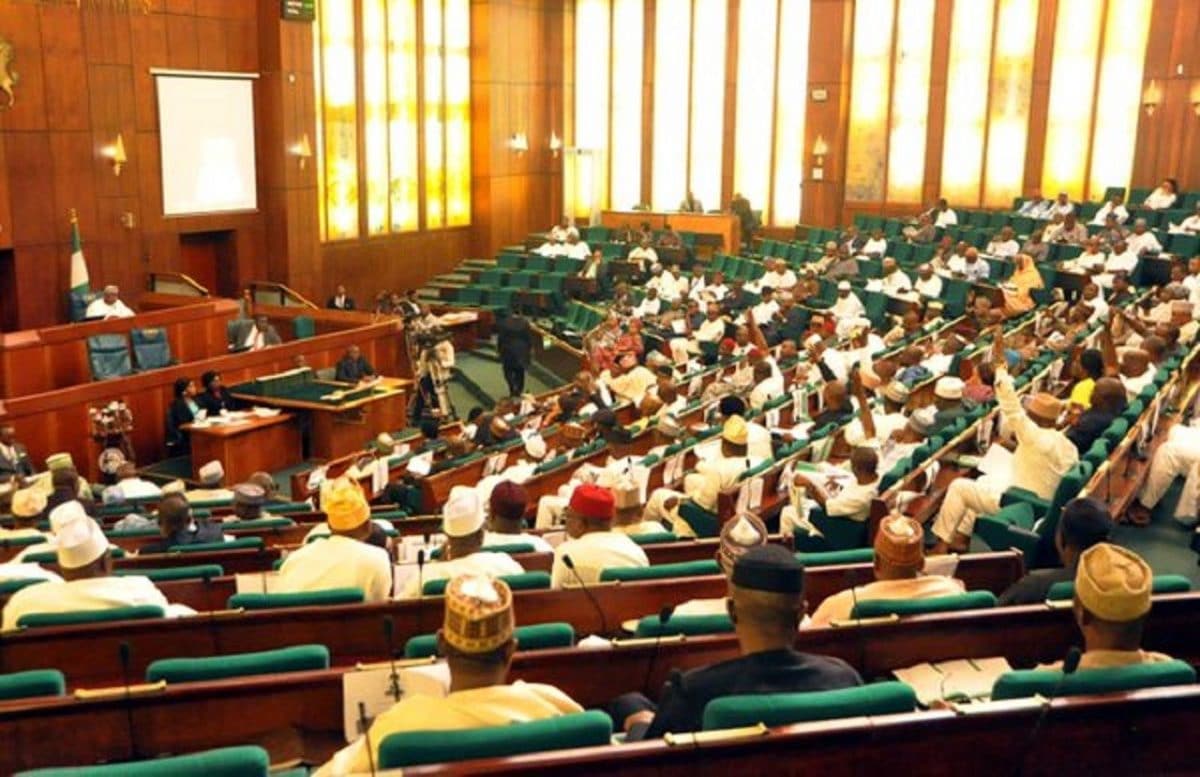
File image.
…deny receiving alleged $10 bribe from foreign interests
…seek court action against purveyors of allegations
By Levinus Nwabughiogu
Despite the mounting opposition against the passage of the Control of Infectious Disease Bill 2020, the Speaker of the House of Representatives, Femi Gbajabiamila has insisted on sending the document to public hearing any time soon.
This is coming when the House also denied receiving a monetary inducement to the tune of 10 million dollars from foreign interests for the speedy passage of the bill into law to enable a general vaccination of the country with a population of about 200 million citizens.
Also read: ‘Dead’ coronavirus particles may cause recovered patients to test positive
It will be recalled that the bill otherwise called National Centre for Disease Control, NCDC bill upon its introduction last week expeditiously scaled through first and second readings, waiting for a public hearing.
But many had criticised the bill as donating too much power to the Director-General of the NCDC, the supervising Minister of the Centre and the law enforcement agents.
One of such powers is marking and destroying any building suspected to be a source of an infectious disease in the future.
The bill being co-sponsored by Gbajabiamila himself, Rep. Pascal Obi from Imo State and Rep. Tanko Sununu from Kebbi State has also been figured as a foreign interest for sale and trial of vaccinations for the ravaging coronavirus pandemic otherwise called Covid-19.
It will also be recalled that a former Senator, Dino Melaye had on Monday filed a suit at a federal high court to stop the House from passing the bill into law.
In his speech at the resumption of plenary one week after the introduction of the controversial bill, the Speaker of the House said that it will be out for a public hearing.
The speaker also dismissed the insinuations that now was not the ideal time to tinker with the old infectious bill.
He said: “The Control of Infectious Diseases Bill will be put forward to a public hearing where stakeholder contributions will be sought to make improvements to the Bill before it is reviewed and debated by the Committee of the whole. It is from the accumulation of these myriad views, suggestions and good faith critiques from within and outside the House that we will arrive at final legislation that meets the present and future needs of our country, and which we all can support in good conscience.
“I disagree wholeheartedly with the suggestion that this is not the ideal time to seek reforms of the infectious diseases and public health emergency framework in the country. The weaknesses of the present system have already manifested in the inability of the government to hold to proper account those whose refusal to adhere with Nigeria Centre for Disease Control (NCDC) guidelines led to the further spread of the coronavirus in Nigeria. We have had people break out from isolation centres, and others, who fully aware of their status chose to travel across state lines on public transport.
“The number of those currently infected by the coronavirus continues to rise alongside the number of those who have died. There is no timeline for when this disease will pass, and nobody can predict when the next public health crisis will occur, just as nobody predicted the present predicament. It bears restating that we do not have in our country, a healthcare system or for that matter, a national economy that is sufficiently robust to withstand the dire consequences of a sustained infectious disease pandemic. We cannot tie our own hands in the fight against this disease.
“Whether we choose to accept it or not, the world we live in has changed irretrievably. There is no ‘normal’ to return to as this present crisis has laid bare the fundamental weaknesses in our systems of law and policy and left our nation at risk of devastating outcomes on all sides. Our current task is first to survive and then to set about building a new world. Inevitably, this demands that we should be willing to consider new ideas, explore novel possibilities, rejecting those ancient shibboleths we have long adhered to without benefit.”
Gbajabiamila further gave reasons for the new bill.
“In the recent uproar, certain fundamental truths have been lost and are worth remembering. Our current framework for the prevention and management of infectious diseases is obsolete and no longer fit for purpose. The current law severely constrains the ability of the Federal Government of Nigeria and the Nigeria Centre for Disease Control (NCDC) to take proactive action to prevent the entry into Nigeria of Infectious diseases and the management of public health emergencies when they occur. Even now, the government remains vulnerable to claims that some directives already being implemented to manage the present crisis do not have the backing of the law and therefore cannot withstand judicial scrutiny”, he said.
The Speaker added that the House will never for any clandestine reason work against the interest of Nigeria and the people.
“Suffice it to say that none of these allegations is true. Unfortunately, we now live in a time when conspiracy theories have gained such currency that genuine endeavours in the public interest can quickly become mischaracterised and misconstrued to raise the spectre of sinister intent and ominous possibility. This House of Representatives will never, take any action that purposes to bring harm to any Nigerian here at home or abroad. As we have thus far shown by our conduct, the resolutions and actions we take in this 9th House of Representatives will always be in the best interests of the Nigerian people who elected us, and no one else”, he said.
Meanwhile, the House has unanimously resolved to seek legal action against the coalition of opposition political parties whose spokesman, Ugochinyere Imo on Monday alleged that the leadership of the House had been induced with $10 million to pass the bill.
The House at the plenary vehemently denied the allegation and decided to head for the court to clear its reputation.
Disclaimer
Comments expressed here do not reflect the opinions of Vanguard newspapers or any employee thereof.