By Evelyn Usman
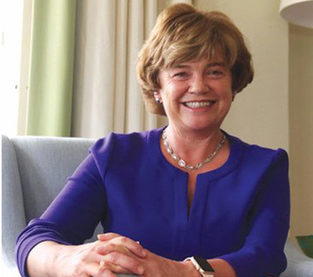
As the world celebrates the International Women’s Day today, the British High Commissioner to Nigeria, shares an op-ed on how far the two countries have gone in charting the road map for empowerment of women and girls in Nigeria.
“As a female diplomat and the first female British High Commissioner to Nigeria, I care passionately about gender equality. The 2020 International Women’s Day, commemorated today with the theme, #EachforEqual, is an important opportunity for countries across the world to take stock of their progress on gender equality and the empowerment of women.
Individually, we are all responsible for our own thoughts and actions and we can actively choose to challenge stereotypes, fight bias, broaden perceptions, improve situations and celebrate women’s achievements. Collectively, we can help create a gender-equal Nigeria and a gender-equal world.
Regarded by many as an international bill of rights for women, Nigeria and the UK are both signatories to the Convention for Elimination of Discrimination Against Women (CEDAW). However, much work remains to be done in both countries before we can truly claim to be compliant with the CEDAW.
In the UK, the Equality Act 2010 has provided for the implementation of some, if not quite all, of the CEDAW’s obligations. The report of the Equality and Human Rights Commission (EHRC), titled “Pressing for Progress; Women Rights and Gender Equality in 2018”, recommended a joint approach for the UK and its devolved governments, to their human rights obligations in relation to CEDAW. According to Rebecca Hilsenrath, Chief Executive of the EHRC, it would be misguided to think that women and girls have equality in the UK and that there is no more work to be done.
READ ALSO: Tourist in Egypt becomes 1st confirmed coronavirus death in Africa
In Nigeria, the challenge is arguably more urgent. Women (and encouragingly, an increasing number of men) fight for the most basic rights for women: girls’ education, better access to reproductive health, the total eradication of female genital mutilation, dignity in widowhood and an end to the entrenched system of patriarchy, which is often indulged in, even by fellow women.
The role of the citizen is crucial and there is a long list of examples of individuals in Nigeria prepared to take proactive steps in bringing about change. One such example was Ms. Gladys Ukeje who fought all the way to the Supreme Court in a case lasting a decade to assert her right to inherit property as a female child. In 2004 when she filed the suit, she was not discouraged by a 1997 judgement by the same apex court that had allowed the nephew of a deceased man to inherit his property instead of his two daughters. Ukeje’s victory was not just hers, but for all women and girls in Nigeria.
Nigeria and the UK are key partners working together to implement policies, programmes and legislation to promote gender equality, address the underlying causes of gender inequality, empower women to be an active part of the decision making process and take up positions of leadership. With UK support, Nigeria’s WPS network has become an example of best practice in West Africa with 11 state-level action plans already implemented and more in the developmental stage.
There is collaboration between our countries to encourage more participation of women in entrepreneurship. Propcom, a programme run by the Department for International Development (DFID), is intended to increase resilience of 500,000 rural farmers in the North. 33% of these farmers are women. Also, Nigeria has the highest number of women with Small and Medium Scale Enterprises registered with the ‘SheTrades Commonwealth’ programme which was launched as gender-responsive trade policy, in April 2018. The programme seeks to make long-lasting impact in Nigeria, to train women entrepreneurs to successfully navigate and overcome gender-related trade barriers.
Many stakeholders in Nigeria, including governments at the three tiers, have key roles to play in the battle for gender equality. Government policies intended to keep girls in school, reducing child marriage, are a positive step towards equality in the long term. These policies should deliberately prohibit gender discrimination in all sectors. In the interim, individual citizens will also have to accept and embrace their roles in the fight for gender equality. This starts at home, where the boy child and girl child should be treated equally and afforded equal opportunities as they embark on their life journey. This starts at home, where the boy child and girl child should be treated equally and afforded equal opportunities as they embark on their life journey.”
Disclaimer
Comments expressed here do not reflect the opinions of Vanguard newspapers or any employee thereof.