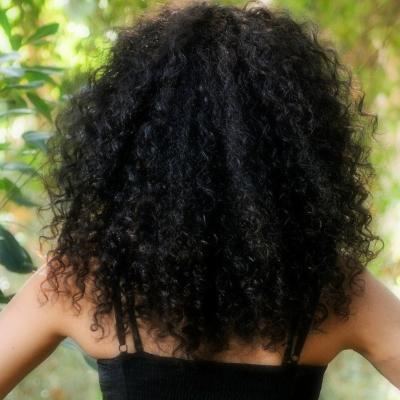
hair
By Morenike Taire
Natural Hair: One question that would invariably pop up whenever legendary Nigerian singer Onyeka Onwenu is interviewed, is the one about her close-cropped hairstyle.
She has worn the natural hairstyle for decades, and it certainly suits her personality, not to mention her person, so it is not a surprise that many of her admirers have copied and retained the style.
It was long after the black-and-proud days of the larger-than-life afro of the sixties, and long before the natural hair trend of the twenty-teens and clearly not motivated by fashion.
Though the Onyeka- type cropped hair is associated with strength and authority nowadays, this has not always been the case. It is probably not a coincidence that contemporary women such as Oby Ezekwesili, Kemi Nelson and Ngozi Okonjo-Iwealla favour this kind of no-frills hairstyle, which is interpreted as no-nonsense; still relatively soft types such as Chidinma also favour it.
In fact, it was all ‘different strokes for different folks’ until it became all politicized. Madam C.J. Walker (nee Sarah Breedlove), America’s first female self-made millionaire and political activist and influencer, made herself a nice little fortune through hair care, upon which she built her entire business, which has outlasted her by decades. The legend has it that she began by teaching the women in her neighbourhood who had water supply issues, how to keep their curls clean. When other women from neighbouring neighbourhoods and towns heard of her, they also wanted a piece of the action, and so her fame grew in leaps and bounds. She began to give hair care tips and began to share her own products, which she made by herself. The woman who was just a little more than extraordinarily fussy about her hair became a legend and a political influencer far ahead of her time.
It must have become clear at that point that black women’s hair is big business. Prior to this, white feminists had complained about the commercialization of their hair and the fact that advertisements of hair products reinforced patriarchal ideas which already hurt women and their self-esteem.
“Does she or doesn’t she?” asked an aggressive marketing campaign of a popular hair dye brand that would trigger an explosion in sales and increase the percentage of women dying their hair from 7 per cent in 1950 to more than 40 per cent in the ‘70s.
Another line declared, “If I have only one life, let me live it as a blonde.” This was apparently a hit particularly for women who didn’t want to reveal their grey roots. A 2012 report says about 90 million women in the U.S. coloured their hair regularly.
The Caucasian women hair industry was already exploding in the mid-1900s, but nothing prepared the world for the explosion of the black hair industry. It was not just about keeping the hair sleek or dark or shiny, which is what the Caucasian woman’s hair world was about. It was about weaves, extensions, relaxers of all kinds, hair ornaments, hair rollers, dryers and many other items.
READ ALSO: 2019: The place of Nigerian woman
All of a sudden, someone woke up and realized that all the money from the black hair industry was being made by people whose skin were not white. They then reinvented the ‘black and proud’ theory and sold it. It caught on like wildfire.
One or two innovators in Nigeria moved into space when no one else had caught the fever, stealing the market share. All the natural materials that go into beauty products the world over were already indigenous to West Africa: coconut oil, shea butter, palm kernel oil. The theory collided with this, and a massive industry was born.
Even as we exist within a global framework, the context within which minorities in other countries who are of African descent operate the natural hair movement is completely different from Nigeria’s where black women not only constitute an overwhelming majority but are confident, established and- one dares to say- proud.
In societies where white women are a minority, carrying natural hair is a socio-political statement. It is the wearer of the hair outrightly saying, “I love my God-given hair exactly the way it is and I don’t care whether or not you do”. Miss USA 2019, Cheslie Kryst, has told everyone who wants to hear that she won the top rated pageant in spite of wearing her natural hair. “You can wear your hair the way that it’s growing out of your head proudly out in the world,” she said in a victory interview.
To now attribute the natural hair movement in places like Nigeria to socio-politics is not only an error but an attempt to confuse the larger than life Nigerian woman but to take her back two hundred years.
Foremost Nigerian author Chimamanda Adichie who has virtually made a sub-career out of the natural hair movement might have scored big with the black diasporas. The average Nigerian woman would even have happily asked for her hairdresser’s number. She went as far as saying quite definitively in a Channel 4 interview that Barrack Obama might not have won his first term had Michelle worn natural hair “because of negative stereotypes associated with it.”
While diasporan women skirted around the issue, Nigerians were not impressed. They like their pretty, natural and natural looking hair, but not the philosophy in the movement, and thank goodness for that.
The beauty, the creativity, the resourcefulness and the uniqueness of the natural hair movement is enough for the Nigerian woman, who can turn out a good day’s work just before she knows she’s looking good. She feels just as good with her 400,000 naira fake straight wig and two-inch eyelashes. Black and kinky pride resonating with Nigerian women? Naa, talk about the paycheck.
Disclaimer
Comments expressed here do not reflect the opinions of Vanguard newspapers or any employee thereof.