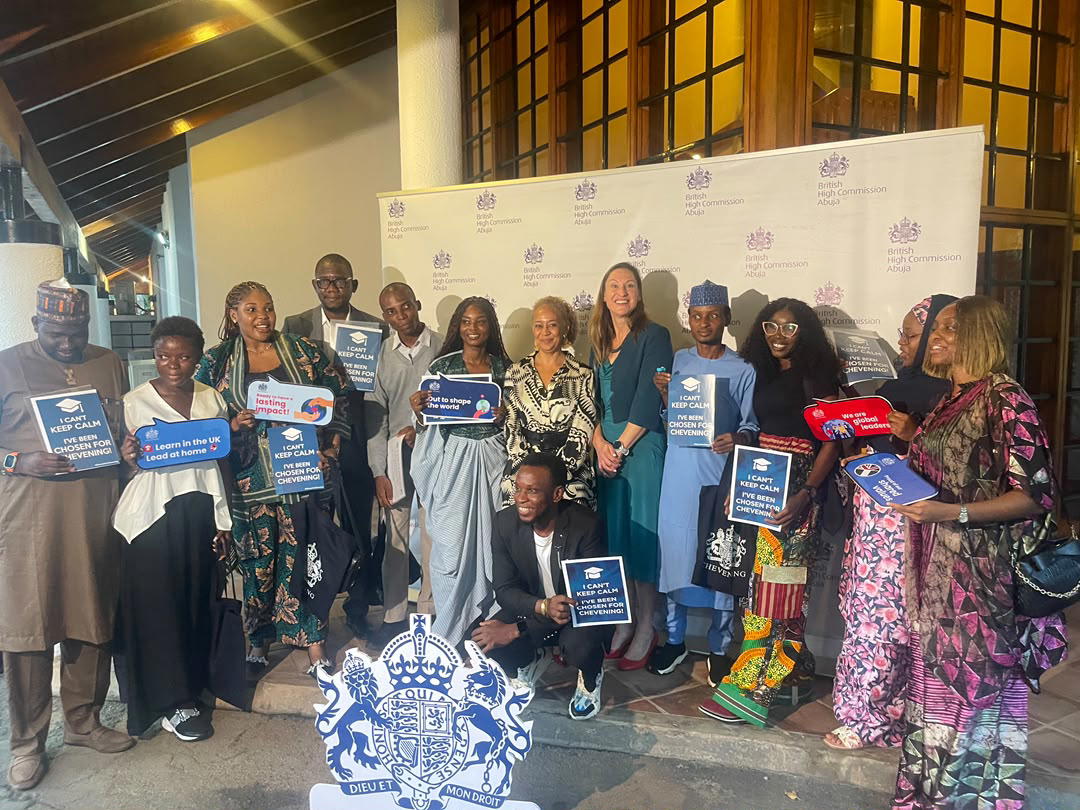
…as 56 Commonwealth, 12 Chevening scholars begin UK programmes
By Favour Ulebor, Abuja
The United Kingdom has urged Nigerian beneficiaries of its Chevening and Commonwealth scholarships to return home after their studies and use the knowledge, skills and networks gained in the UK to develop solutions to Nigeria’s challenges.
The UK Charge d’Affaires to Nigeria, Vicky Seymour, gave the charge on Tuesday in Abuja during a farewell reception for the 2026 Commonwealth and Chevening scholars, with 56 Nigerians selected for Commonwealth Scholarships and 12 for Chevening Scholarships.
Seymour described the scholarship programmes as an investment in Nigeria’s future, saying the beneficiaries were selected not only for their academic ability but also for their leadership potential and commitment to making a difference in their home country.
She said the scholars would gain new perspectives, experience a different education system and culture, and build networks that could be useful in their careers and in contributing to Nigeria’s development.
She noted the competitiveness of the programmes, saying the Commonwealth Scholarship Commission received more than 31,000 applications globally, with more than a third from Nigeria, while Chevening received over 89,000 applications worldwide, including 14,000 from Nigeria.
Seymour urged the scholars to make the most of their time in the UK and return prepared to create lasting impact in their communities and across Nigeria.
She cited the example of a scholar who plans to train 50 young people in green skills within the first year of returning to Nigeria, as well as an alumnus who established a flying doctor service in Nigeria after studying aviation and medicine in the UK.
According to her, such examples demonstrate how the scholarship programmes can produce people who return to change lives and contribute to Nigeria’s future.
The Director-General, Institute for Peace and Conflict Resolution, IPCR, Joseph Ochogwu, described the scholarship as a life-transforming programme that brings together some of the best talents from different countries and gives them access to a global network.
Ochogwu, a 2004–2005 Chevening scholar, said members of his cohort had become ambassadors, ministers and chief executives of private organisations, adding that the programme also strengthens bilateral relations between Britain and other countries.
The General Secretary of the Chevening Alumni Association of Nigeria, CAAN, and Chief Executive Officer of Pistis Finserve Centre, Oluwafemi Adedipe, urged the scholars to use their time in the UK to prepare for problems Nigeria still needs to solve.
He advised them to study systems in the UK and identify lessons that could be adapted to Nigeria. He also reminded them that the scholarship requires beneficiaries to return to Nigeria for at least two years after their studies.
A member of the Commonwealth Scholars and Fellows Alumni Association Nigeria, COSFAN, Ojochide Cyril Akagwu, urged the scholars to remain focused on the purpose of their studies and make full use of the academic and networking opportunities available to them.
Akagwu encouraged them to examine the technological and institutional advances they encounter in the UK and consider how they could be adapted to address Nigeria’s challenges over the next five to 10 years.
Meanwhile, one of the 2026 Commonwealth scholars, Bright Oyom, who is heading to Queen’s University Belfast for a PhD in Biomolecular and Medicinal Chemistry, said his research would focus on developing anti-cancer compounds and tackling antimicrobial resistance.
Oyom said he hoped to understand the full drug development process and use the experience to help bridge gaps in Nigeria’s healthcare and pharmaceutical research system.
Lauretta Bright, who is heading to the University of Glasgow for an MSc in Climate and Environmental Science, said her experience of flooding, irregular rainfall and environmental degradation motivated her interest in climate action.
She plans to build expertise in climate data analysis and modelling and, on returning to Nigeria, train young people in green skills while working with schools, local governments and NGOs.
Another scholar, Zainab Sani Dahiru, who will study Public Health for Global Practice at the London School of Hygiene and Tropical Medicine, said she would focus on reducing cancer disparities in Nigeria and improving access to quality cancer care.
The scholars are expected to begin their respective programmes in the UK as part of the 2026–2027 scholarship cohort.
Disclaimer
Comments expressed here do not reflect the opinions of Vanguard newspapers or any employee thereof.