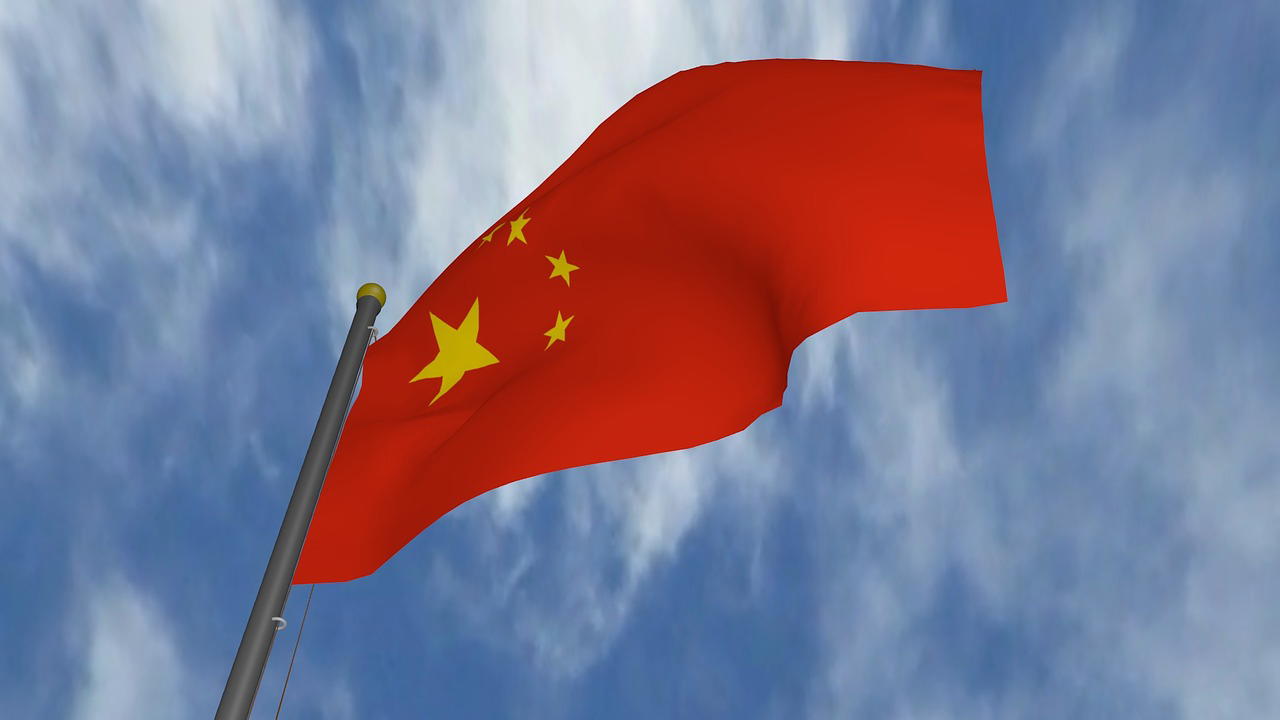
China’s flag
By Favour Ulebor, Abuja
A Professor at the China-Africa Think Tank Research Center, Professor Hui An, has said China’s Global Development Initiative (GDI) has delivered tangible development benefits to more than 120 developing countries since its launch five years ago.
In a statement marking the fifth anniversary of the initiative, Hui An said the GDI was created to address development challenges facing countries in the Global South through practical cooperation rather than political conditions or bloc-based approaches.
According to him, the initiative has gained the support of over 130 countries and several international organisations, providing a platform for countries to pursue development based on their own priorities.
He noted that the world continues to face multiple challenges, including economic slowdown, geopolitical tensions, energy shortages, climate-related disasters and food insecurity, which have widened the development gap between developed and developing nations.
The professor disclosed that China has mobilised more than $23 billion and implemented over 1,800 development projects under the initiative, while training over 200,000 technicians across participating countries.
He said Africa has become a major beneficiary of the programme, particularly in the areas of energy, food security, industrial development and climate action.
Hui An explained that Chinese companies have supported the construction of large-scale solar power projects in countries including Nigeria, Kenya and Ethiopia, while solar mini-grids have been deployed in rural communities to improve electricity access.
He added that climate adaptation programmes focusing on drought-resistant farming, water conservation and weather monitoring have also been introduced to support sustainable development across the continent.
On agriculture, he said Chinese hybrid rice and Juncao technology have helped improve food production in several African countries, including Nigeria, while Luban Workshops established across Africa are providing technical and vocational training for young people in engineering, manufacturing and renewable energy.
The professor further stated that China has implemented zero-tariff treatment on taxable products from 53 least-developed African countries, creating greater access to the Chinese market for products such as cocoa, cashew and mineral resources.
He noted that the Group of Friends of the Global Development Initiative now consists of 88 countries and that all projects under the initiative are aligned with the United Nations 2030 Agenda for Sustainable Development.
Looking ahead, Hui An said China would deepen cooperation with African countries, including Nigeria, in key sectors such as green energy, modern agriculture, digital infrastructure, disaster prevention and climate resilience.
He expressed confidence that continued cooperation under the initiative would help promote inclusive growth and support Africa’s long-term development goals.
Disclaimer
Comments expressed here do not reflect the opinions of Vanguard newspapers or any employee thereof.