…tasks staff to drive process, reposition RMRDC
By Gabriel Ewepu
ABUJA – THE Director General and Chief Executive Officer, CEO, Raw Materials Research and Development Council, RMRDC, Prof Nnanyelugo Martin Ike-Muonso, Thursday, expressed optimism that with the relaunch of the Journal of Raw Materials Research, JORMAR, gives hope to the nation’s research ecosystem.
In his remarks at the launch of the new JORMAR, Prof Ike-Muonso lamented how the Council lost grip of in-depth research publications, despite recording 46 patents, which many research findings were never published by the Council including an abysmal performance of having less than 10-peered reviewed articles from the Council that were published in reputable international journals since its establishment in 1988.
According to him, there is little evidence to justify that the RMRDC lives up to its name and mandate as a research council, leaving valuable scientific discoveries on the shelves instead of contributing to global knowledge and industrial development, which he said became imperative to launch JORMAR, and to make it more competitive on the global stage, where Nigeria would be reckoned as a research powerhouse.
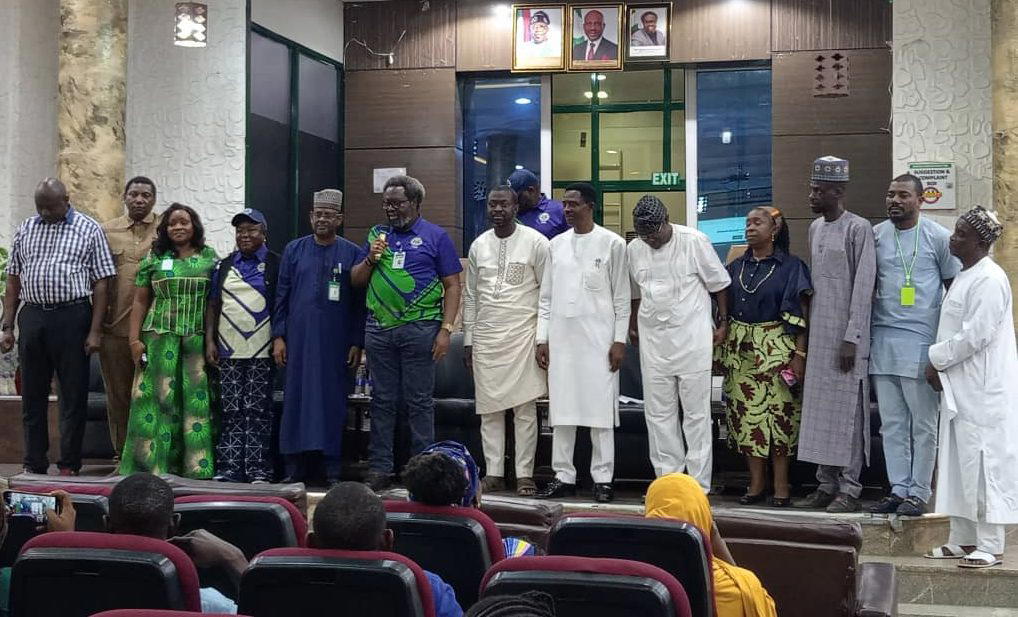
The launch had directors and other staff of the ministry in attendance, who also witnessed the launch of JORMAR including the media.
He said: “Today is a special day for me, and for those of us who were here. We were talking about how we now research globally, engraved in our name, without also demonstrating in any way that we belong there. We will understand why this activity is very exciting.”
Meanwhile, to sustain JORMAR, he disclosed that the Head of Office of the Federation, HoSF, approved Research and Academic Cadre alongside the existing scientific and non-scientific cadres, which will open a new vista for researchers to obtain enhanced knowledge and professionalism as they go through the ranks, which their research works will be published in order to accord the Council a global status, as he announced that, “Staff who wish to move into research can now do so officially. This is part of our effort to rebuild RMRDC into a true research council”, and expressed optimism that the lost research glory has been restored with the relaunch of JORMAR.
Meanwhile, the Chairman, JORMAR Committee and Director of Agriculture and Agro-Allied Department, Dr. Sab Ebiriekwe, in a remark said, “Research that was once confined to library shelves can now be accessed by scholars, students, industry players and policymakers across the world. By digitising all previous editions and assigning DOIs, we have preserved an important chapter in Nigeria’s research history.
“Our goal is not merely to secure indexing. Indexing is recognition that comes when a journal consistently demonstrates quality, transparency, editorial integrity and scientific excellence.”
According to him, the JORMAR platform is open to all to come onboard with their research works published on a global scale for a global readers while he called on those who have retired as research to use the platform as well to showcase their findings that would transform the society, saying the JORMAR’s scope has been broadened to accommodate various areas including agriculture, industrial competitiveness, public policy, agro-industrial raw materials, minerals, biotechnology, advanced materials, product development, biodiversity, commercialisation, investment promotion, indigenous engineering, additive manufacturing, circular economy, and economics.
He said: “Research that was once confined to library shelves can now be accessed by scholars, students, industry players and policymakers across the world. By digitising all previous editions and assigning DOIs.”
He also explained that the Council has gone to another level of ensuring digitization of previous editions of the journal, which he said had been preserved over the years including scientific research for unborn generations to come, whereby articles that were published since the journal’s inception have been assigned a Digital Object Identifier, DOI, enhancing their permanence and discoverability, and also making them citable and accessible to researchers across the globe.
Disclaimer
Comments expressed here do not reflect the opinions of Vanguard newspapers or any employee thereof.