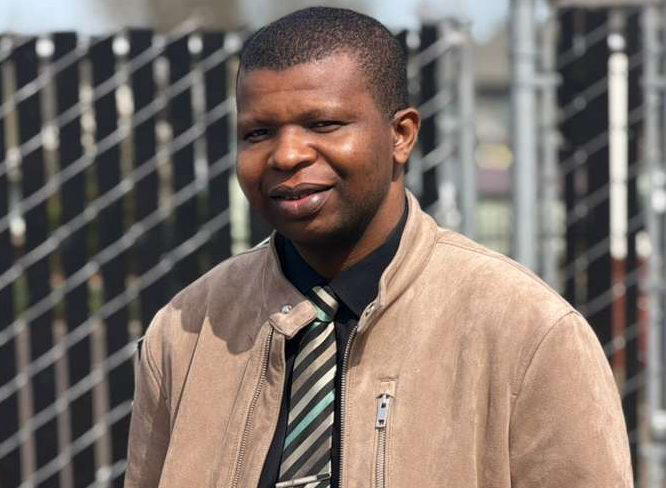
Akinfolahan
By Gabriel Ewepu
A youth mentorship expert and vocational education specialist, Oluwasegun Peter Akinfolahan in this interview, narrated his personal development as a youth but refused to give up, here he asserted that structured mentorship networks crucial for the Nigerian youth development and progress, as he spoke on other issues.
Excerpts;
What can you say about your educational journey and the daunting challenges you encountered?
My educational journey has been long, demanding, and deeply transformative. It has not been a straight path. It began at the Federal College of Agriculture, Akure, an institution many young people especially those coming from Lagos would be reluctant to attend. The training there was rigorous and practical. Each student was assigned a piece of land to cultivate, and I personally farmed yam, cassava, beans, rice, among other crops. That experience instilled discipline, responsibility, and appreciation for hard work.
The path was filled with interruptions, financial hardships, selfdoubt, and moments when giving up seemed easier than pressing forward. I had to combine learning with survival working, acquiring vocational skills, and constantly adapting to circumstances that were often unfavorable. Yet, each challenge strengthened my resolve. Rather than seeing obstacles as barriers, I learned to treat them as lessons that shaped my discipline, patience, and sense of purpose.
Through persistence and determination, I graduated with an Upper Credit, which qualified me for Direct Entry admission into the Federal University of Technology, Akure (FUTA).
However, the struggles continued. For a Direct Entry student, there is no shortcut only hard work. Starting from 200 Level while simultaneously taking selected 100 Level courses demanded resilience and consistency.
My time in the Forestry and Wood Technology (FWT) Department was defining. As early as my 200 Level, I began hearing discussions about scholarships. Instead of ignoring them, I took it upon myself to learn how scholarship applications worked and what was required to be competitive. This curiosity led me to volunteer with the International Forestry Students’ Association (IFSA).
My passion for service and leadership grew steadily. I became deeply committed, eventually serving as Treasurer, then President, and later as Regional Representative for Northern Africa. Through IFSA, I developed leadership skills, built international networks, and expanded my vision beyond my immediate environment.
While still in my 400 Level, I received my first international admission offer in Poland. I later completed my master’s degree in Italy on a fully funded scholarship, and today, my academic journey has taken me to the United States. Life has never been easy at any level of education. Each stage demands resilience, adaptation, and sacrifice, especially navigating new cultures, climates, and foods.
However, this journey has taught me that growth often begins where comfort ends, and perseverance has the power to carry one across borders, disciplines, and dreams.
What do you especially remember while pursuing your dream career as a growing youth?
What I remember most vividly was hunger for growth, not just physical hunger, but a deep longing for opportunity, knowledge, and relevance. As a young person, I constantly lived between two worlds: where I was and where I believed I could someday be. No matter my environment, I carried an inner determination to add value and make a meaningful contribution.
There were painful moments of rejection, especially when I received my first scholarship denial, and long stretches of uncertainty where the future felt unclear. But hope came through small victories finishing a task against the odds, learning a new skill, or hearing words of encouragement from someone who saw potential in me.
Those moments became my fuel. They reminded me why I started and gave me the courage to continue.
Did you have a mentor who assisted your rise from vocational work to doctoral studies?
Yes, mentorship played a critical role in my journey. While it was not always formal, I encountered individuals at different stages of my life who corrected me, challenged my thinking, and expanded my vision beyond my immediate environment.
Transitioning from handson vocational work into academia required a significant shift in mindset, confidence, and exposure.
My mentors did not carry me or remove the challenges along the way; rather, they showed me what was possible. They helped me understand that my background did not define my destination. Most importantly, I acknowledge the role of the Holy Spirit as my personal mentor, guiding my decisions, strengthening my resolve, and giving me clarity and direction where human guidance was limited.
Can you speak on the power of resilience and dedication in transforming youth lives?
Resilience and dedication are powerful because they compound over time. Talent may open doors, but resilience is what keeps you inside the room. Dedication builds consistency, and consistency is what eventually produces excellence. From my experience, young people who persist even when progress is slow and results are not immediately visible gradually develop confidence, competence, and strong character.
Resilience could transform failure into feedback, while dedication turns ordinary effort into extraordinary outcomes. These qualities are what sustain every achiever and every successful person, regardless of the field or profession. Success is rarely accidental; it is often the result of sustained effort, repeated learning, and the courage to continue despite setbacks.
Personally, I still consider myself a student when it comes to fully understanding and practicing the power of resilience and dedication. It is a lifelong lesson. Every young person must come to learn that growth is a process, not an event, and that staying committed, even in difficult seasons, can ultimately change the course of one’s life.
Is society giving sufficient attention to raising young people for development, peace, and unity?
From my assessment, society’s attention to youth development is inconsistent and largely reactive rather than intentional. Young people are frequently discussed in public discourse, yet they are not adequately equipped with the necessary skills, values, and opportunities required to thrive.
Educational systems, mentorship structures, and economic opportunities often remain misaligned with the real and evolving challenges young people face in today’s world.
There is a pressing need for stronger and more deliberate investment in value-based education, youth leadership development, dignity in vocational skills, volunteering, and innovation ecosystems.
In addition, society must deliberately position young people to engage with emerging technologies that are shaping global development, such as artificial intelligence, robotics, and creative digital innovation.
The critical question is: how are we equipping young people to understand, adopt, and apply these technologies for societal development rather than becoming passive consumers of them? When properly guided, these tools can empower youth to drive economic growth, solve local problems, and contribute meaningfully to peace, unity, and sustainable development.
As the popular saying goes, “an idle mind is a dangerous workshop.” While religious activities play an important role in moral development, they alone are not sufficient to prepare young people for the realities of life. Youth must be encouraged to engage in intentional self-development through reading, continuous learning, skill acquisition, critical thinking, and exposure to practical problem-solving. Unfortunately, this strong culture of personal growth and lifelong learning is still lacking among many young people.
For society to experience lasting peace and progress, youth engagement must move beyond conversation and rhetoric to purposeful action, structured guidance, mentorship, and genuine empowerment. Only then can young people fully realize their potential as drivers of development, unity, and positive social transformation.
What is your major concern for Nigerian youth?
My major concern for Nigerian youth is the growing loss of hope and sense of direction. Many young people are intelligent, talented, and capable, yet they feel abandoned by the very systems meant to support them. Challenges such as unemployment, insecurity, misinformation, and the absence of strong mentorship have created frustration and, in many cases, survival-driven choices. When young people stop believing that effort leads to progress, society exposes itself to long-term instability.
Another concern is the shift from value creation to value consumption. Increasingly, many young people focus more on visibility than substance seeking quick validation and income through social media trends rather than building skills, character, and long-term impact. While social media can be a useful tool, it should not replace purposeful self-development.
Money alone is not the goal; even Scripture reminds us that the love of money is the root of all evil. Without value, money cannot provide meaning or fulfillment.I am also concerned about a growing culture of complaint without preparation. We often criticize leadership, yet many young people are not intentionally equipping themselves to become better leaders.
Whenever someone complains to me about bad leadership, my response is simple: what are you doing today as a potential leader? Leadership positions do not automatically create competence; they only reveal it.
The contrast between Nigerians doing well abroad and those at home raises an important point. This is not to suggest that Nigerians within Nigeria are failing many are doing exceptionally well despite the challenges. Rather, it shows that when discipline, preparation, and opportunity align, Nigerians can thrive anywhere. The task before us is to cultivate these same values discipline, competence, integrity, and resilience regardless of location.
Finally, restoring hope among Nigerian youth requires a renewed focus on character formation, skill acquisition, mentorship, and personal responsibility. When young people are empowered to create value and see themselves as part of the solution, the future of Nigeria becomes far more promising.
Do you have strategies that can serve as solutions to youth challenges?
Yes, some practical and actionable strategies include the following: Structured mentorship networks that intentionally connect professionals with young people across vocational trades, entrepreneurship, and academia. Digital platforms such as LinkedIn already provide valuable access to mentors and professional communities, but young people must be guided on how to use these platforms purposefully for learning, networking, and career development.
Skill-based education that places equal value on vocational and technical pathways alongside university degrees. Today, young people can acquire highquality skills through accessible learning platforms such as YouTube and other online educational resources, provided they are intentional, disciplined, and focused on mastery rather than entertainment.
Entrepreneurship support systems, including access to microgrants, incubation hubs, and startup mentorship, to help young people translate ideas into sustainable businesses and employment opportunities.
Character, ethics, and leadership training deliberately embedded within schools, tertiary institutions, faithbased organizations, and community programs. These values are essential for producing competent and responsible leaders who can positively influence society.
Policy consistency and institutional continuity, ensuring that youth development programmes survive beyond political cycles and are measured by longterm impact rather than shortterm visibility.
Taken together, these approaches have the potential to restore confidence, productivity, and a renewed sense of purpose among young people, positioning them as active contributors to national development rather than passive observers.
Is there hope for Nigerian youth?
Absolutely, yes there is hope for Nigerian youth. Nigerian youths are resilient, innovative, and courageous, wherever they find themselves. Despite persistent challenges, they continue to create solutions, excel on global platforms, and uplift their communities through creativity, hard work, and determination.
Hope lies in intentional support when society chooses to genuinely guide, invest in, and listen to its young people. With access to the right environment, mentorship, education, and opportunities, Nigerian youth will not only rise above challenges, but they will also lead with excellence, integrity, and vision, shaping a more prosperous and unified future for the nation.
Disclaimer
Comments expressed here do not reflect the opinions of Vanguard newspapers or any employee thereof.