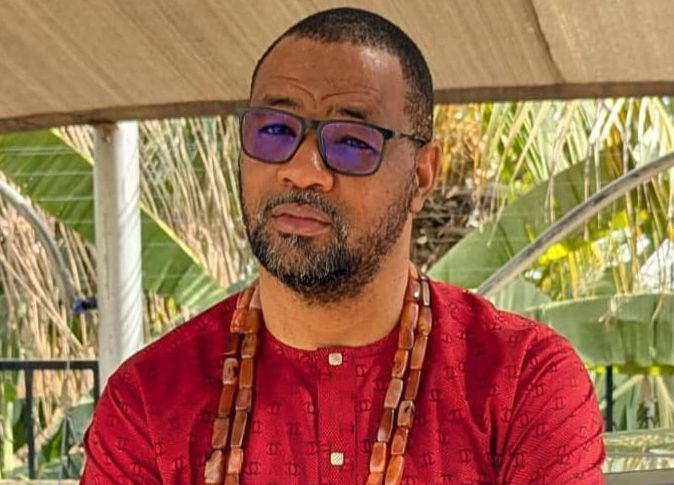
By Dr. Oboh S. Jerry
In light of the most recent developments in the Middle East and the breakdown of critical diplomatic engagements, I am compelled to expand my earlier position and restate, with greater urgency, my call for structural reform of global institutions and a fundamental rethink of how we pursue peace.
The recently concluded high-level negotiations between the United States and Iran in Islamabad, mediated by Pakistan, represent one of the most consequential diplomatic efforts in recent history. Yet, after over 20 hours of intense dialogue, these talks failed to produce a peace agreement, leaving behind a fragile ceasefire and deep uncertainty about what comes next.
While Pakistan’s mediation demonstrated that diplomacy is still possible, the inability of the parties to resolve core disagreements, particularly around nuclear commitments, regional security, and sovereignty, reveals how fragile and politically constrained modern peace processes have become.
Even more concerning is the fact that negotiations are not entirely dead, but suspended in a state of strategic hesitation. This is not peace; it is a pause before potential escalation.
At the same time, the role of the United Nations, once envisioned as the central pillar of global peace, appears increasingly constrained. Its warnings are clear, yet its capacity to enforce or prevent escalation remains limited. The United Nations has already cautioned that the ongoing conflict could push over 30 million people into poverty, reversing years of global development gains.
This raises a difficult but necessary question: are countries beginning to lose trust in multilateral institutions?
From my assessment, the answer is increasingly yes. When major global actors pursue unilateral military strategies, when alliances override collective decision-making, and when enforcement mechanisms are weakened by political interests, institutions like the United Nations risk being seen not as arbiters of peace, but as observers of conflict.
What we are witnessing is not just a war; it is a gradual erosion of institutional credibility.
The economic consequences are already unfolding at a global scale. The ongoing conflict has disrupted energy supplies, driven oil prices upward, and triggered inflationary pressures across both developed and developing economies. Countries far removed from the battlefield, including those in Africa, are experiencing rising fuel costs, economic uncertainty, and downward revisions in growth projections.
This reveals a critical reality: modern wars are no longer geographically contained. Their economic shockwaves are global, indiscriminate, and deeply unequal.
I am particularly concerned about the widening gap between those who can absorb these shocks and those who cannot. The cost of accessing a “good life” defined by stable income, healthcare, energy, and food security is rising sharply. For many developing countries, this is not just an economic inconvenience; it is a regression into vulnerability.
Even more troubling is the gendered dimension of this crisis. In many parts of the world, women already face structural barriers to healthcare, income, and social protection. Conflict-driven inflation and economic disruption disproportionately limit their access to a healthy and dignified life, further widening existing inequalities.
Beyond macroeconomic indicators, we must not lose sight of the human reality. Civilians remain the primary victims of this conflict. Displacement is rising, livelihoods are collapsing, and entire communities are being forced into survival conditions. Reports indicate that thousands of refugees are fleeing conflict zones, often moving from one unstable region into another, compounding humanitarian crises.
These are not just statistics; they are lives suspended in uncertainty.
Equally important is the silent burden placed on countries that are neither involved in the conflict nor consulted in its resolution. Nations across Asia, Africa, and other parts of the Global South are being forced to manage fuel shortages, inflation spikes, disrupted trade flows, and refugee pressures without having any meaningful voice in the decisions driving these outcomes. In some regions, governments are already implementing emergency measures to cope with energy scarcity and economic strain.
This raises fundamental questions about fairness in global governance. How can a system claim legitimacy when its consequences are global, but its decision-making remains concentrated?
“War today is no longer confined to those who fight it. It is exported economically, socially, and politically to those who had no seat at the table.”
I maintain that the core issue is no longer the absence of solutions, but the absence of coordinated will. The failure of negotiations, the limitations of global institutions, and the rising socio-economic cost of conflict all point to a deeper systemic challenge.
I therefore reiterate my call for:
• A restructured and more independent global governance system, capable of acting decisively without political paralysis;
• Renewed trust-building mechanisms within multilateral institutions, particularly the United Nations, to restore legitimacy and effectiveness;
• A global shift from militarisation to human-centred investment, addressing poverty, inequality, and climate vulnerability as core security issues;
• Inclusive global decision-making, ensuring that countries affected by the consequences of war have a voice in shaping its resolution.
If we fail to act, we risk normalising a world where war is constant, diplomacy is symbolic, institutions are weakened, and inequality deepens across nations and within them.
This is not just a geopolitical crisis. It is a test of whether humanity can still prioritise cooperation over confrontation in an age where the cost of failure is no longer regional, but global.
History will judge not only those who wage war, but those who allow its consequences to spread unchecked.
Dr. Oboh S. Jerry (PhD)
Economist and Public Affairs Analyst
Disclaimer
Comments expressed here do not reflect the opinions of Vanguard newspapers or any employee thereof.