By Joseph Erunke, Abuja
Nigeria’s education sector is undergoing one of its most ambitious transformations in decades, with the Federal Government rolling out massive investments in infrastructure, digital connectivity, and skills-driven learning under President Bola Tinubu’s Renewed Hope Agenda.
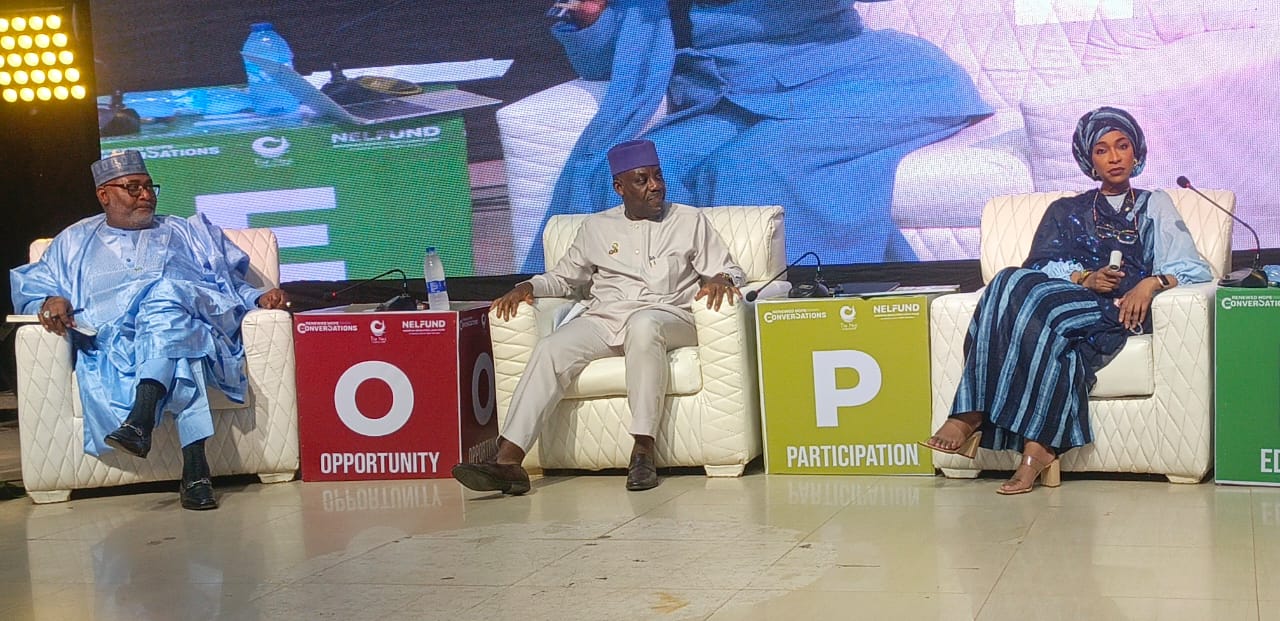
Speaking at the Renewed Hope Conversations – University of Abuja Edition, the Minister of Education, Tunji Alausa, delivered a forceful and wide-ranging address, outlining bold reforms aimed at repositioning Nigerian graduates for a rapidly evolving global economy.
At the heart of the reforms is a sweeping upgrade of university infrastructure.
“In every single institution today, we have 24-hour electricity,” Alausa declared, pointing to the deployment of mini-grid power systems across campuses.
He added that institutions now enjoy free internet access, a development he described as foundational to modern learning.
The minister emphasized that improved infrastructure is already translating into better academic outcomes.
“It’s about infrastructure, improving teachers’ welfare, and deploying technology,” he said, noting the introduction of digital learning platforms and learning management systems designed to modernize instruction nationwide.
But beyond facilities, Alausa made it clear that the government’s real focus is a paradigm shift—from theory-heavy education to skills-based training.
“The future is skills,” he said repeatedly, warning that traditional degree paths, particularly in some social science disciplines, may no longer guarantee employment.
Instead, the government is steering students toward market-relevant fields such as engineering, technology, and artificial intelligence.
To support this shift, the Federal Government is injecting billions into the sector.
According to the minister, tens of billions are being allocated to build engineering workshops across universities, upgrade laboratories, and procure modern medical equipment.
Plans are also underway to expand medical education, with dozens of new medical schools in development.
Alausa revealed that a nationwide digital backbone is being strengthened through the rollout of 90,000 kilometers of fiber optic infrastructure, prioritizing connectivity for schools at all levels,from primary to tertiary institutions.
In a move aimed at tackling youth unemployment, the government is also embedding entrepreneurship into the academic curriculum.
Students will now undergo compulsory entrepreneurial training throughout their degree programmes, equipping them to launch ventures upon graduation.
“We are not training you to be job seekers. We are training you to be entrepreneurs—micro, mid-level, and large-scale,”the minister told students
A flagship initiative under this policy is the newly launched student venture capital grant, offering up to N50 million in equity-free funding to support student-led innovations.
The programme is complemented by research commercialization efforts designed to bridge the gap between academia and industry.
Technical and vocational education is also receiving renewed attention.
Alausa disclosed that over 160,000 students have already completed training under government-backed programmes, while a recent call for an additional 100,000 slots attracted nearly 800,000 applicants within days,underscoring the surging demand for practical skills.
The minister framed these reforms as part of a broader national strategy to harness Nigeria’s youthful population,estimated at over 260 million,for economic growth.
“We are banking on you for the future. And for us to do that, we must equip you,and that is what this administration is doing,”he said.
The event, held at the University of Abuja, brought together policymakers, students, and stakeholders to discuss key priorities in education and national development.
Disclaimer
Comments expressed here do not reflect the opinions of Vanguard newspapers or any employee thereof.