By Innocent Anaba
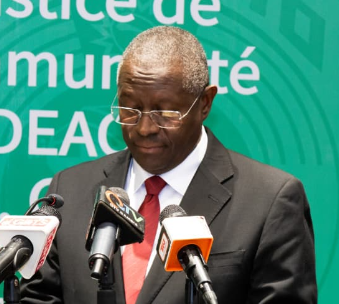
The President of the ECOWAS Court of Justice, Ricardo Gonçalves, has called for stronger collaboration between the regional court and national judicial systems, warning that failure by member states to comply with court decisions undermines justice and regional integration.
Gonçalves made the call on Tuesday in Banjul during the opening of a sensitisation meeting aimed at deepening awareness of the court’s mandate and operations.
He said the effectiveness of the court largely depends on the willingness of member states of the Economic Community of West African States to honour their legal obligations.
“The effectiveness of any regional court ultimately depends on the political will of states to fulfil their obligations,” he said.
The ECOWAS Court, he noted, remains a critical pillar of regional integration, with a mandate to interpret community laws and protect citizens’ rights across West Africa.
According to him, the court’s human rights jurisdiction has become “a cornerstone of regional accountability” and a source of hope for victims of rights violations.
“Its jurisprudence has contributed to strengthening citizens’ trust in supranational justice,” Gonçalves added.
However, he expressed concern over persistent challenges, including non-appearance of some member states before the court and failure to enforce its rulings.
“Such practices weaken the authority of the court and undermine our collective commitment to justice, accountability and the rule of law,” he warned.
The ECOWAS court president also addressed concerns in some quarters about jurisdictional overlap with domestic courts, particularly in human rights cases.
He clarified that the regional court does not seek to replace national judicial systems but rather complements them.
“The court rules exclusively on the international responsibility of member states. It is a court of cooperation, not competition,” he said.
Gonçalves stressed that individuals can only bring cases against states before the court, not against private entities, noting that primary responsibility for human rights protection still rests with national courts.
He, therefore, called for enhanced judicial dialogue and cooperation across the region, including exchange programmes, joint research, and increased public awareness.
The ECOWAS court president also commended The Gambia for its strides in strengthening democracy and the rule of law, particularly through its transitional justice process.
He highlighted the work of the Truth, Reconciliation and Reparations Commission as a “historic milestone” in national healing and institutional reform.
“The experience of The Gambia demonstrates that justice, when combined with political will, can transform societies and restore confidence in institutions,” he said.
Gonçalves further noted that progress was being made at the regional level, citing the signing of a supplementary act by 11 member states at a summit in Abuja in December 2025 to harmonise legal protocols governing the court.
He urged stakeholders, including governments, the judiciary, civil society and the media, to deepen engagement with the court to ensure it continues to serve as a “guardian of rights” in the sub-region.
“Together, through dialogue and cooperation, we can ensure that the court remains a central pillar of regional integration,” he said.
Disclaimer
Comments expressed here do not reflect the opinions of Vanguard newspapers or any employee thereof.