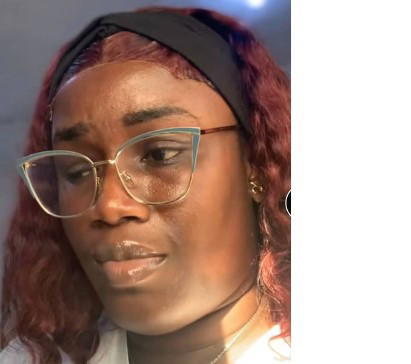
Uche Olivia
By Elizabeth Osayande
In a poignant testament to the struggles faced by individuals with disabilities in Nigeria, Mr Yinka Olaito, a journalist and disability inclusion advocate, has called for immediate action regarding the distressing experience of Uche Olivia, a visually impaired registered nurse who was denied essential accommodations during a recent entrance examination.
Olaito’s statement, delivered to reporters, underscored a grim reality for many visually impaired Nigerians: “In Nigeria, losing one’s sight too often comes with something far worse than blindness— the loss of dignity. From examination halls to hospital corridors and government offices, visually impaired citizens are routinely denied basic accommodations, shamed for asking for help, and quietly pushed out of opportunities that others take for granted.”
At the heart of this issue lies Uche Olivia, a determined individual diagnosed with optic nerve atrophy in October 2024, a condition that severely impairs vision. Despite her challenges, Olivia was eager to continue her professional journey by applying for further training in mental health nursing. However, her aspirations came to a halt when she faced insurmountable barriers at the Federal Neuropsychiatric School of Post-Basic Mental Health Nursing in Enugu.
In a video that has since gone viral, Olivia recounted her harrowing experience, stating that the institution denied her lawful requests for accommodations during the entrance exam, despite her proactive efforts to arrange for large-print question papers, a reader, and additional time—a legal requirement under Nigerian law.
Upon arrival at the examination venue at 8 a.m., Olivia discovered that accreditation would not begin until two hours later, with the exam itself commencing around 5 p.m. The long and exhausting wait proved challenging, especially for someone with her condition. When Olivia sought assistance during the exam, she was met with disheartening dismissal from an examiner, who reportedly retorted, “If you knew you were not able to read, why did you come to school or apply?”
This interaction epitomises the stigma and misunderstanding that individuals with disabilities often endure within public institutions, where disability is perceived as a personal failure rather than a right protected by law.
Olivia’s attempts to seek recourse were met with further frustration. When she approached the provost with her medical documentation, she received a chilling response: “Answer the ones you can see, leave the ones you cannot.” These dismissive words encapsulated the institution’s neglect of her rights, confirming her fear that her disability rendered her invisible within their framework.
To date, the school has remained silent, failing to respond to repeated inquiries for comment. This silence, advocacy groups assert, is not merely a lack of communication but an indication of complicity in the systemic injustice faced by individuals with disabilities.
Nigeria’s legal framework, as outlined in the 1999 Constitution and the Discrimination Against Persons with Disabilities (Prohibition) Act of 2018, guarantees equal educational opportunities and mandates reasonable accommodations. This includes provisions for Braille or large-print papers, approved scribes, extended exam time, and other forms of support. The blatant denial of these accommodations constitutes a violation of the law, effectively criminalising disability by transforming a medical condition into a basis for exclusion.
Prominent disability advocate Susan Ihouma Kelechi articulated the urgency of addressing this injustice. “Keeping quiet without punishment is inappropriate. Today it is Uche Olivia; tomorrow it can be another person,” she warned.
This sentiment resonated with leaders from the Joint National Association of Persons with Disabilities (JONAPWD), who condemned the alleged treatment meted out to Olivia. National President Abdullahi Usman characterised the incident as “a display of ignorance in a federal institution” and vowed to advocate for accountability. State-level leaders have labelled the treatment “inhuman,” calling for formal apologies and systemic reforms.
Other advocates, including Yusuf Olatunji and Susan Kelechi, argue that this incident reflects a broader unwillingness within the system to embrace inclusivity. Dapo Taiwo, a member of the Association of Assistive Technology Professionals, noted that there is no excuse in 2025 for institutions not to seek support from organisations equipped to assist students with disabilities.
The legal community has also weighed in, with visually impaired lawyer Felix Areo describing the treatment of Uche Olivia as “a dangerous signal from a federal institution.” He emphasised that alternatives such as oral examinations or assistive measures should always be considered.
As the conversation surrounding Uche Olivia’s plight gains momentum, advocates are hopeful that it will spark the necessary changes to protect the rights of individuals with disabilities in Nigeria. This case serves as a stark reminder of the continuing struggle for dignity, inclusion, and equality, underscoring the urgent need for societal and institutional reform.
Disclaimer
Comments expressed here do not reflect the opinions of Vanguard newspapers or any employee thereof.