By Olasunkanmi Akoni
Lagos State Governor, Babajide Sanwo-Olu and former Liberian President Ellen Sirleaf have called for stronger institutions, expanded opportunities for young people and inclusive leadership as key drivers of Africa’s development.
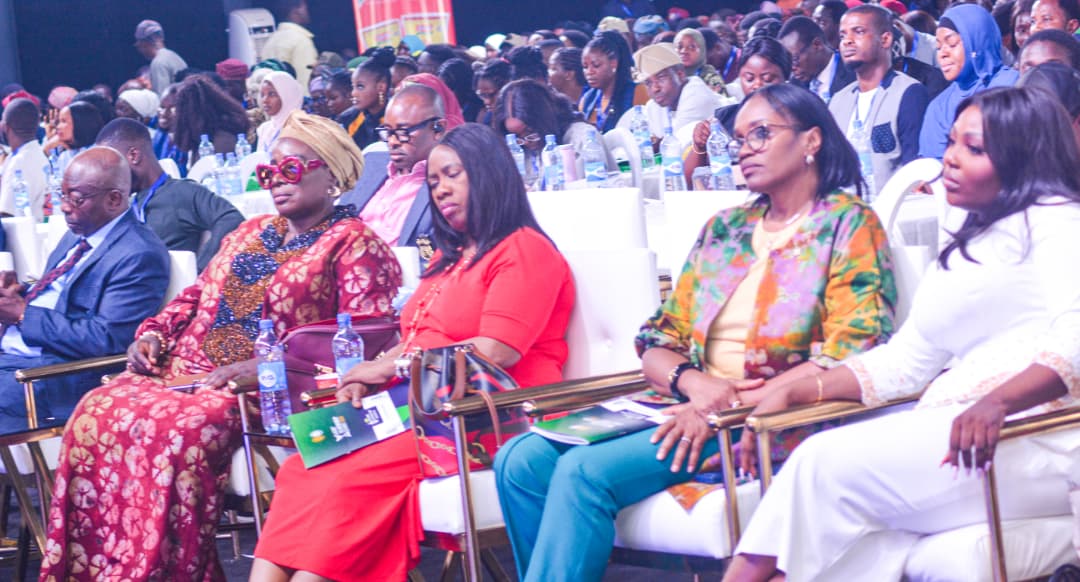
The duo spoke on Wednesday at the Lagos Leadership Summit 2026, organised by the Lateef Jakande Leadership Academy, LJLA, where policymakers, development partners and emerging leaders gathered to examine how governance can deliver sustainable impact.
Sanwo-Olu, represented by Secretary to the State Government, Bimbola Salu-Hundeyin, stressed that sponsorship remains the most critical factor in unlocking youth potential, pointing out that mentorship and access alone are insufficient without opportunities to prove competence.
“Mentorship builds capacity. Sponsorship creates opportunities. Access gives you exposure,” he said, explaining that while the three are interconnected, only sponsorship provides the platform for real impact.
Sanwo-Olu noted that many young Nigerians possess education and skills but lack the opportunities to apply them, a gap he said continues to limit productivity across sectors.
The governor clarified that sponsorship should not be misconstrued as patronage, but as institutional backing that enables individuals to translate knowledge into measurable outcomes.
“What makes you is how you prove yourself after being sponsored,” he added, urging young people to position themselves strategically for opportunities.
Sirleaf, in her address, shifted focus to institution-building, warning that governance anchored on personalities rather than systems cannot deliver lasting development.
According to her: “Systems that outlive us are not built by the force of personality alone but by those who relinquish power gracefully and deliberately.”
Drawing from her experience leading Liberia after years of civil war, Sirleaf said rebuilding required deliberate investment in accountability, transparency and the rule of law, as well as restoring public trust and economic stability.
“The strength and quality of governance define a presidency, but strength alone does not deliver change. Leadership does,” she stated.
Sirleaf also advocated for greater inclusion of women in leadership, describing it as Africa’s most underutilised resource and warning against confusing symbolic milestones with structural progress.
“One woman reaching the pinnacle of power does not constitute a system. Symbolism without structural change is just symbolism,” she said.
Sirleaf added that excluding women from decision-making weakens governance outcomes, urging leaders to create space for broader participation.
“When half of your population is excluded from decision-making, you are governing with one hand tied behind your back,” she said.
Earlier, the Executive Secretary of the academy, Ayisat Agbaje-Okunade, set the tone for the summit with a call for deliberate system-building, stressing that leadership must be judged by its ability to create structures that endure.
“In a state like Lagos, leadership cannot be reduced to ideas or visibility. It is measured by what it builds, what it sustains, and what continues to function in its absence,” she said.
She questioned whether the increasing interest in leadership among young people is translating into real impact or merely filling positions without substance.
“Are we building leaders, or are we producing individuals who simply occupy leadership spaces?” Sirleaf asked, noting that sustainable progress depends on strong systems.
Agbaje-Okunade described systems as the backbone of development, comprising policies, processes and institutions that ensure continuity regardless of leadership changes.
“A system is what ensures that something works not once, but repeatedly because something reliable has been built,” Sirleaf said.
She therefore urged young participants to see themselves as active contributors within existing structures, rather than future actors waiting for opportunities.
“You are already within the system. The question is whether you are engaging it with intention or simply reacting to it,” Sirleaf said.
Disclaimer
Comments expressed here do not reflect the opinions of Vanguard newspapers or any employee thereof.