By Kenneth Oboh
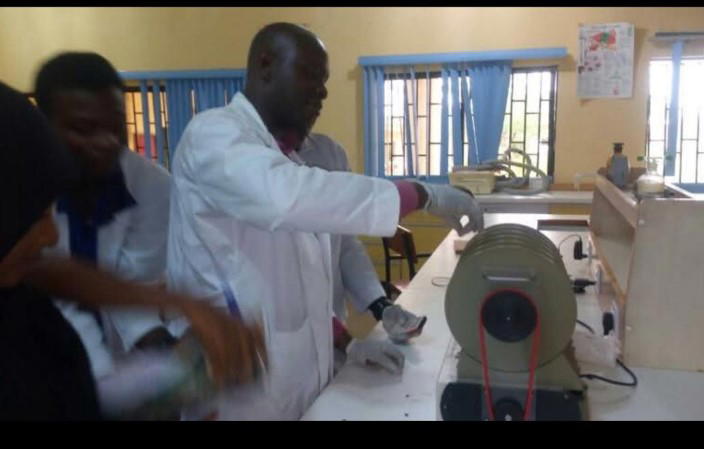
Dr. Opeyemi Osuntokun is a physiologist and lecturer who first noticed a curious pattern in the laboratory one quiet afternoon in Ile-Ife, Osun State. Rows of male Wistar rats, his subjects for a study on convulsion-induced neuro-oxidative stress, twitched and struggled under chemically induced seizures. The group that had received proanthocyanidin-rich extracts from grape seeds was calmer, their recovery quicker, and their memory functions remarkably preserved. This observation, for Osuntokun, was more than a fleeting moment. It offered a glimpse into a potential breakthrough in neuroprotection. He recalls the excitement of that moment, reflecting on the untapped potential of natural compounds in neurological science.
That experience set the trajectory for a research career spanning over a decade, one that bridges basic physiology, translational neuroscience, and integrative medicine. Osuntokun’s work explores the complex interactions between neurological function, pharmacology, and nutritional interventions, with a focus on mitigating seizure severity, cognitive impairment, and mood disorders. His Ph.D. dissertation at the Obafemi Awolowo University, completed in 2019, examined the effects of proanthocyanidin against seizure, cognitive impairment, depression, and convulsion-induced neuro-oxidative stress in male Wistar rats, a development which secured for him a slot as a pioneer in exploring natural neuroprotective agents.
The journey as an undergraduate
Osuntokun’s journey began with an undergraduate degree in Physiology at Ladoke Akintola University of Technology (LAUTECH) in Ogbomoso, where his dissertation focused on the development of cardiorespiratory fitness. From there, he pursued a master’s degree at the Obafemi Awolowo University, investigating the effects of carbamazepine and its combination with gabapentin on testicular function and anticonvulsant indices in male Wistar rats. These early experiments demonstrated his interest in the ways pharmaceutical compounds affect biological systems, and they laid the groundwork for his later focus on neuropharmacology and oxidative stress.
In the years that followed, Osuntokun began to explore the therapeutic potential of natural compounds. His research on proanthocyanidins, a class of polyphenolic compounds found in grape seeds, revealed that these extracts could reduce seizure severity, mitigate cognitive impairment, and alleviate depressive-like behaviours in rodent models. His studies showed that these compounds modulate glutamatergic and NMDA receptor activity, enhance anti-NeuN expression, and stimulate the NRF2 antioxidant defence pathway, offering new insights into the role of natural compounds in neuroprotection.
One of his studies demonstrated that graded doses of grape seed methanol extract attenuated hepato-toxicity and cerebellocortical impairment caused by chronic carbamazepine treatment in male Wistar rats. This research offered a biochemical and behavioural basis for combining nutritional interventions with conventional pharmaceuticals to protect both neural and systemic health. These findings also opened the door for future translational studies aimed at human populations with convulsive disorders and neurodegenerative conditions.
Research beyond the laboratory
Osuntokun has always believed that research is most meaningful when it reaches beyond the laboratory. So since 2015, he has held teaching positions across Nigerian and British institutions, including Afe Babalola University (ABUAD), the Osun State University, the Federal University Oye-Ekiti, the Mont Rose College of Management and Science, an arm of Buckinghamshire New University, and the Regent College London, an arm of the University of Greater Manchester. He currently leads modules in Anatomy and Physiology for Health and Diseases, Legal and Ethical Issues in Healthcare, Safeguarding Vulnerable Adults, and Innovation and Action Research while supervising bachelor’s and master’s research projects. Students describe his teaching style as rigorous but accessible. One former student recalls that he does not simply teach physiology but fosters curiosity, critical thinking, and the courage to explore the unknown.
While seizure research remains central to his work, Osuntokun has expanded his focus to reproductive physiology. Between 2014 and 2023, he investigated the effects of anticonvulsants, including phenytoin, levetiracetam, and combinations of carbamazepine and gabapentin, on the hypothalamic-pituitary-testicular axis in male rodents. These studies revealed varying degrees of reproductive dysfunction, which could be mitigated by proanthocyanidin-rich extracts and other nutritional interventions. In another study, Mucuna pruriens seed administration protected hippocampal neurons and reduced seizure indices in chemically convulsed mice, providing evidence of Nrf2-mediated neuroprotection. These findings underscore his integrative approach, evaluating natural compounds alongside conventional pharmaceuticals to optimise both neurological and systemic outcomes.
Innovation as a hallmark
Innovation is a hallmark of Osuntokun’s research. No wonder he has incorporated advanced digital tools, including virtual modeling and digital data capture, to enhance reproducibility and analysis. His participation in the Advanced Digital Appreciation Programme for Tertiary Institutions at the Osun State University in 2016 illustrates his early adoption of digital approaches in both teaching and research. He has also been involved in workshops on research commercialisation, emphasizing the importance of translating laboratory discoveries into practical solutions. At the 12th WARIMA International Workshop on Pathway to Technology at the University of Ibadan in 2019, he shared methods for moving scientific innovation from concept to implementation.
Osuntokun has, over the years, received multiple awards recognising both his research and teaching excellence. Between 2016 and 2020, he was named the Best Lecturer in his department and faculty at the Osun State University and ranked third in the College of Health Sciences. He is an active member of national and international scientific societies, including the Neuroscience Society of Nigeria, Physiological Society of the United Kingdom, American Physiological Society, American Psychological Society, the International Parkinson and Movement Disorder Society, and the International Union of Physiological Society. He regularly serves as a peer reviewer for journals such as Toxicology, Research Journal of Health Sciences, and the African Journal of Traditional, Complementary and Alternative Medicines.
Osuntokun’s work has reached audiences far beyond the laboratory. He has presented at the International Conference on Advanced Pharmacy and Clinical Research in Paris, the Seventh International Congress of the African Association of Physiological Sciences in Lagos, and the Physiological Society of Nigeria’s 33rd Scientific Conference in Ibadan. His presentations consistently emphasize the potential of integrative approaches to neurological disorders and the benefits of combining pharmacology, nutrition, and physiology.
His commitment to community service complements his scientific endeavours. He has led peer education initiatives on HIV prevention. He has also volunteered in local community programmes, including sanitation projects in Luton, England. These experiences reflect his belief that science must serve society and that knowledge gains its full value only when applied to real-world challenges.
Impact and relevance
At the core of his studies is an ambition to decode the intricate mechanisms that trigger seizures. Osuntokun’s studies mean a lot in a country like Nigeria, where the experience of living with seizures is often told in fragments of struggle, resilience, and hope. One woman, writing on a health blog, recalled how her right diagnosis and access to medication opened a path to motherhood and restored dignity.
A participant in a Lagos-based study remembered the day she collapsed at her factory job. She had just returned from lunch when the seizure struck. None of her colleagues knew how to help her. “I never returned to that job because of the shame and stigma,” she narrated her ordeal. The silence that followed her episode was more wounding than the seizure itself.
In another account, a young woman admitted, “I did not tell suitors I had epilepsy — many women hide it during dating because if a seizure happens after marriage, they face divorce or separation.”
By mapping patterns in brain activity and identifying biomarkers of early warning, Osuntokun’s work could lead to predictive tools that alert patients and caregivers before an episode strikes. Imagine a wearable device that signals an oncoming seizure, giving a student time to sit safely or a driver a chance to pull over. The science is still unfolding, but the vision is clear: turning data into life-saving foresight.
Equally transformative is his focus on refining therapies. Traditional antiepileptic drugs often come with heavy side effects such as fatigue, mood swings, and cognitive dulling that weigh on patients almost as much as the seizures themselves. Osuntokun’s exploration of novel treatment pathways, whether through improved pharmacological targeting or rehabilitation strategies that enhance neurological resilience, could reduce those burdens. In practical terms, this means patients spending less time managing side effects and more time reclaiming normalcy, holding steady jobs, excelling in school, and building relationships without fear.
The ripple effects go further. Shorter hospital stays, fewer emergency interventions, and more effective long-term management translate into lower healthcare costs, not just for families but for overstretched health systems. Policymakers and insurers alike could benefit from integrating research-backed tools that keep patients stable and productive.
Beyond epilepsy, Osuntokun’s frameworks have wide applications. The same neuroimaging techniques or computational models used to study seizures can be adapted to stroke rehabilitation or recovery after traumatic brain injury. For communities where access to neurological specialists is scarce, these breakthroughs promise scalable solutions that improve outcomes across diverse populations.
Truly, Osuntokun’s research continues to focus on translational neuroscience. He is particularly interested in developing interventions that mitigate seizure-induced neurodegeneration while preserving reproductive and systemic health. Recent studies have explored the neuroprotective potentials of proanthocyanidins and anthocyanidins against environmental neurotoxins such as rotenone in animal and Drosophila models. He envisions a future where nutritional neuroscience, pharmacology, and technology converge to produce therapies that are effective, safe, and accessible to those who need them most.
The numbers
Osuntokun’s research was anchored in meticulous data collection, where numbers told stories of health and hope. He examined over 1,000 patients in clinical studies, documenting seizure frequencies, treatment outcomes, and the prevalence of neurological disorders in West Africa. His work quantified the silent burden of epilepsy, revealing incidence rates that had been overlooked in global datasets. Through statistical rigor, he mapped correlations between genetics, environment, and disease progression, ensuring patterns were not dismissed as anecdotal. Each dataset became evidence, each percentage a step toward precision medicine, shaping interventions that improved survival rates and quality of life for patients.
From observing the first protective effects of grape seed extracts in Wistar rats to leading international conferences and shaping future scientists, Osuntokun has demonstrated how focused research can have a profound societal impact. His work in neuroprotection and integrative physiology illustrates the power of curiosity, discipline, and innovation.
Disclaimer
Comments expressed here do not reflect the opinions of Vanguard newspapers or any employee thereof.