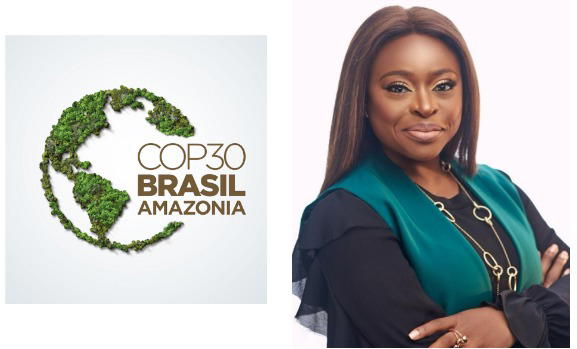
By Lolade Awogbade
Every COP has a unique slant depending on which country is playing host. 2022 was the finance COP with the creation of the infamous “Loss and Damage Fund”. 2023 introduced the concept of the global stocktake, an initiative focused on country level assessments of progress toward the Paris Agreement. 2024 had a strong focus on the carbon markets and Article 6.
2025 is the year that is focused on implementation with the global South at the centre of discussions. There is a strong push for adaptation financing with a focus on protecting indigenous people and ensuring they are given the financing to protect their environments whilst pushing for scaling of climate financing and including food systems and land use as part of the value chain financing.
An introduction to the Lungs of Planet Earth
Belém, the host city of COP30, sits at the gateway of the Amazon rainforest, the world’s largest tropical forest and a critical global climate regulator. Lush green foliage surrounds the entirety of the city’s layout. Its native Acai berry considered a super fruit globally and reviled for its rich antioxidant qualities is plentiful in supply and a key ingredient across numerous product value chains from food to health and beauty.
Choosing Belem as the host city for this year’s COP is a strategic move by the Brazilian government. It is an opportunity to experience the amazon first hand. But furthermore, it is an opportunity for us all to appreciate why we need to fight for the conservation and preservation of our planet.
This COP felt unique. Hear are my “hot takes”
- Let’s talk about the money
There is a very clear push for the mobilisation of financing for adaptation projects. There is a clear feeling that people have had enough of the talking and need to see implementation commence on projects as well as in the securing of needed funding for implementation. Multilateral development banks (MDBs) have doubled their adaptation support; in 2024 they delivered over US$ 26 billion to vulnerable economies. Innovative financing mechanisms are getting attention e.g., solidarity levies (on aviation, finance, etc.) are being seen to raise fair, non-debt-generating funds.
- The AMAZONIANS are not happy:
Attendees have witnessed waves of peaceful protests by indigenous groups showing deep frustration around land rights and decision-making. There is criticism that while the summit is meant to highlight the Amazon, infrastructure decisions (e.g., building roads) may undercut the very forest protection people came to promote. Civil society is pushing for more meaningful inclusion; some feeling that not enough power is given to traditional peoples in the negotiations.
- Youth, Climate and Taking Action!
Youth coalitions held sessions around themes like race, gender, disability, and territory, highlighting inequalities in how climate change affects young people. Young people are demanding mitigation: they’re framing climate change as deeply entwined with social justice; racial justice, Indigenous rights, and intergenerational equity.
As a side note, it was a great opportunity for an organisation like the Development Bank of Nigeria to confirm that its current activities in climate education for Nigerian youth showcased through its Green Clubs is spot on! We will continue our strong support for awareness raising activities around waste, plastic, forestry preservation and tree planting ensuring our efforts have direct impacts at grassroot and youth levels.
- Nigeria delivers at COP 30!
Nigeria through the National Council on Climate Change has shown up on this international stage with an unmissable renewed energy. First Nigeria finally got the carbon market framework approved by His Excellency, the Vice President Kassim Shettima. This is a much-awaited framework that should kickstart carbon trading on both the Voluntary and regulated market spaces. Next, in a great boost for women, Nigeria launched its National Data Hub for Gender and Climate Information aimed at generating, harmonizing, and visualizing gender-disaggregated climate data across sectors. Finally, in a nice surprise, Nigeria and the United States State of California signed an MOU to accelerate green development and climate innovation.
We must prevent runaway global warming targets!
This COP truly feels like it might be the COP that kickstarts implementation on both financial and non-financial goals.
On financing, there is a risk of eroding trust if the can is kicked any further down the road. Scarce public funds must be used to attract private capital at scale for mitigation and adaptation in developing countries. Developed countries must lead through multilateral development bank reform, effective debt solutions, and instruments that crowd in private investment at scale turning finance pledges into financial flows.
As the sun sets on yet another year, we can only hope we have a plan to prevent this from happening and that we have done enough to push the world towards a sustainable and more resilient future.
Lolade Awogbade is a Sustainability Specialist at The Development Bank of Nigeria
Disclaimer
Comments expressed here do not reflect the opinions of Vanguard newspapers or any employee thereof.