By Jimoh Babatunde
Stakeholders in Nigeria’s livestock sector are intensifying a private sector-led push to unlock $3 billion in investment opportunities over the next three to five years, aiming to shatter longstanding barriers and propel the industry into a $74-90 billion powerhouse by 2035.
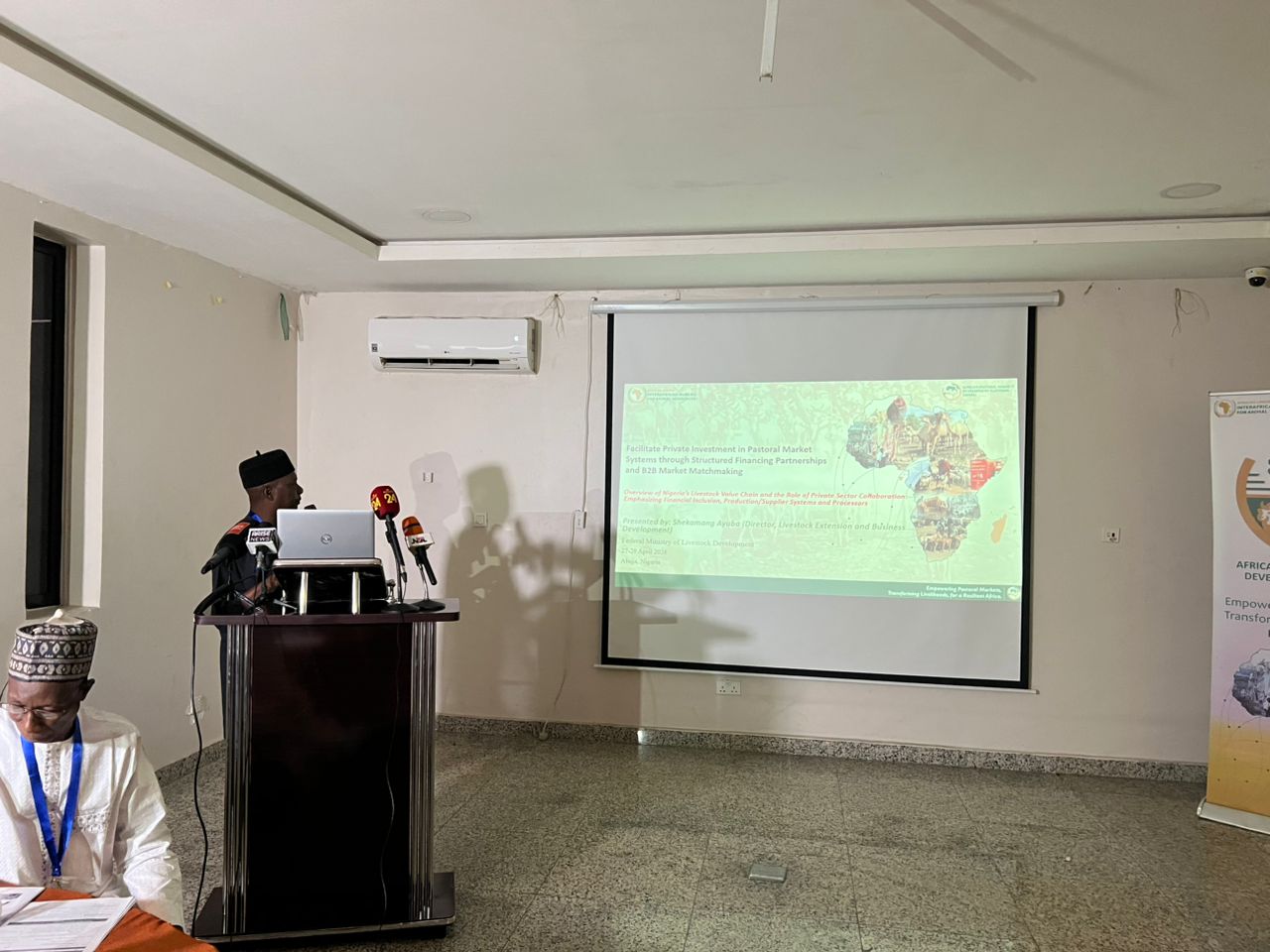
The momentum built at a three-day high-level forum in Abuja, hosted by the African Union Inter-African Bureau for Animal Resources (AU-IBAR) under its Africa Pastoral Markets Development (APMD) Platform, a Gates Foundation-backed initiative.
Producers, processors, financiers, and policymakers sealed deals, supply pacts, and trust-building agreements to unify a fragmented value chain.
Director of Livestock Extension and Business Development at the Federal Ministry of Livestock Development, Shekamang Ayuba, spotlighted Nigeria’s edge as West Africa’s livestock giant with 54 million cattle, 250 million poultry birds, sustaining 75 million households and contributing 5% to GDP at $32 billion.
Yet, stark gaps persist, 60% dairy imports, milk yields below 10% of global norms, and feed costs eating 60-70% of expenses.
Ayuba added that the government has begun laying the groundwork for transformation through a mix of policy frameworks and targeted investments.
He pointed to the National Livestock Master Plan, developed with support from the Livestock Productivity and Resilience Support Project (L-PRES), the International Livestock Research Institute and the Gates Foundation, as a comprehensive blueprint addressing systemic constraints from feed supply to animal health and market access.
He further highlighted the National Livestock Growth Acceleration Strategy, which aims to scale the sector into a $74 billion to $ 90 billion industry by 2035 through partnerships involving state governments, private investors and international partners under a strengthened federal regulatory framework.
“Government alone cannot drive transformation of Nigeria’s livestock sector. The future depends on bold, private sector-led investment across the entire value chain, from feed to processing to market linkages,” he said.
AU-IBAR’s Private Sector Engagement Expert, Mohammed Eidie, described the forum’s B2B matchmaking as “infrastructure of trust,” targeting supply deals, financing, and reforms across private participation, policy, and data pillars, with emphasis on gender, youth, nutrition, and climate resilience.
Policy Pillar Lead Prof. Ahmed Elbeltagy added: “This will sharpen Nigeria’s edge in regional markets, bolster food security, and slash poverty.”
Abattoir operators urged action too. ABAT CBD Limited’s MD, Raymond Olalekan Odulate, called licensed facilities the “critical bridge” for pastoralists to urban markets like Lagos, but decried power and water woes forcing diesel reliance that spikes costs and blocks exports.
SCL Future Food Systems’ Operations Manager, Evangeline Dan Yusuf, stressed turning abattoirs into “investment-ready hubs” via clear frameworks.
The Nigerian Meat Partnership (NiMeP) is certifying five abattoirs,Abis Farm Market and Halal Abattoirs (FCT), Halal Modern Meat (Nasarawa), Majestic Farm (Kano), and Ibadan Central (Oyo),for Gulf exports. With capacity for 420,000 cattle yearly (now at 45%), they eye 35,532 metric tons of boneless meat annually, fetching $264 million at $7,500per tonne.
NiMeP’s Managing Partner, Roland Oroh, vowed: “We’re building a full export pipeline from northern rangelands to Jeddah and Dubai, Nigeria’s structured non-oil breakthrough.”
As Nigeria eyes non-oil revenue amid global shifts, this $3 billion drive could redefine pastoral economies, create jobs, and feed growing cities.
Disclaimer
Comments expressed here do not reflect the opinions of Vanguard newspapers or any employee thereof.