By Msugh Ityokura, Abuja
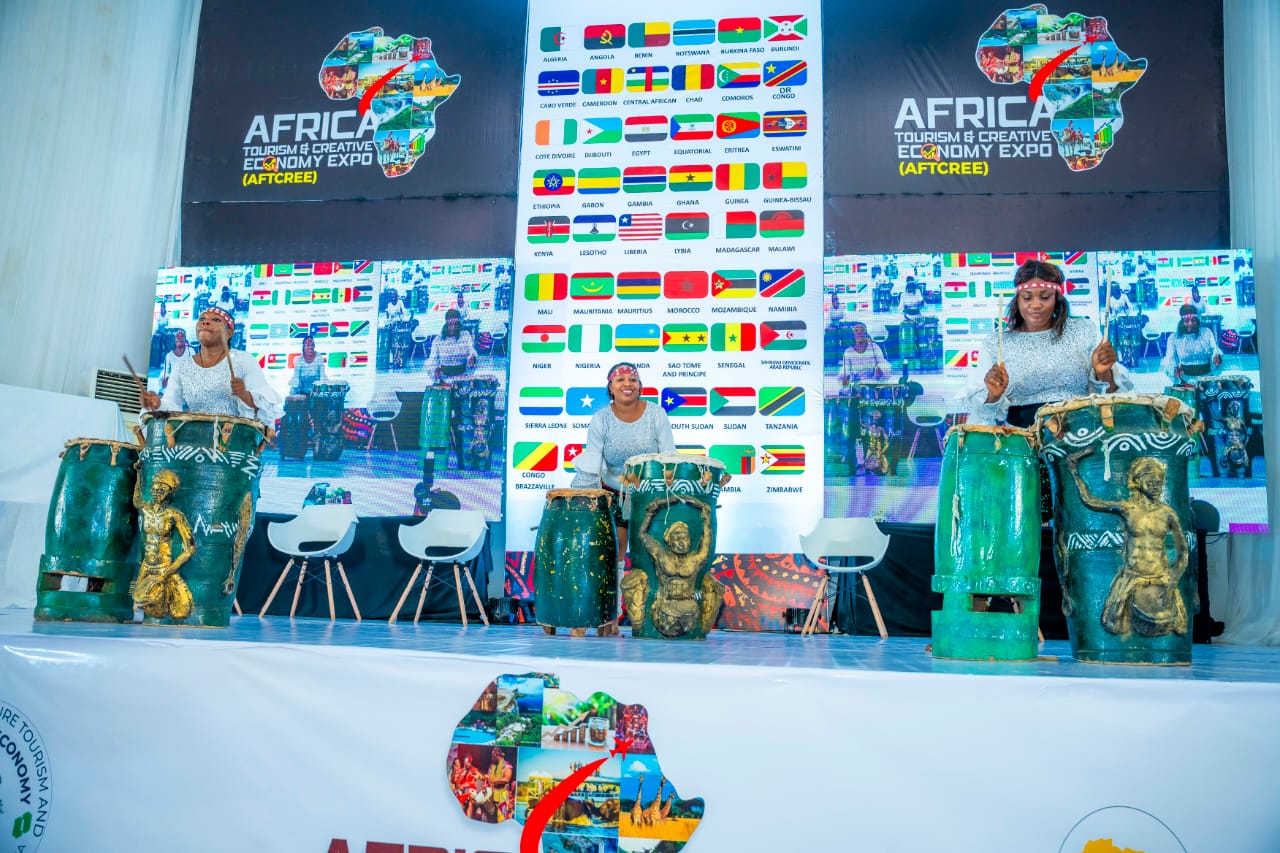
Delegates from across Africa, policymakers, culture custodians, investors and creative industry leaders on the 24 -25 November converged on Abuja for what organisers described as a “historic continental intervention.”
The maiden Africa Tourism and Creative Economy Expo, was not just another conference, it was, in the words of its convener, Mr. Chuks Akamadu, “a moment for Africa to look in the mirror.”
Akamadu, Managing Director of Afrocultour Limited, organizers of the event in collaboration with the Federal Ministry of Arts Culture Tourism and Creative Economy
stood before the audience with a message as bold as it was urgent, “Africa is sitting on a goldmine, but behaving like a continent content with crumbs”
The Minister in charge of the ministry and Chief Host, Barr. Hannatu Musa Musawa was represented by the permanent Secretary, Dr. Mukhtar Muhammad Yawale,
Despite abundant natural resources, vibrant cultures and bustling creative energy, Africa contributes less than three percent to global trade. Within the continent, trade among African nations remains shockingly low, a mismatch that puzzles experts and frustrates policymakers.
“Something is wrong somewhere,” Akamadu told the audience, adding “We are richly endowed, yet seem to have settled for voluntary lack.”
The statistics provide painful evidence. Africa’s festivals, from Algeria’s Timgad International Music Festival to Nigeria’s Durbar, attract global attention but fail to translate into sustained economic value.
The Expo, jointly organised by Federal Ministry of Arts Culture Tourism and Creative Economy in collaboration tourism assets such as the Pyramids of Giza, Asmara’s modernist architecture and Central African Republic’s Dzanga Sangha Reserve remain under leveraged, often lacking the infrastructure and policy support that turn tourist attractions into economic engines.
When the African Continental Free Trade Area (AfCFTA) launched in 2018, it was hailed as a masterstroke, a vehicle to strengthen trade ties, open new markets and finally integrate the continent economically. Yet, seven years later, the promise remains largely unfulfilled.
Akamadu believes the challenge is not just institutional but philosophical. AfCFTA, he argues, cannot thrive as a government only project. Indigenous non state actors, businesses, NGOs and creatives must see it as their platform, their opportunity and their responsibility.
Without that ownership, he says, the world’s largest free trade area risks being another noble idea stalled by continental inertia.
The global economy has tilted sharply toward services, which now account for over two-thirds of global GDP. Creative industries, music, fashion, film, art, digital content are among the fastest growing in the world, meanwhile, tourism remains one of the highest revenue earners globally.
Yet, Africa, the cultural and ecological crown jewel of the world, continues to underperform making Akamadu to believe it as Africa’s most painful paradox.
From the vibrant Puus Kat Festival in Jos to Cape Verde’s dramatic Pico do Fogo, he sees billions of dollars in dormant value. “Why,” he asked, “would a continent so blessed with low hanging economic fruits sit on her fortunes and remain an obvious destination for foreign aid?”
The Expo, therefore, arrived as a continental call to action, an appeal to rethink Africa’s cultural assets not as spectacles, but as structured industries with measurable outputs, investments and returns.
Perhaps the most groundbreaking unveiling at the Expo was the Cultourmetre, a tool designed to rank the 54 African nations based on their performance in culture-tourism development.
How much of each country’s national budget is allocated to culture and tourism, the share of their GDP generated from these sectors, Infrastructure growth, Policy reforms
and Year on year performance
It is the first tool of its kind on the continent, a system that encourages competition, accountability and measurable progress.
Akamadu revealed that Afrocultour has already engaged the African Union Commission, the AfCFTA Secretariat, AFREXIM Bank and a leading global audit firm to ensure integrity and credibility.
The first annual Cultourmetre report will be released at the Expo’s second edition in 2026.
The Expo articulates ambitious yet achievable goals which are Increase Africa’s share of global trade from 3% to at least 10%, Raise Africa’s global tourism revenue share from 5% to 20%
Achieving this will require coordinated policy reforms, heavy investment in tourism infrastructure, incentivising the creative sector and improving intra African mobility.
Delegates at the Expo believe the targets are bold, but for the first time, there is a structured pathway.
The Nigerian government received special commendation for collaborating with Afrocultour to host the maiden Expo.
Representatives from various African countries attended, alongside non African foreign missions, signalling a growing recognition of culture and tourism as serious economic components.
This context is significant. For decades, African nations have leaned more on extractive industries and donor support than on creativity, culture and heritage despite global evidence that these sectors can be transformative.
Beyond the speeches and presentations, the mood at the Expo reflected a continent aware of its potential yet conscious of the gap between promise and performance.
The gala night held on the final day honoured individuals and institutions pushing the boundaries of Africa’s cultural economy, a symbolic bow to those already doing the work the continent needs.
But the true message of the Expo was captured in Akamadu’s closing words, “Africa, arise and shine for your hour has come.”
For a continent long described as promising but emerging, hopeful but hesitant, the Expo served as both a wake up call and a blueprint.
Whether Africa seizes this moment, as Akamadu urged, may well determine the future of its economic independence and its place in a rapidly evolving global economy.
Building on this, a communiqué issued at the end of the event urged “African governments to prioritise tourism and the creative sectors as key drivers of development, with a clear ambition to raise Africa’s share of global trade from less than 3% to 10% and expand its global tourism revenue from 5% to at least 20% by 2030”
It also called for “improved access to funding, strengthened legal frameworks, incentives for local and foreign investment and institutional consolidation similar to Nigeria’s model to enhance synergy and productivity”.
Besides, the communique called for the institutionalization of AFTCREE as an annual event adding that to promote fairness and inclusivity, future editions should rotate among Africa’s sub regions, allowing more countries to host and shape the evolving discourse.
Disclaimer
Comments expressed here do not reflect the opinions of Vanguard newspapers or any employee thereof.