30 years after execution: HOMEF, Right Livelihood Foundation honour Ken Saro-Wiwa
By Henry Obetta
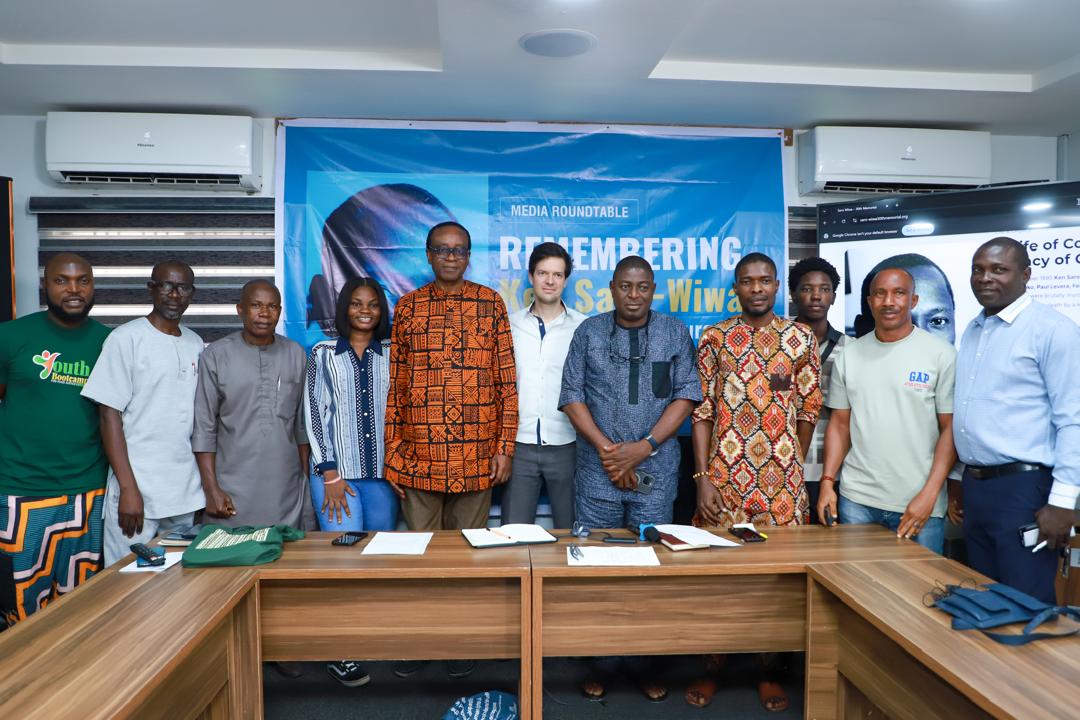
The Health of Mother Earth Foundation (HOMEF) in collaboration with the Right Livelihood Foundation, has held a remembrance roundtable in Lagos to mark 30 years since the execution of Nigerian environmentalist and writer, Ken Saro-Wiwa, and eight other Ogoni activists collectively known as the Ogoni Nine.
Executive Director of the Right Livelihood Foundation, Ole von Uexkull, described Saro-Wiwa as a “common-sense environmentalist” who fought peacefully for the dignity and survival of his people in the face of widespread environmental degradation.
He recalled how Saro-Wiwa and fellow activist Barinem Kiobel were honoured in 1994 for their fearless defence of their people’s rights against pollution and exploitation by multinational oil companies.
Von Uexkull said the foundation now has more than 200 laureates across the world, all dedicated to promoting justice, peace, and sustainability.
He added that Saro-Wiwa’s struggle reflects similar fights against fossil fuel exploitation and corporate impunity in other countries.
He expressed concern over renewed oil exploration in the Niger Delta despite global transitions to clean energy, describing such moves as “unjust and environmentally dangerous.”
Also speaking, Executive Director of HOMEF, Nnimmo Bassey, described Saro-Wiwa as a man of peace who was unjustly killed for defending his people and their environment from reckless oil extraction.
Bassey referenced Saro-Wiwa’s final writings from prison, noting that the activist was convinced his ideas would live on even if his body perished.
He lamented that the same injustices—pollution, exploitation, and government inaction—continue to plague the Niger Delta 30 years after his death.
“The Ogoni Bill of Rights, presented to the Nigerian government in 1990, remains largely unimplemented. Pollution continues, and communities remain unsafe,” Bassey said, criticising government’s continued emphasis on oil production over environmental restoration and renewable energy investment.
The remembrance event featured reflections, documentaries, and tributes in honour of the Ogoni Nine.
Participants reaffirmed calls for justice and environmental cleanup, while urging sustained advocacy to protect communities affected by oil pollution across Nigeria.
A guest at the event, Executive Director of the Corporate Accountability and Public Participation Africa (CAPPA), Akinbode Oluwafemi, described Saro-Wiwa’s legacy as one that continues to inspire global movements for justice, human rights, and environmental protection.
He recalled the global outrage that followed Saro-Wiwa’s hanging on November 10, 1995, noting that his ideas and advocacy remain powerful decades after his death.
Oluwafemi said the Right Livelihood Award, popularly known as the “Alternative Nobel Prize,” was created in response to the Nobel Foundation’s reluctance to recognise social and environmental justice struggles. He reminded the audience that Saro-Wiwa received the award in 1994 for his non-violent campaign for the rights of the Ogoni people, a year before his execution.
“It’s a great honour to host this important conversation as we remember Ken Saro-Wiwa, a Right Livelihood Award winner whose courage and ideas remain relevant 30 years after,” Oluwafemi said.
Disclaimer
Comments expressed here do not reflect the opinions of Vanguard newspapers or any employee thereof.