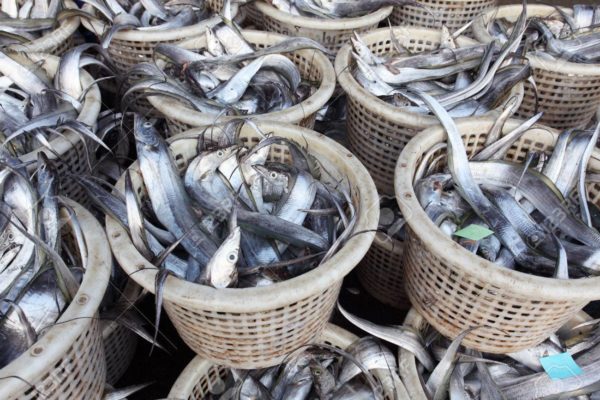
File image
By Juliet Umeh
Nigerian regulatory agencies, including the National Agency for Food and Drug Administration and Control, NAFDAC, and the Federal Department of Fisheries, have been urged to intensify training for retailers to prevent poor post-import handling of seafood products.
This call came as Norwegian stockfish producers reaffirmed the purity and sustainability of their products, dismissing claims of chemical additives in imported fish sold across Nigerian markets.
During a visit to Whitesand Market in Lagos, representatives of SUFI, a Norwegian seafood company, alongside officials of the Norwegian Seafood Council, inspected retail stockfish outlets to verify product quality and educate local distributors on safe handling and preservation practices.
Speaking during the visit, Mr. Truls Hellnæs, Finance Director of SUFI, explained that their production process relies solely on natural elements, wind, sunlight, and cold air, to dry wild-caught fish from Norway’s Lofoten region.
“Every fish we use is wild-caught directly from fishermen, not farmed. The drying process is 100 percent natural, using only the sun, wind, and air. No chemicals, no preservatives, only Mother Earth,” Hellnæs said.
He noted that the fish are manually inspected daily during the drying season to ensure consistent quality before being packed for export.
According to him, the traditional Norwegian method, passed down through generations, produces one of the healthiest and most sustainable food products globally.
“Any issue of chemical contamination usually arises from improper storage or attempts by local handlers to prolong shelf life in high temperatures. But our stockfish, when properly stored, remains safe and nutritious,” he added.
Also speaking, a Lagos-based stockfish trader with Master Fish Enterprises, Mr. Chikodi Onyekwere, described the business as profitable but challenged by rising import tariffs and costs.
“The business is good, but high tariffs and clearance costs have pushed prices up from about N8 million to nearly N20 million per consignment. This slows down sales and affects affordability for consumers,” Onyekwere explained.
He appealed to the Federal Government to review import duties on stockfish, which he described as a “daily food item, not a luxury product,” to make it more accessible and prevent market distortion.
On her part, Fisheries Consultant to the Norwegian Seafood Council, Mrs. Abiodun Cheke, commended the transparency of the inspection process, noting that all containers of Norwegian stockfish undergo strict international quality checks before export.
“Before any container leaves Norway, it is sealed under the supervision of the European Free Trade Association, EFTA. On arrival in Nigeria, the Fisheries Department inspects again before delivery to importers. At Whitesand Market today, we found no trace of formalin, sniper, or weevils,” she said.
Cheke also urged Nigerian regulatory agencies, including NAFDAC and the Federal Department of Fisheries, to intensify training for retailers to prevent poor post-import handling.
“Those who use chemicals must be identified and trained. After education comes enforcement. That’s the only way to maintain Nigeria’s confidence in imported stockfish,” she advised.
The visit was part of a broader awareness campaign by the Norwegian Seafood Council to strengthen trade ties and promote food safety between Norway and Nigeria.
Disclaimer
Comments expressed here do not reflect the opinions of Vanguard newspapers or any employee thereof.