By Kenneth Oboh
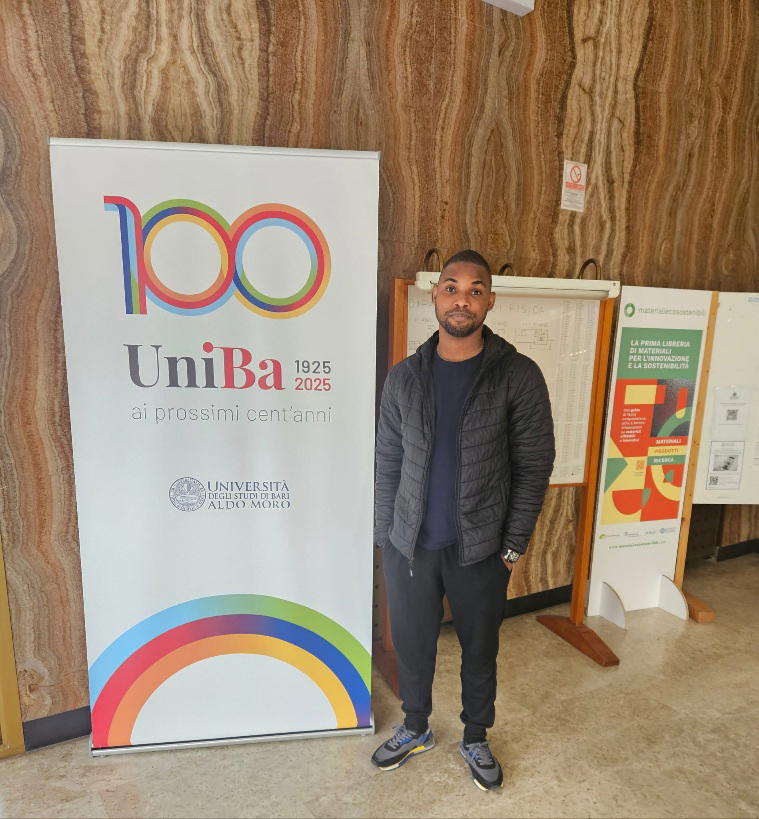
It was an honor to finally sit down with one of Nigeria’s most promising global talents in the quantum space – Mr. Tunde Kushimo, recipient of the prestigious European Quantum Flagship Fellowship at the University of Bari, Italy. Tunde is notably the first and only Nigerian – and African – to be awarded this highly competitive fellowship, aimed at advancing professional excellence in Quantum Science and Technology through a second-level master’s program.
Thank you for joining us, Mr. Kushimo, and happy World Quantum Day! Let’s begin with the basics – what exactly is the “Second Quantum Revolution,” and why should Africa, particularly Nigeria, pay attention?
Thank you for having me. The Second Quantum Revolution refers to the phase we are currently entering, where we no longer just observe quantum phenomena but actively control and engineer them. This has led to the rise of technologies like quantum computing, quantum communication, and quantum sensing.
These technologies will dramatically change how we solve complex problems in finance, cybersecurity, healthcare, energy, and many others. For Africa and Nigeria, this isn’t just about catching up; it’s about seizing a chance to participate in shaping the future of science and technology.
You’re currently enrolled in a professional master’s program in Quantum Science and Technology at the University of Bari in Italy. Tell us more about that and what it represents for you and for Africa.
I’m honored to be the first and only African recipient of the European Quantum Flagship fellowship to study in this program, but I am hoping that many others will position themselves to benefit from such opportunities as this. I received the highest fellowship based on my exceptional application and the strength of my prior work in quantum education research and curriculum development.
The program stands out because it’s not purely academic – it’s directly backed by industry and includes internship placements. The goal is to close the gap between quantum science and its applications, and to train professionals who can lead that transition. That’s exactly what Africa needs: education tied to real-world innovation.
Let’s talk about your current research – what are you working on now, and why is it important?
My current research lies at the intersection of theoretical quantum science and workforce education, and it’s guided by one critical question: How do we build an inclusive, scalable, and application-oriented quantum workforce? I’m working on developing research-informed, technology-enhanced, and scalable educational models that would bridge the gap between academia and industry. In addition, I’m working on benchmarking the skills required for quantum careers globally and mapping them to existing educational pathways. This research not only informs policy recommendations and curriculum development but also ensures that educational programs align with the real-world needs of the quantum industry.
The significance is clear: if Africa does not start preparing its workforce now, we risk being left behind in a field that will define the next generation of technological leadership. My goal is to build the models, tools, and roadmaps that will make African participation in the quantum economy both possible and sustainable.
Many people think of quantum science as extremely abstract and intimidating. Do you believe Nigerians can truly thrive in this field?
Absolutely. That perception is understandable, but it’s not accurate. Yes, quantum computing is complex – but so is any transformative field at the beginning. We’ve already seen how Nigerians have excelled in artificial intelligence and software engineering once the opportunities and mentorship became available. What we need is early exposure, structured learning pathways, and intentional policy support.
I’ve met many brilliant students and educators in Nigeria who would thrive in this field if given the chance. Quantum may be difficult, but Nigerians are not strangers to hard work or innovation.
What inspired you to go into quantum computing, and how would you encourage someone looking to transition into the field?
My motivation began as a physics educator. I saw the direction the world was heading and realized education would have to evolve. I didn’t want to just teach outdated concepts; I wanted to help shape what the next generation of learners would study. To those interested in transitioning: start where you are. There are now free and structured programs from renowned universities and industry partners, you can take advantage of those. You don’t need to be a physicist to get started. The field is broadening, and the future quantum workforce will be multidisciplinary, we need people from various backgrounds.
You’ve mentioned the importance of curriculum development and policy. What role do you think the Nigerian government should play in this space?
The government’s role is crucial. First, it should recognize quantum science and technology as a strategic national priority, just like renewable energy or digital economy. This could mean: Investing in pilot quantum education programs in universities and secondary schools, funding faculty training and curriculum development, creating incentives for private sector involvement, and most importantly, supporting research initiatives that bridge academia and industry, just as is done in Europe and the U.S. If Nigeria acts now, we could be among the first African countries to build a serious quantum education and innovation pipeline.
With everything you’re doing – PhD work in the U.S., fellowships in Europe, international collaborations – what does success look like for you?
Success, for me, is equipping the next generation of African quantum thinkers and doers. It’s not enough for me to succeed individually. My goal is to co-create pathways – whether through curricula, workshops, trainings, mentorship, or policy support that enable many more Africans to lead in this space. I want to look back and see that I was part of a movement that made quantum knowledge accessible, inclusive, and impactful for Africa.
That’s an inspiring vision. Any final words for young Nigerians reading this?
Don’t be intimidated by quantum. Get curious. Start learning. You don’t have to know everything before you begin. The future is quantum – and there’s space for you in it.
Thank you very much, Mr. Kushimo. We wish you continued success as you represent Nigeria and Africa on the global quantum stage.
Thank you, it’s an honor to serve and inspire.
Disclaimer
Comments expressed here do not reflect the opinions of Vanguard newspapers or any employee thereof.