…as Onuigbo calls for inclusion of climate change in school curriculum
By Chinedu Adonu
The Minister of Environment, Balarabe Abbas Lawal, has expressed concern over the effects of the ravaging climate change globally, saying Nigeria as a developing country is the worst hit.
He said Nigeria and Africa as a whole contributed the least, in terms of emission of greenhouse gasses into the atmosphere, but unfortunately, they were the worst hit by the impacts of climate change due to limited adaptive capacity to cope with the impacts.
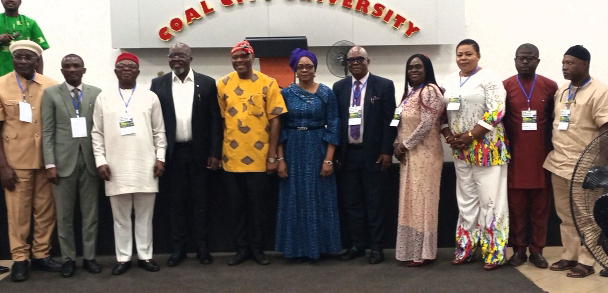
Hon Lawal represented by Mrs Uduak Ekpa made this known at Coal City University Enugu during the maiden climate justice and just energy transition in developing countries conferences in honour of Prof. Chinedum Nwajiuba’s 60th birthday.
Recall that Prof. Chinedu Nwaniuba was the former Vice-Chancellor, Federal University Ndufu Alike Ikwo in Ebonyi State and later elected as the Chair of the Board, West African Science Service Centre on Climate Change and Adapted Land Use (WASCAL).
He disclosed that climate justice and just energy transition is at the centre of the development discourse in Africa and globally because energy is a key driver of economic and social well being everywhere.
He declared that federal government in its effort to ensure a just and equitable energy transition, has launched the National Clean Cooking policy with the overall goal of providing sustainable adaptable forms of clean energy and low-carbon energy access to all Nigerians.
“Today’s event is uniquely special because we are honouring and celebrating an embodiment of excellence and leadership, an icon, a model and global masterpiece and a voice in climate change and energy space.
“Climate change is one of the most critical global challenges of our times with attendant environmental, cultural, political and socioeconomic consequences. This is evident as millions of vulnerable people face disproportionate challenges in terms of extreme events, health effects, food, water, and livelihood security, migration and forced displacement, loss of cultural identity, and other related risks.
“These disproportionately far-reaching consequences of climate change call for the urgent need for climate justice and just energy transition.
“Government on its part will continue to create enabling environment for all, and collaborate with relevant stakeholders, NGO, CBO and international organizations in ensuring equitable access to resource and u of energy sources, strengthen energy infrastructure, create public awareness and education, build capacities and skills, engage community, create green jobs and address security concerns in meeting its national commitment. To this end, the Ministry is open for collaboration and partnership,” he said.
Former House of Representatives, Hon Sam Onuigbo delivering a lecture with a topic, “Climate change Act: Implications for climate action in Nigeria, called for inclusion of climate change in school curriculum to ensure early awareness and understanding to be able to tackle it.
He declared that legislation would play a critical role in tacking the climate change consequences in the country if properly enforced.
“Parliamentarian can play a crucial role in addressing this challenge, ensuring government accountability, and effectiveness as well as providing a vital knowledge link with constituents, both aspects being important in ensuring a country’s response and resilience to climate change. Parliamentarians also have the opportunity to promote the voice of citizens at home and during international negotiations.”
“This aptly captures the critical role of legislators in the battle against climate change. Without legislators making the laws, providing oversight, engendering knowledge sharing with their constituents, and generally holding everyone accountable, no country will effectively meet its climate change goals and obligations.
“It is therefore appropriate to state here that, aware of the importance of the role of legislation for climate change, the government of the United Kingdom set the ball rolling in 2008 with the first standalone climate change legislation. Other countries of the world followed suit,” he said.
Disclaimer
Comments expressed here do not reflect the opinions of Vanguard newspapers or any employee thereof.