By Kenneth Oboh
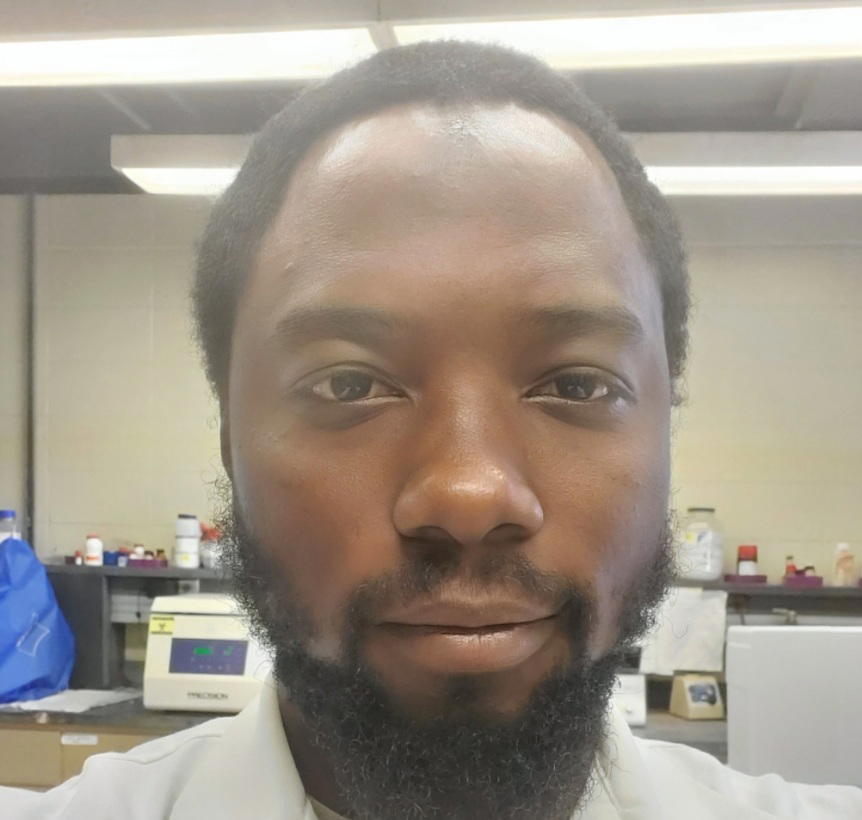
Hammed O. Faleke is a researcher focused on advancing disease diagnostics, with a particular emphasis on cancer and neurodegenerative diseases. From studying the therapeutic potential of medicinal plants in Nigeria to developing functionalized carbon dot nanoparticles at Texas Tech University, his work bridges phytomedicine and nanotechnology. Faleke’s goal is to create innovative, accessible tools for early detection and management of complex diseases, combining natural product insights with cutting-edge technology.
What was the focus of your research on phytomedicine in Nigeria?
My research in Nigeria centered on the therapeutic potential of medicinal plants and polyherbal formulations commonly used in traditional medicine. I explored their biochemical and pharmacological properties, particularly their roles in combating oxidative stress, inflammation, and toxicity. For example, I studied the antioxidant and cytoprotective effects of the methanol fraction of Ficus mucoso and its ability to mitigate iron-induced oxidative damage in Drosophila melanogaster. Additionally, I investigated polyherbal remedies for managing inflammation and neurotoxicity, analyzing their bioactive components through methods like GC-MS and in vivo models.
How did your work in Nigeria prepare you for your current research at Texas Tech University?
My phytomedicine research in Nigeria provided a strong foundation in biochemistry, oxidative stress mechanisms, and the development of therapeutic interventions. This experience translated seamlessly into my current work on functionalized carbon dot nanoparticles for disease diagnostics. The skills I developed in Nigeria, including designing biochemical assays, evaluating toxicity, and employing Drosophila as a model organism, play a crucial role in my current research. Additionally, my understanding of bioactive compounds and their interaction with biological systems inspired me to apply similar principles when working with nanoparticles.
How does your current research reflect your transition and build on your previous experience?
At Texas Tech, my research focuses on developing carbon dot nanoparticles to detect and understand oxidative stress as a precursor to cancer and neurodegenerative diseases. This work builds on my expertise in oxidative stress and redox biology, which I gained during my phytomedicine research. The principles I learned in natural product chemistry—such as how bioactive compounds modulate biochemical pathways—inform my design of nanoparticles for specific biological interactions. Furthermore, my experience using Drosophila as a model organism is directly applicable to evaluating the efficacy of carbon dots in vivo. For instance, my current work involves exploring how carbon dots localize in specific cellular compartments to signal oxidative stress. This approach mirrors my earlier work, where plant-derived compounds were assessed for their ability to protect cells against stress-induced damage. The difference lies in the precision and versatility that nanotechnology provides, enabling me to target and monitor molecular events with unparalleled accuracy. By combining the natural principles of biocompatibility and antioxidant mechanisms with advanced synthetic tools, I am advancing a holistic approach to disease diagnosis and management.
What challenges did you face during this transition, and how did you overcome them?
Transitioning from phytomedicine to nanotechnology presented several challenges. The most significant was adapting to the technical demands of materials science, which was a departure from my previous focus on natural products. I needed to learn the chemistry and physics behind nanoparticle synthesis and the advanced tools for their characterization, such as fluorescence spectroscopy, dynamic light scattering, and electron microscopy. To overcome these challenges, I relied on the supportive environment at Texas Tech, where I could access cutting-edge facilities and receive mentorship from experts like Dr. Dimitri Pappas. I also immersed myself in self-study, attending workshops, webinars, and conferences on nanotechnology to accelerate my learning. Collaboration was another key strategy. By working alongside peers with expertise in nanoscience, I gained hands-on experience and a deeper understanding of integrating my biochemical background into this new field. Moreover, I drew heavily on my resilience and adaptability, traits developed during my time in Nigeria, where I often had to innovate with limited resources. These skills proved invaluable in navigating the steep learning curve associated with interdisciplinary research.
How do you integrate principles of phytomedicine into your current research?
Although my focus has shifted to synthetic nanoparticles, I continue to draw inspiration from phytomedicine. For instance, I am investigating the possibility of incorporating plant-derived compounds into nanomaterials to enhance their biocompatibility and efficacy. The mechanisms through which natural products exert antioxidant or anti-inflammatory effects inform how I design nanoparticles to interact with cellular pathways. This interdisciplinary approach allows me to bridge traditional and modern biomedical strategies. In practice, this means designing nanoparticles that mimic the functional properties of plant-derived compounds. For example, carbon dots can be functionalized with antioxidant molecules inspired by phytomedicine to improve their therapeutic potential. Similarly, my knowledge of how natural products interact with oxidative stress pathways helps me more precisely engineer nanoparticles that target these pathways. By combining the best aspects of both fields, I aim to develop tools that are not only effective but also sustainable and accessible.
How do you envision your research impacting healthcare and science?
My goal is to develop affordable, sensitive diagnostic tools for early detection of diseases, particularly cancer and neurodegenerative diseases. By combining the accessibility and therapeutic insights of phytomedicine with the precision of nanotechnology, I aim to create solutions that address global and local healthcare challenges. For instance, the knowledge I gained in Nigeria equips me to design diagnostic tools that are scalable and cost-effective for underrepresented populations, potentially transforming healthcare outcomes on a broader scale. I envision my work contributing to the democratization of healthcare technology. Early diagnostics play a crucial role in managing diseases like cancer, Alzheimer’s, and Parkinson’s, where intervention is most effective in the early stages. By integrating the principles of biocompatibility and affordability—values I hold from my time working with phytomedicine—I hope to create diagnostic tools that are accessible in low-resource settings. This approach addresses global health disparities and aligns with sustainable development goals in healthcare. In the long term, I see my research paving the way for hybrid solutions that merge nanotechnology and natural product science. Such solutions could offer targeted therapies that minimize side effects while maximizing efficacy, revolutionizing how we approach complex diseases.
What advice would you give to researchers transitioning into a new field?
Transitioning fields can seem daunting, but it’s a rewarding experience. I would advise researchers to view their foundational expertise as an asset that offers a unique perspective. Be open to learning new techniques and seek mentorship from experts in the field you’re transitioning into. Don’t hesitate to collaborate across disciplines—many groundbreaking discoveries happen at the intersection of fields. Finally, maintaining a sense of curiosity and resilience is crucial for navigating the challenges of interdisciplinary research. Beyond technical skills, I recommend focusing on the bigger picture—how your unique background can address current challenges in the new field. For me, bringing a phytomedicine perspective to nanotechnology has allowed me to ask questions and explore pathways that might not have been obvious otherwise. Transitioning fields isn’t just about acquiring new knowledge; it’s about integrating diverse ideas to create innovative solutions.
What’s next for you in this exciting journey?
I’m looking forward to further exploring the applications of functionalized carbon dots, particularly in disease diagnostics and therapeutics. My ultimate goal is to combine nanotechnology with bioactive compounds derived from natural sources, creating innovative healthcare solutions. I also hope to mentor aspiring scientists and advocate for research that bridges traditional knowledge with modern science to address global health challenges.
Disclaimer
Comments expressed here do not reflect the opinions of Vanguard newspapers or any employee thereof.