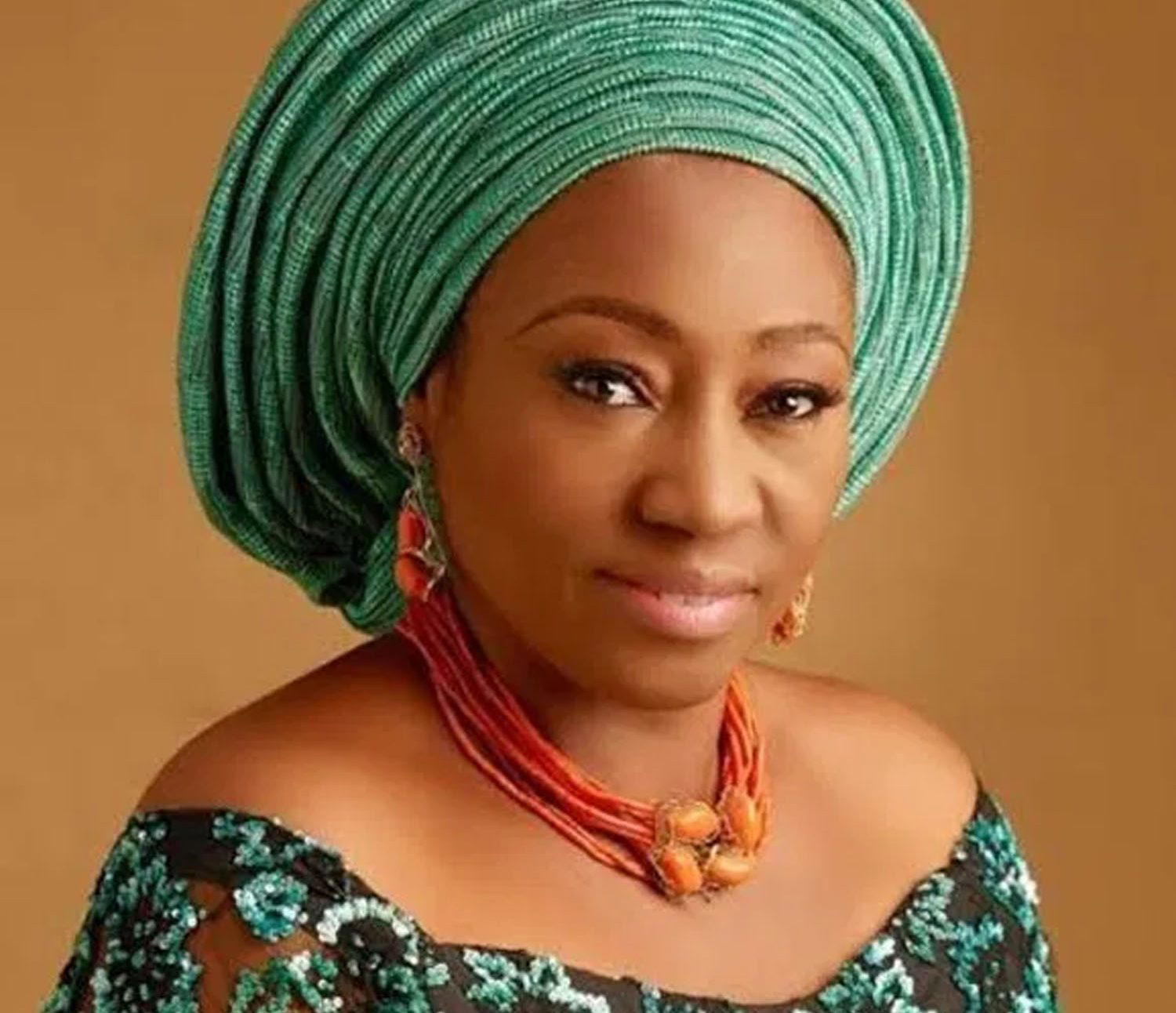
Erelu Bisi Fayemi
By Funmi Ajumobi
Erelu Bisi Adeleye-Fayemi, a gender activist, writer, columnist and policy advocate, is 60 today. In this interview to mark the milestone, the Ekiti State former First Lady speaks on what it means to her to join the ‘diamond club’, her time in Ado-Ekiti Government House, the home front, activism and advice for the younger generation among other issues. Excerpts:
Your Excellency, congratulations on your new age. At 60, the striking thing about you is that you look refreshingly young. What is the secret?
Thank you very much, I am flattered. It is all God’s grace. I have seen women who are much older than me looking really great for their age, and I learnt from them. I watch what I eat, I take care of my skin and I do not tolerate negative energy.
How do you feel joining the ‘diamond club’?
I feel blessed, joyful and grateful.
You have been an advocate for women’s rights and development issues. You secured an amendment to Ekiti State Gender-Based Violence Prohibition Law, 2011 (revised 2019) to ensure stringent punishments for perpetrators of rape and other social scourges against women and girls just to mention a few of your achievements. What is the motivation? And at 60, what is your next vision?
Ekiti State passed the Gender Based Violence Prohibition law in 2011. It was revised in October 2019 in order to domesticate the Violence Against Persons Prohibition Act (VAPP) as well as to respond to emerging issues in the fight against Sexual and Gender Based Violence.
Governor Kayode Fayemi was a relentless champion of this work and he made it clear that Ekiti State would have zero-tolerance for SGBV. We also had a great Attorney-General, Hon Wale Fapounda (SAN) who was at the forefront of shaping the laws and implementation strategies. With the amended law in place, the State Government decided to focus on not only community ownership and education for prevention of GBV, but the rights of SGBV victims as well. A survivor-cantered approach means that you will have to put a range of systems in place to turn to enable victims become survivors.
The government established a model Sexual Assault Referral Center at the Ekiti State University Teaching Hospital, as well as a Transit Home and Vocational Center for women and girls in distress. There was also a SGBV Fund to enable survivors rebuild their lives. For me, the motivation was to respond to the urgent needs of women and and girls who were suffering from various forms of violence. This work continues with the political will of Governor Biodun Oyebanji and the efforts of the First Lady, Dr Olayemi Oyebanji. My vision is for this work to continue at national level and in other states.
Currently, 60 is the retired age for many. Are you going to retire?
You can retire from a job, you don’t retire from your passions. I will keep doing the things I am passionate about – advocating for the rights of women and children, writing and leadership development.
Tell us the best moments of your 60 years on earth.
There have been many. Marriage, motherhood, a fulfilling career and serving my people.
You are known to be a strong woman behind your husband, His Excellency, former governor of Ekiti. What is the secret?
There is no secret to it. My husband and I met when we were in post- graduate school at the University of Ife (OAU) in 1986. We have grown together and we share the same values and principles. Our relationship is grounded in mutual respect and support. His struggles are my struggles
and my worries are his concern. That is how a marriage is meant to be.
As a writer, is there any book written already to celebrate your 60th birthday? Can you give us an insight into the thrust of the book?
I wrote an autobiography, ‘Speaking above a whisper’ for my 50th birthday in 2013. For my 60th bithday, I am not publishing another autobiography but I have a collection of Loud Whispers essays which is called Demand and Supply. I also pulled together all my short stories and poems into one volume, ‘A Tray of Locust Beans’.
You are credited with raising the bar of political participation for Ekiti women. How was the battle fought and won?
Yes, I have been an advocate for the inclusion of women in leadership and governance. Women are the ones who fuel party machinery but get the least benefits for their labours. With my modest efforts, the political landscape in Ekiti State has changed for the better. This was achieved through political will of my husband the Governor, mobilising women, economic empowerment and capacity building, collaboration with the party leadership, advocacy with local communities and developing messages that resonated with people. I will not say the battle has been won, but a lot of progress has been recorded.
In 2007, there were zero women in the Ekiti State House of Assembly. In 2011, when I started to push for women (together with the late Deputy Governor Mrs Funmilayo Olayinka) we saw four women in the Assembly. In 2019 we got four again and in 2023 we have six, the highest in the country. By design and accident, Ekiti State currently has a female Deputy Governor, female Secretary to the State Government and female Speaker, as well as other key positions.
At what moment can Nigerian women say they have achieved gender equality?
That moment is a long way off. I however believe we can lay the foundation for it. For Nigerian women to achieve gender equality, there have to be laws and policies in place to guarantee this, they have to be implemented, there has to be equal access to education, training, capital, technology and other resources, and women need to participate fully and equally in decision-making processes. In a world where there is gender equality, there is zero tolerance for violence against women, discriminatory practices and negative gender stereotypes. According to the World Economic Forum, it would take 108 years to close the global gender gap. The poor performance of very large countries such as Nigeria and many others will continue to make this problematic to achieve.
How would you describe your feelings during the time your husband’s mandate was stolen and the day it was restored by the Court of Appeal three and a half years later in 2010; the day he lost re- election bid in 2014 and the day he won his re-election in 2018?
My father used to tell me that politics can take you to the greatest of heights and it can also cause you to crash when you least expect it. It was not easy to live through but I knew we had to have hope and persevere. You go through this see-saw of emotions every time you have a win or a loss and it can be quite draining. It is however important to remember that it is when you are alive that you can win or lose something.
What informed your choice of Gender Studies at Master’s level and a career in the field of women development?
I wanted to know more about gender, power relations and the links with development. It was an opportunity to familiarise myself with the literature, theories and practical applications of feminism and gender. It was a new area for many of us black women at the time and I am glad I did it.
What do you want the younger generation to learn from you as you clock 60?
Education is very important, as well as a sense of purpose and direction. Seek out those who can add value to your life and not those who are only after clicks and likes on social media. Good manners are important, they will get you through the door and keep you in the room. Read widely.
Have an open mind. Provide a wrapper for others when you are in a position to do so.
Disclaimer
Comments expressed here do not reflect the opinions of Vanguard newspapers or any employee thereof.