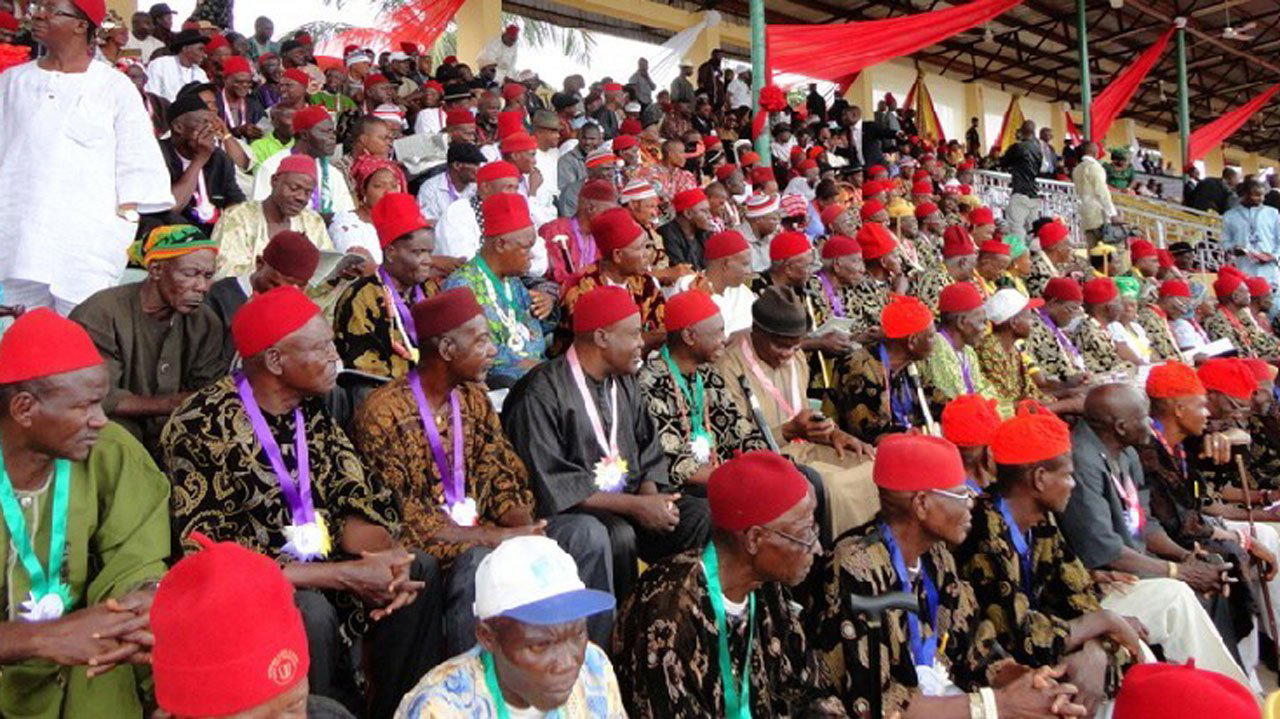
File photo for illustration.
By Anayo Okoli, Vincent Ujumadu, Chimaobi Nwaiwu, Ugochukwu Alaribe, Steve Oko, Chinonso Alozie & Emmanuel Iheaka
IN the past, self-help communal initiatives played a major role in galvanizing development in Igbo land. Through that, many communities witnessed quantum development in the provision of good roads, potable water, building and equipping schools, hospitals, building of town halls, electricity, markets, churches, up to granting of scholarships to bright indigent students, to as much as university level. Ndigbo, then never depended on the government to develop their areas. However, this spirit of communal effort seems not to be strong again and stakeholders attributed this to a number of factors.
In many communities in Anambra State, most of the infrastructure being enjoyed by the people were provided through self- help. In the 1970s and 1980s, virtually all communities were competing with one another in attracting various projects to their areas. Indeed, apart from the mission schools and hospitals, as well as few ones owned by government, most of the secondary schools in almost all communities in the state were established through self help. The competition among villages and towns was so much that the state government was relying on these communities to execute projects and hand over to it.
For instance, the popular Madonna University, Okija, was originally a Teacher Training College built by Umuogu village in the town and when teachers colleges were scrapped by government, the village handed the school over to Rev. Fr. Emmanuel Edeh for the establishment of the university. Also, the General Hospital, Okija was built by another village, Uhuobo and handed over to government. Similarly, over 80 per cent of secondary schools in the state were built by communities and handed over to government. Also, almost all communities in the state attracted electricity projects to their areas and even bought transformers to energize the supply.
Chief Godson Nnadi attributed the drop in the zeal for communal development to economic downturn. He said that many people are still enthusiastic to help their communities, but they lack the funds to back it up.
“Many communities still lack some social amenities, but the economic situation in the country does not give the people the opportunity to contribute in the funding of projects in their areas”, he explained.
Politics, corruption part of the reason—Obasi
Chief Jerry Obasi said that politics, corruption and selfishness are factors behind the huge decline in the volume of communal developmental projects in the South-East region. According to him, the integrity of candidates for town union or kingship positions was a vital factor in the election of town union leaders in the past. Such important criteria, he noted, have been ignored in most communities because of corruption and politics as doubtful characters now occupy the positions, which in most cases, do not allow some philanthropists to entrust such people with their money for any project.
Most community and town union leaders, he claimed, are corrupt and consider their position as an opportunity to enrich themselves and their cronies.
“The main factor responsible for the high reduction in the rate of communal projects in the South- East zone is corruption and politics. Most town union leaders are corrupt. In the olden days, integrity of candidates for town union positions was highly considered before anybody was elected to lead the community, especially for the town union president and traditional ruler; but such considerations have been ignored and no longer the case in most communities.
“Today, funds earmarked for community projects are always embezzled and such projects stalled. People who embezzle community funds are not even punished because their political associates and cabal in the communities would stand to protect them. The election of questionable characters as traditional rulers has aggravated the problem. Some traditional rulers now collude with town union leaders to embezzle community funds. State governments, on their part, also impose men of questionable characters as town union presidents and monarchs because of political interest. These are some of the things that have dampened the self-help spirit of the people.
“Politics has brought division between supporters and non-supporters of political parties in most communities. Because of political interests, you may even see some people in the town union supporting those who had misappropriated funds. Igbo people are noted for integrity and industry. Efforts must be made to address the situation to revive the gesture that helped Ndigbo a lot.
Blame avarice, self-centeredness among new Igbo generation—Ariwodoh
The Chairman, Abia State Elders Consultative Forum, Archbishop Princewill Ariwodoh attributed the loss of interest in communal self- help development to avarice and inordinate ambition for wealth acquisition among young Igbo generation. He noted with disgust the mad chase for wealth and personal accomplishment which has made some Igbo youths to become self-centered and seek only after those things that would benefit them alone.
According to the cleric, the new generation of Igbo, in their quest to be the only cocks crowing in their communities, would not mind sacrificing anything that could benefit others at the altar of personal aggrandizement.
“I don’t know where the present generation of Igbo is coming from. Some of the people do not want anybody to rise above them. Some of them are extremely self-centered and don’t care about others,” Ariwodoh said, and called for re-orientation and sensitization of the people to re-activate the spirit of communal efforts and brotherhood among the Igbo.
Traditional rulers to blame—Akwukwuegbu
The National Chairman of Traditional Prime Ministers Association of Nigeria and the Traditional Prime Minister of Ibeku Umuahia ancient kingdom, High Chief Uche Akwukwuegbu, blamed “selfish ambition of some traditional rulers who place their personal interests above communal interests.” He, however, believes that the spirit of communal efforts is still very much alive among the present generation of Ndigbo.
“I don’t think the spirit of communal efforts has left Ndigbo. Go to various communities today, you will see that our women are embarking on various developmental projects during their August meetings. For instance, here in Amuzukwu, our women just had N30 million fundraising to complete their town hall project. Some Igbo today still engage in empowerment programmes to assist the indigent ones.”
He noted that the reason it appeared that some communities do not engage in community development projects is that their traditional rulers prefer awarding chieftaincy titles to the highest bidder to enrich themselves instead of turning in the proceeds for community development projects.
“One problem I know we have is the selfish tendency of some traditional rulers who want to dominate the role of presidents-general and town unions. Instead of collaborating with presidents- general for community development projects, they are more interested in awarding chieftaincy titles to people because whatever money that comes through that goes into their private pockets,” Akwukwuegbu said.
Kidnapping is destroying self-development in Imo—Stakeholders
Stakeholders who spoke to South-East Voice in Imo State said that activities of kidnappers have made wealthy persons in the society who want to bring social amenities to their communities to think twice as the gesture could make them the targets of kidnappers.
One of them cited an example of philanthropists in Aboh Mbaise and Isiala Mbano who were kidnapped sometime after spending a lot of money for various programmes in their villages.
“I am not from this side, but in this area, there are so many people who will do many good things for their community but the fear of being targets of bad boys has become a problem. Not only here, but in many other communities. You see a wealthy man and he will be hiding and would not want people to know him just because he does not want to be kidnapped or killed. It is a big problem here.
“Do you know that even in the church, people don’t like mentioning their name when making financial donations? They are afraid that some people are in the church to get information and give to kidnappers. In the end, they will have a share in the proceeds of kidnapping,” a resident of Avu who gave his name as Chief Emma Ibeh said.
It is still active in Oba —Regent
But the Regent of Oba community in Idemili South Local Government Area, Anambra State, Prince Noel Ezenwa, said that self-help spirit is still very active in Oba, insisting that it is indispensable in Igbo land.
Prince Ezenwa who spoke to SEV, on a day his community had a meeting and resolved on doing some repairs on their roads said: “We don’t have any solution other than self -help in our developmental projects, programmes and solving some of our problems. However, if they say self-help projects are declining in Igboland; I don’t agree with you that the Igbo have lost that aspect of their life, but it will be attributable to the economic situation in the country, which will return when it improves.
Disclaimer
Comments expressed here do not reflect the opinions of Vanguard newspapers or any employee thereof.