By Osa Mbonu-Amadi, Arts Editor
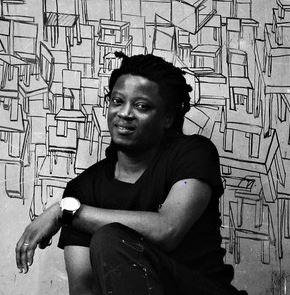
BOB-NOSA Uwagboe, Habeeb Andu and Uche Uzorka are artists whose strokes, shades and lines on canvas take a spot on the landscape of activism as politicking peaks towards the much-anticipated 2023 general elections in Nigeria.
Titled: Twenty Twenty-Three, the artists’ group exhibition of paintings, which opens on April 30 and continues till May 21, 2022 at AMG Projects, 24 Rasheed Alaba Williams Street, off Admiralty Way, Lekki, Phase-1, Lagos, challenges every patriotic Nigerian to add value to their agitation for a better country.
For the artists, participatory democratic culture is the energy that drives desired change for a better country. With the exhibition, AMG Projects asserts its platform aimed at facilitating broader access to the art world for emerging artists and art leaders in Africa. The artists are gathered in Twenty Twenty-Three, coming from a rich background that, deliberately or otherwise, prepared each to use their art in critical engagement.
Uwagboe is a multidisciplinary artist whose work, early in his career, has inspired him to establish Protest Art Studio, in Lagos. After picking a joint grand prize of National Art Competition, NAC, 2011, organised by African Artists Foundation, AAF, Uzorka launched his career into mainstream art circle with a solo exhibition titled: Line. Sign. Symbol. For Andu, it is a steady progression as one of the new generation expressionists, having been mentored by the late Ben Osaghae and winning Art X Prize, 2017, gave him an opportunity for his debut solo exhibition in 2018, from where his career took a new leap.
- READ ALSO: Dialogue between artist’s timeless pieces
Among the artworks to be on display in the Twenty Twenty-Three exhibition are quite some themes that speak to everyone’s conscience in the struggle for a just society. From Uwagboe comes Stepping Forward, (acrylic spray paint on textured canvas, 137 x168cm); Andu’s Is your friend (Checkpoint), done on acrylic and newspaper cut on canvas, 63 x 72 inches; and Uzorka’s Desert Stations: The state of Austere (acrylic on canvas), among others.
In its gallery statement, AMG Projects noted that artists, across cultures and generations, were known to have contributed to issues that affect the socio-political directions of their environment. In Twenty Twenty-Three, Uwagboe, Andu and Uzorka, who have “well-documented history of pushing boundaries through work that is deeply rooted in activism,” according to AMG, will attempt to answer quite a number of questions within the context of agitation towards a greater Nigeria.” The artists communicate their point of view about everything we are currently experiencing, including the drama of every four-year election cycle, among others.
The gallery argued that art has the antecedence of not being in love with elements of oppressive characters who survive on injustice and inequality. “The personal life and work of the artist transcends the individual and speaks to a larger audience by producing knowledge or simply raising awareness,” curator, Jide Ogunsanya explained. “People shape the cultural systems that determine their lives and citizenship is defined by the creative use of one’s voice, body, mind and ultimately, one’s vote.” And adding practical value to activism, particularly at a period considered as most crucial “in our history”, the artists are calling on everyone to join them in Twenty Twenty-Three “to dig deeper, get inspired and find the courage to act: go and get your PVC.”
Excerpts from AMG
Project’s Gallery Statement:
“Best known for his iconic portrayal and depiction of contro-versial subjects in a satirical manner, Bob-Nosa Uwagboe’s art fearlessly defies conventional boundaries and political correctness. Through his work, he continues to comment on a wide array of issues ranging from Human rights to elitism and the role of religion in the decay of modern-day African societies.
“In a similar manner, Uche Uzorka creates narratives that define social issues. Using various media in his work, he explores the domino-effects from systemic breakdown. Politics, the environment, education and corruption are some of the recurring themes in his critically acclaimed body of work.
“Stemming largely from personal experience, Andu’s daring approach to creating emotionally charged imagery makes him an important commentator on the afflictions endured by Nigerians on a daily basis. Through a diverse array of mediums, he constantly shines the spotlight on topics from unemploy-ment to police brutality while finding a way to connect the dots from one end to the other.”
Disclaimer
Comments expressed here do not reflect the opinions of Vanguard newspapers or any employee thereof.