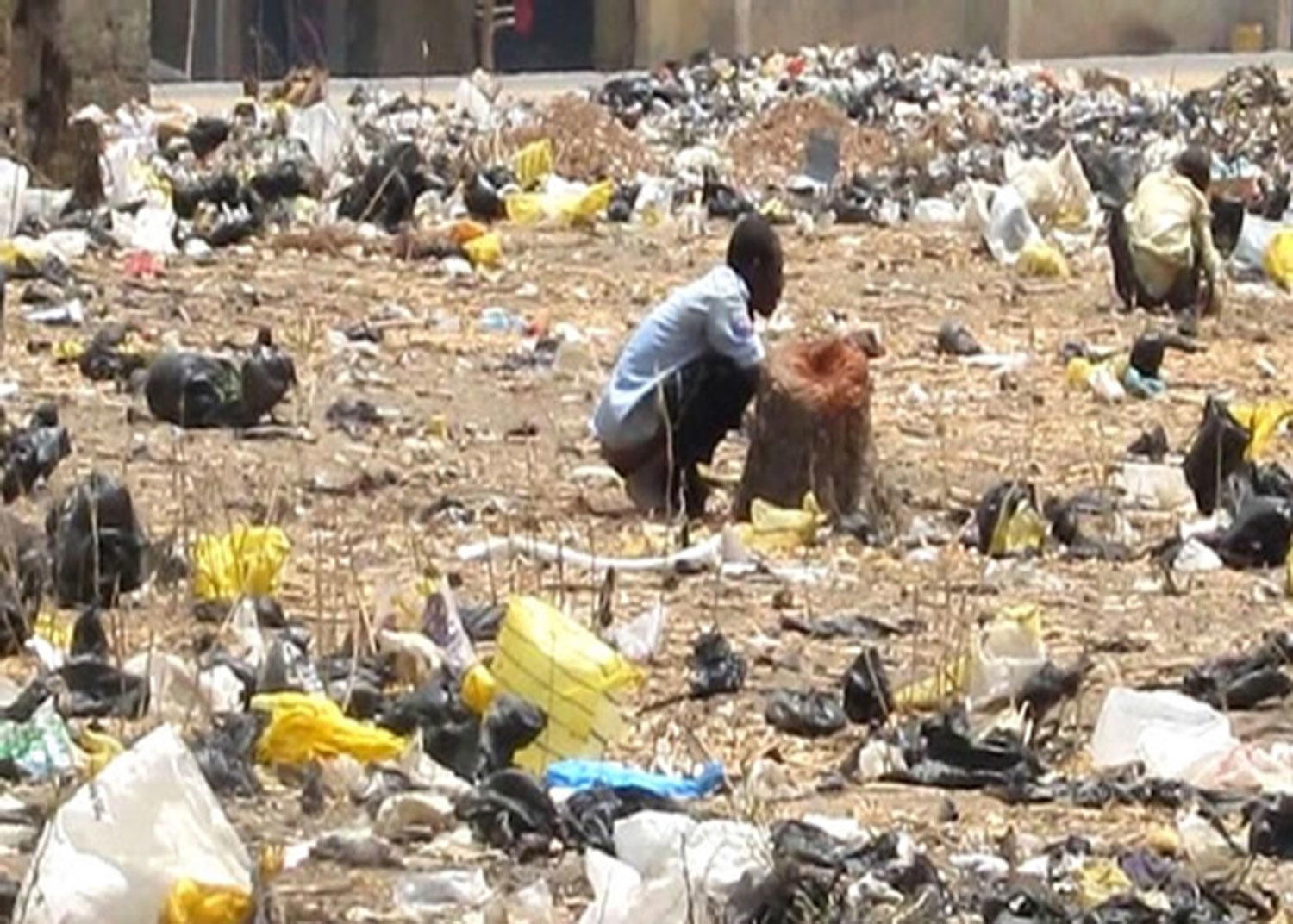
File image
Says 47m Nigeria currently into practice
As African Water Ministers move to provide direction
open defecationBy Gabriel Ewepu – Abuja
With barely five years ahead as a target to end Open Defecation, ODF, in Nigeria, the Federal Government has made it clear that it is not its responsibility to build toilets.
This was disclosed by the representative of the Federal Ministry of Water Resources, Director of Water Quality Control and Sanitation, Emmanuel Awe, at the recent African Sanitation Policy Guidelines, ASPG, Country Stakeholder Consultation Meeting, held in Abuja.
Awe explained building toilets in public places like markets, schools, and primary health care centre remain a constitutional responsibility of the local government.
He also said the Federal Government can only intervene when and where necessary.
READ ALSO: Open Defecation: UNICEF supports 10 LGAs in Kano
He added that households and other privately owned property including schools and malls should be provided with toilets by their owners, but the government can only intervene and demonstrate what the state and local governments, and private sector should do in toilet construction.
He said: “Federal Government does not have communities, but all these communities are in the States and local governments. For building toilets in public places the federal government can only intervene, the responsibility of building toilets solely lies with the local governments.
“All we are doing is to intervene and demonstrate that it is doable, and the states are to ensure that all their local governments are empowered enough to build public toilets, build toilets in their schools, primary health centres, and it is not our responsibility to build toilets.
“Equally important is the fact that Federal Government has decided that it will not build toilets for householders; what that means is if you have your house the family should be able to build toilets for the occupants, except in a critical situation where the head of the household seems not be able to avoid it there can be other assistance coming from the private sector or their neighbours, community raising funds to assist such a household.
“But by principle or policy, the government will not go to households or each house to build toilets. The government can only build toilets in public places, like schools but government schools and not private schools, also build for health places, markets, car parks, and others.
“Government can build and transfer to the private sector to manage. It is not entirely true that the government will not build toilets. We expect in the next five years all these people, householders and government will build not less than 10 million toilets.”
According to him (Awe) there are sanitation policies that exist presently which the government targets and prioritises, and very soon all the policies that exist in different ministries will be harmonized into a single document that will enable all development partners and agencies to have access in order for them to know where exactly to intervene in the water, sanitation and health sub-sector.
However, he made it known that 47 million Nigerians are practicing Open Defecation, and it gives the government serious concern about it, but efforts are made to eradicate the practice by 2025.
“Presently 26 states have keyed into the PEWASH programme and we believe the rest states will key in.
“Federal government also recently encouraged State governments to have their own roadmap to address the issue of open defecation in their states.
“We have a national roadmap for ending open defecation in Nigeria by 2025 and if we are to work with that means we have just five years to address the issue of open defecation in Nigeria, and time is fast running.
“Presently we have 47 million people in the practice, but we are encouraged by the fact that India removed 550 million people within five years. So we believe it is possible to remove 47 million people from open defecation within the next five years.”
Meanwhile, leaving no stone unturned, the African Ministers’ Conference on Water, AMCOW, have waded into action to ensure African countries have their water, sanitation and hygiene challenges tackled through the Sustainable Development Goals, SDGs, and to intervene where necessary.
This was made known by the Executive Secretary, AMCOW, Dr. Canisius Kanangire, while explaining the vision of the organization, at the consultation meeting.
Kanangire said: “African Ministers Council of Water, AMCOW, has been mandated by the African Union, AU, to provide leadership, policy directions and advocacy on the management and development of water resources and provision of sanitation services.
“And that mandate was given mainly with the target of reaching good and sustainable services by the horizon 2025. That was the Africa Water Vision 2025. But meanwhile, there were also other high-level commitments that came in like the Sustainable Development Goals, SDGs, which put the horizon 2030 and which aims now at providing those services to all, and we have other commitments, the African continent, and I can cite the African wants, then African Agenda 2063. We are contributing to all those high-level commitments.
“Now, when we look at sanitation landscape one of the first issues we noticed in that more so, African countries are still working on policies, which are guided by Millennium Development Goals, MDGs, objectives, and targets, and yet the MDGs was ended, the horizon was completely evaluated in 2015 and we moved to the SDGs.
READ ALSO: Enugu to end open defecation with public conveniences
“The SDGs are targeting halfing the services, the number of people who are not accessing those different basic services and here the SDGs are more ambitious we target everyone and should leave no one behind.
“So the policies we are promoting today should be the one with the right target with the right objectives and because of that they should develop the factors to make ensure they succeed, and those factors would be on the right institutions, mechanisms, financing, capacity, and others”, he stated.
According to the AMCOW boss changing the strategy and developing a guideline will provide directions to all the countries in the same time would be the right way because many countries can follow the guidelines and adopt, whereby move from the guideline to their individual policies, and in five years or less AMCOW will reach out to all the countries and transform the policy landscape of the whole Africa.
“And if we do that we will manage to have in each country of this continent a policy which put together and expand to other core elements aligned to the SDG period and that will be something which will certainly transform the way we address key challenges that we have, the way we put together the means and respond to the political will and many cries from the communities”, he said.
Disclaimer
Comments expressed here do not reflect the opinions of Vanguard newspapers or any employee thereof.