By Yinka Odumakin
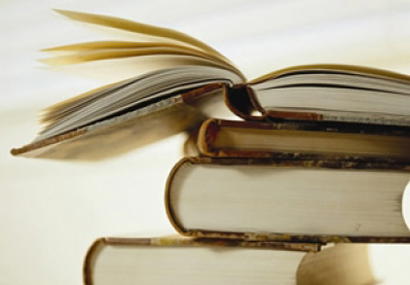
Reading booksWHAT appears to be an obituary of literate Nigeria was pronounced on Saturday when one of the greatest men of letters Nigeria ever produced, Prof. J.P. Clark, asked a pregnant question. It was over lunch at the country home of his elder brother, Chief E.K Clark in Kiagbodo, Delta State shortly after the end of the maiden convocation of Edwin Clark University, ECU.
It was an impressive ceremony I attended in dual-capacity. The first was as an official of Southern and Middle Belt Leaders Forum where Chief E.K Clark is our chairman while the second was standing in for former President Goodluck Jonathan to receive the first Honorary Doctorate Degree to be conferred by the University.
READ ALSO:Drama as Ooni hosts Eze Nri at Olojo festival(Opens in a new browser tab)
We had retired to the elder statesman’s home for lunch after the ceremony. As we were having lunch on a table shared by Prof. J. P. Clark, Prof. Anya O. Anya, Prof. Ihechukwu Madubuike, Prof. Oladapo Afolabi, Dr. Pogu Bitrus, Gen. I. B. M. Haruna (retd), Gen Zamani Lekwot (retd), Ambassador Godsknow Igali and yours dearly. As we discussed the state of the country, Prof. Anya kept making copious references to his lectures, interviews and articles in recent time. At a point Prof. Clark cut in and said “I can see that you still write regularly but who reads?”
Respected intellectual
I lost appetite immediately the respected intellectual dropped that bombshell as it brought home to me clearly that I am citizen of a dead society where reading has become an alien culture. Prof. Clark has read all his life and has taught thousands of students to read. I started hearing of him from primary school and started reading him from secondary school through university.
Somebody on the table noticed that my appetite has dropped and could not resist asking why I was eating the way I was doing. As we departed the table, two gentlemen, a driver and police escort – had to take me from Kiagbodo to Yenagoa. I did not exchange one word with them as I was lost in thought throughout the journey.
My mind went back to the days in this country when you could hardly go through any major street in our towns and cities without coming across a major bookshop. The scent of freshly printed books was so fascinating in those days as we raced through the shelves to check available publications right from our secondary school days. We got to the university and got immersed in the forest of books. The University of Ife (now Obafemi Awolowo University) had a fantastic library that was a pride for scholars.
In fact, the use of library was a compulsory course for all students that you risk non-graduation if you didn’t pass it. Those of us sold to radical tradition went to look for books outside the university, especially from the home of late Comrade Ola Oni in Ibadan. We became so full of knowledge that we engaged our teachers Fanon for Fanon and Cabral for Cabral. I will always remember an incident in Ife in 1986 which was part of Prof. Segun Osoba valedictory lecture when he pulled out of Ife.
The Nigerian Institute for Policy and Strategic Studies had set up a panel under Gen. Charles Ndiomu to go round the universities to look for causes of students unrest. They mistakenly made Ife their first port of call. I represented the students union at the hearing while Prof. Osoba, Prof. Omotoye Olorode and Dr Idowu Awopetu came in for ASUU.
I addressed the panel for about 45 minutes without holding a sheet of paper. When it was the turn of ASUU, my teachers just adopted my submissions and added only a few remarks. Ife was the first and only place the panel visited to get the views of all universities in Nigeria.
I recall also the Justice Akanbi panel set up after the ABU crisis of 1986. The panel was given a serious tutorial by one of our colleagues in Ife, Mr. Kola Odetola. They were spell-bound. By the time the panel arrived UNILAG and one students leader was stammering, Justice Akanbi told him: “Why can’t you borrow a leaf from this brilliant student in Ife, Kola Odetola.”
It is sad to now go to the same schools we went to and see students clutching only handouts and possibly jaded books in fading libraries. How such students can pack critical thinking remains a miracle. In the years before they finally killed education in Nigeria, every budget printed by government was usually an issue for critical analysis by students and teachers with informed opinions coming from the universities before the town would join the train.
It was a season when Student Unions were so strong on our campuses unlike today when cultism reigns and what we mostly see on campuses are xeroxing of the irresponsibilities of government officials with number plates like “NANS 1,”SUG (Students Union Government)1.” It is all forms and no more substance. As big as Lagos is I do not know more than four or five places where you can buy books today. I saw a building marked “Bookshop” in Ojodu area on Sunday and it would not be more than 4×4 feet in a clear testimony to our Boko Haram status as a country.
Starting from the early 90’s, the Nigerian government made a deliberate attempt, more than in the preceding years, to kill the knowledge industry with conscious effort to promote cultism in order to smash vibrant students union activities. They slashed the budget for funding of education and abandoned the welfare of university teachers to the point that many of them started driving “kabukabu” to augment their take-home pays that cannot take them home.
The society started promoting values that do not promote education and the army of unemployed graduates was not an incentive for pursuit of knowledge. Educated people were gradually pushed to the background with the elevation of the basest in our midst which makes young people to have their heroes in drop-outs swimming in political cash while the educated struggle to survive.
We have now reached a point where our Supreme Court campaigns against education by making pronouncements undermining academic qualifications and declaring that a candidate for the most senior office in the land does not need to present certificates. It was shortly after our Supreme Court declaration on education that we started seeing campaign T-Shirts with inscription “Who did Grammar Help?” in our recent elections.
Prof. struck a cord “Who still reads?” Not many and that is not a recipe for progress. Elizabeth Gunn summed up what we have become when she wrote: “A person who is unable to read may have low self-esteem or feel emotions such as shame, fear, and powerlessness. Students who struggle with literacy feel ostracized from academia, avoid situations where they may be discovered or find themselves unable to fully participate in society or government.
“Says Dwyer, “Literacy permeates all areas of life, fundamentally shaping how we learn, work, and socialize. Literacy is essential to informed decision-making, personal empowerment, and community engagement. Communication and connection are the basis of who we are and how we live together and interact with the world.”
A person who cannot read struggles to know his or her rights, to vote, to find work, to pay bills and to secure housing. All told, this complex struggle spirals outward, impacting future generations and our society. “Illiteracy impacts an individual’s opportunities to fully participate in a democratic society,” says Leigh A. Hall, professor and Excellence Endowed Chair in Literacy Education at the University of Wyoming. “It doesn’t just have a negative effect on that person’s life, but on the overall health and well-being of our country.”
Pity the country !
Disclaimer
Comments expressed here do not reflect the opinions of Vanguard newspapers or any employee thereof.