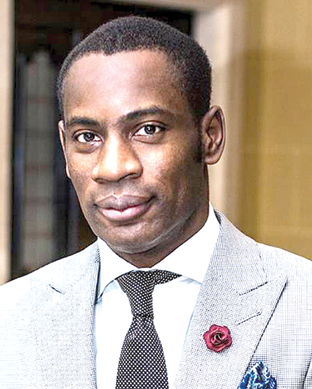
•Ayodele Kusamotu
BY CHARLES KUMOLU
A CHIEFTAIN of the All Progressives Congress, APC, Mr. Ayodele Kusamotu, in this interview, berates his party’s position on calls for restructuring, saying the party is not in concordance with the mood of Nigerians. He also speaks on other issues of national significance.

•Ayodele Kusamotu
The fight against corruption is one of the focal points of this government. How do you assess it?
It has brought the issue to the consciousness of Nigerians. We are in a better place. At least everybody now knows that if you steal from the government, there could be prosecution and punishment. It is not easy to fight corruption and this government has been the first with all sorts of innovative techniques to fish out ill-gotten wealth. The executive should also handle allegations of corruption with transparency when it involves its own members. There is a need for the law enforcement agencies and prosecution to be thoroughly trained and meticulous in their investigations. When the government said it would not publish the names of the alleged looters, the war on corruption started taking a downhill journey. A Non-Governmental body just obtained a court order under the Freedom of Information Act to publish the names. Let us see if the government will obey this order.
On insolvency laws
The government should reform our insolvency laws. There is now a desperate need for this as you can see from the ongoing distress in the economy which has taken down two telecommunication companies, NTEL and Etisalat. The problem is that the regulatory authorities seem to be acting arbitrarily and it sends shivers down the spine of prospective investors. For instance, NCC is saying that the Skye Bank cannot take over NTEL but the funds that have been lent to the NTEL are depositors funds. Likewise, the Central Bank of Nigeria recently appointed one of their own into the Board of Etisalat or 9mobile as it were. Again, I cannot see the justification for this.
Recently the Acting President signed executive orders to improve the ease of doing business in Nigeria, as someone in the private sector, what is your take on this?
Essentially these orders are designed to improve the way government business and operations are conducted in the country. These orders can only be described as superlative. This is what I expect from the brilliant Professor of Law. I, however, think that the Executive Orders surrounding VAIDS should be amended. I would advise that government to borrow from the principle behind former President Jonathan’s Amnesty Program in the Niger Delta. There should be a robust dialogue with businesses in Nigeria to create the right policy.
On President Muhammadu Buhari’s administration
It was reported that the level of inflation currently stands at 17.24 percent as against 9.5 percent at the time the government came to power. However, the government seems committed to economic diversification through the promotion of locally manufactured goods in order to ensure economic recovery and development.
Unemployment also seems to be at an all-time high under the current administration as there has been mass sack in the banking sector and other sectors of the economy. The N-Power initiative, a tool of youth empowerment and employment was developed by the current administration. However, its impact is yet to be felt in the country.
The education, health, and power sectors are very much the same, with no noticeable improvements.
The bickering between the executive and legislature as well as the insistence of the Presidency on retaining the head of EFCC needs to be examined in the context of leading by example.
In all, so much more is expected from the current government as a lot of its campaign promises have been unfulfilled. The most explosive issue now is about the restructuring of Nigeria. The APC has not looked at the clamour for the restructuring of the country. However, Mallam El Rufai, the Governor of Kaduna State rather than address the issue at hand in his press briefing chose to attack the individuals calling for the restructuring of the country. In the light of these issues, I do not think that the people in government are really in touch with what is going on now in Nigeria.
Two years after, Nigerians seem disappointed. A recently conducted Twitter poll revealed that 54 percent of the voters rated the Buhari administration’s performance as poor. Also, on 29 May 2017, Business Day published the results of another survey, conducted by the respected NOI Polls. According to the NOI Polls, only 47 percent of Nigerians scored the government well on security and 45 percent on corruption among others.
On disobedience to court orders
Compliance and obedience to orders of a court are incidental and a component of the doctrine of rule of law and any well-developed democracy or any nation that professes democracy as a system of government must obey court rulings. The orders of court are sacred and should be duly respected by all.
Nigeria, over the years, has failed in this basic democratic component. The Federal government under the current administration has flouted court orders. It would appear that the President is still much influenced by his military background and does not pay much attention to the rule of law. However, Nigeria was ranked at 96 out of 113 countries in 2016 for compliance with rule of law by the World Justice Project.
However, the principle of rule of law basically states that the law is binding on everyone and no one is above the law. It is deeply embedded in and is the bedrock of any democratic system.
What will you say is responsible for the widespread perception of corruption among members of the judiciary?
I am a Nigerian before being a lawyer. I don’t think it is just a perception. There is corruption in the judiciary and our legal profession. But it is not unexpected because we are part of the society. We are not immune to the ills of the society. In our society, our morals have gone down the drain. It is naive to think that the legal profession or judges hold a special place, we are all like the average Nigerian. We should do more self-introspection to tackle this issue in the profession.
The Chief Justice of Nigeria recently set up a committee to suggest some reforms for the judiciary. As a member of the profession, what areas do you wish to see reformed?
This is a welcome development. These actors know where the clog in the wheel of change is. However, I think it should include members of the civil society. They should hold public hearings around the country and make their findings public.
The National Judicial Policy which bars Petitioners to the National Judicial Council from publicising their petition should be rescinded. A key ingredient of justice is that it should be public. I don’t see why such information should be kept secret. Really, the Judiciary and legal profession need a complete overhauling. We also need to invite outsiders who can give us an assessment of the service delivery and how it can be improved.
Disclaimer
Comments expressed here do not reflect the opinions of Vanguard newspapers or any employee thereof.