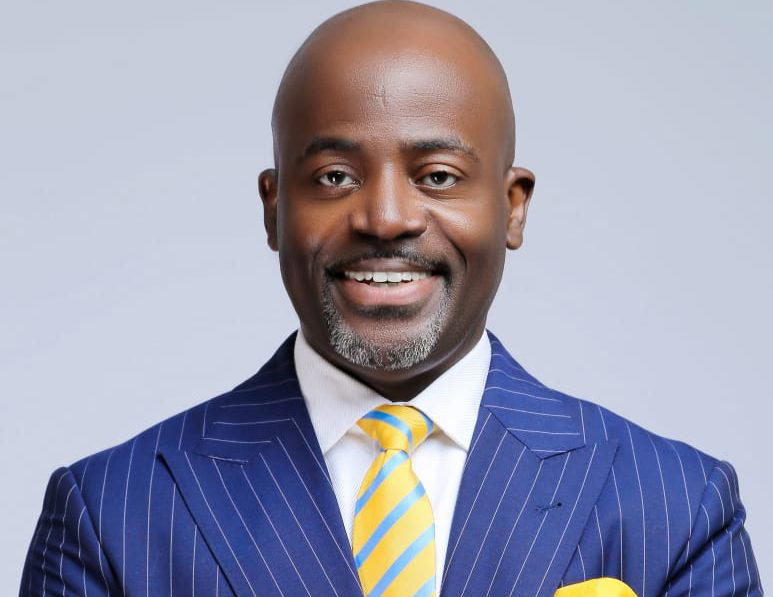
By Olasunkanmi Akoni
An All Progressives Congress, APC, chieftain, Obafemi George, has commended President Bola Tinubu for supporting the passage of the State Police Bill by the National Assembly, describing the establishment of state police as a major solution to Nigeria’s persistent security challenges.
Speaking with journalists in Lagos, George praised the President for backing the legislation, noting that the creation of state police would empower governors to effectively direct security operations within their states.
According to him, although governors are widely regarded as the chief security officers of their states, they currently lack the constitutional authority to issue directives to commissioners of police because policing remains under the exclusive control of the Federal
Government.
“We refer to governors as chief security officers of their states, but that title is not expressly provided for in the Constitution.
“Section 215(4) of the Constitution states that a governor shall ensure public safety and public order in the state by giving lawful directions to the Commissioner of Police.
“However, the governor lacks operational control over the police, making it difficult to effectively discharge that responsibility,” he said.
George maintained that the new state police structure would correct the imbalance by granting governors greater authority over policing within their jurisdictions.
According to him, “If someone is responsible for the security of a state but does not control the security apparatus, it becomes difficult to hold that person
for maintaining law and order,” George added.
Addressing concerns that some governors could misuse state police for political purposes, George acknowledged that no governance system is without flaws but maintained that the benefits of decentralised policing far outweigh the risks.
“There is no perfect system anywhere in the world. The United States has operated state police since the 19th century, yet challenges still exist. That does not mean the system should be discarded.
“Rather, we should build safeguards that will ensure accountability while allowing the advantages of state policing to prevail,” he said.
On the prospects of President Tinubu’s re-election in 2027, George expressed confidence that the President stands a strong chance of securing another term, citing ongoing economic reforms and infrastructure development across the country.
He said the administration’s reform agenda has earned recognition from international financial institutions and has positioned Nigeria on a path toward sustainable economic growth.
According to him, infrastructure development remains the backbone of every thriving economy, and President Tinubu is replicating at the national level the developmental model he pursued as governor of Lagos State.
The President has consistently stressed this and is already implementing projects that will transform connectivity across the country,” he said.
George cited the establishment of regional development commissions for the North-West, North-Central, South-West, South-South and South-East, as well as major road projects such as the Lagos-Calabar Coastal Highway and the Sokoto-Badagry Super Highway, as examples of initiatives designed to integrate Nigeria’s geopolitical zones and stimulate economic activity.
He explained that the road networks would improve the movement of goods and people, reduce travel time and strengthen trade among different regions of the country.
“The Sokoto-Badagry Super Highway will create a direct economic corridor linking the North-West to Lagos, while the Lagos-Calabar Coastal Highway will enhance connectivity between the South-West and South-South.
“Other approved highways, including the Akwanga-Borno road, will further connect the North-Central and North-East, promoting national integration and economic development,” he said.
Drawing comparisons with global examples, George noted that the United States accelerated its economic expansion through its interstate highway system, while China embarked on decades of sustained infrastructure investment beginning in 1979, which helped lift hundreds of millions of people out of poverty.
“Infrastructure is what builds an economy. Countries that have achieved rapid development did so through long-term investment in roads, transportation and other critical infrastructure. Nigeria is now following that path,” he added.
Disclaimer
Comments expressed here do not reflect the opinions of Vanguard newspapers or any employee thereof.