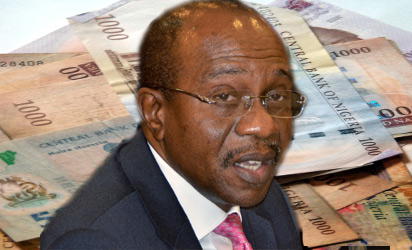
Governor, Central Bank of Nigeria (CBN), Mr Godwin Emefiele
With the exception of the state of health of President Muhammadu Buhari and its consequences for the nation, the most topical economic issue in Nigeria is the fall in value of the Naira to the major foreign currencies (particularly the Dollar).
From around N190 to $1 in May 2015 when the Buhari government assumed office, the Naira plunged to as low as N560/US$1 in mid-February 2017. It appeared as if the downward trend would never stop, resulting in calls for the resignation or sack of the Central Bank of Nigeria (CBN) Governor, Godwin Emefiele, and the total deregulation of the foreign exchange market or devaluation of the Naira.

Governor, Central Bank of Nigeria (CBN), Mr Godwin Emefiele
The CBN was not totally without support as some experts believed that the foreign exchange frenzy was artificially driven by three non-market forces.
First, speculators are always lurking around to prey on currencies assailed by foreign exchange scarcity. Second, in the Nigerian case, are many individuals hiding large amounts of dollar bills outside the banking system to evade the anti-graft searchlight of the Federal Government. Third, there are those who have profited immensely from the nation’s weak financial control system wanting to transfer their illicit gains out of the country – at any price.
Critics of the incumbent regime even alleged that a few privileged individuals have been corruptly favoured with surreptitious allocations of foreign exchange at give-away rates which they sell to make huge profit.
Meanwhile, both critics and the supporters of the CBN are in agreement that the primary cause of our exchange rate problem is scarcity of foreign currencies. Everyone knew that the low price of crude oil, the lower demand for the commodity and the low supply levels consequent upon economic sabotage in the Niger Delta, were the major culprits. Only a reversal of these trends and a marked improvement in the inflow of dollars from oil and non-oil sources could help alleviate the pressure on the naira.
Between the middle of February and early this month, the CBN shocked the speculators by injecting over one billion US Dollars into the market. The impact was almost immediate. The plunge was halted, then reversed. Within a few days the Naira rebounded toward the N400 to $1 mark.
While congratulating the CBN for these bold interventions, we caution that these are mere temporary palliatives. But, these measures and their effects have proved that forex scarcity is the main problem.
Beyond the improved foreign exchange revenue from oil, other supportive government measures that will encourage people to bring out their hidden foreign exchange and trigger other inflows from outside sources must be introduced to ensure a reliable supply of forex and stable stand for the Naira. These will signpost the gradual recovery of the economy from recession.
Disclaimer
Comments expressed here do not reflect the opinions of Vanguard newspapers or any employee thereof.