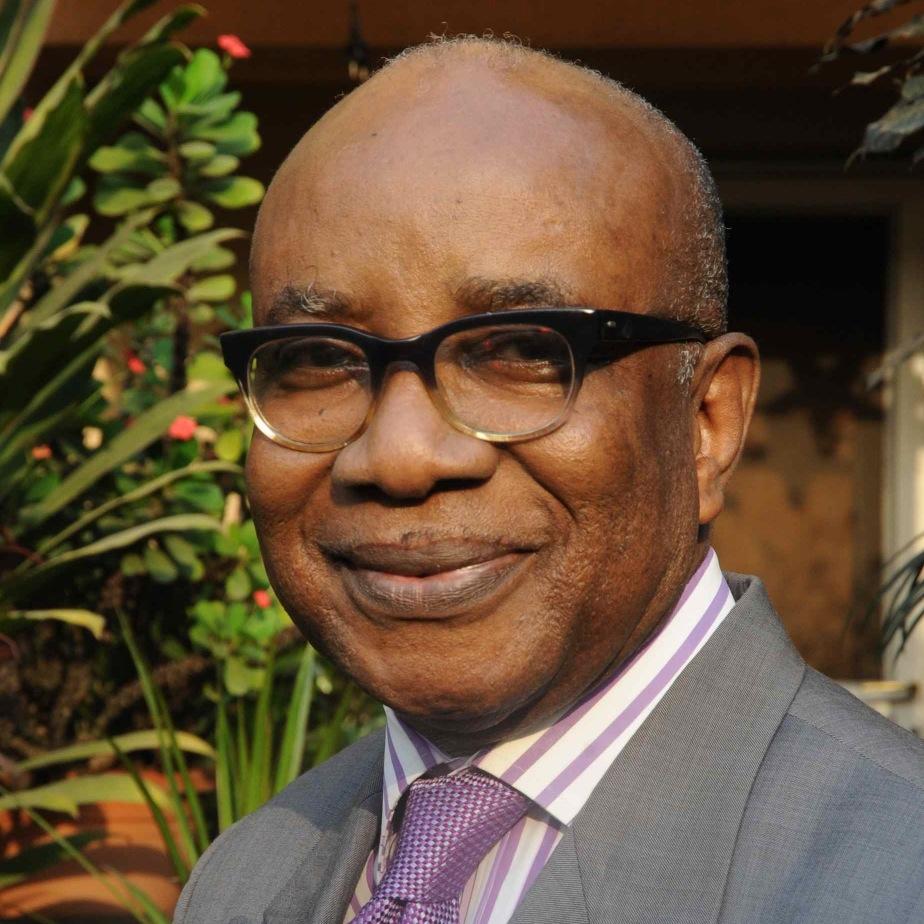
•Smart-Cole
He turned his camera into a medium of dialogue between Man and Nature, between Man and his social milieu but also as an interventionist which is where photography becomes Art.”—Nobel Laureate, Wole Soyinka.
By Dele Sobowale
Professor Soyinka’s comment can be found at the back of an album which must be a rare collection of artworks presented as photography. It takes one to know one; and Soyinka, an incomparable artist himself, is the sort of person to appreciate genius in an artist operating in another medium. The album is titled SUNMI’s LENS – medium BETWEEN MAN AND NATURE; and I have a copy on account of despair and idleness.
Thursday, September 22, 2016, would have been an ordinary day but on that day my mechanic had told me that my car’s problems had set me back N300,000. That is money hard to find in this recession which the CBN just renamed stagflation. I don’t have it. So, that was the end of that until further notice. I received the bad news on my way to an appointment with Uncle Sam, where I was sure of getting a free bottle of beer and to indulge in my idleness. A bottle destroyed and Uncle Sam announced he was going to the office.
I begged to be dropped at the Anthony Taxi stand to take a cab home. On the way, Uncle Sam announced that he was stopping at Yaba before going to the office. That was a stroke of good luck for me. It would save me a few naira in taxi fare. When you have one foot in the grave and a N300,000 bill to pay every kobo saved is like having your life prolonged.
Still on the way, Uncle Sam further disclosed that he was going to see Sunmi Smart-Cole. That did it! Here was an opportunity to see once again the artist whom I have always regarded as a genius behind those cameras. I had watched Egbon Smart-Cole at close range on three occasions taking pictures.
Each time, he was so painstaking in his preparations and approach that he always reminded me of another great artist and genius operating in another medium – music. I strongly believe that Smart-Cole is motivated by the same desire for perfection which made Giuseppe Verdi, 1813-1910, the Italian composer, to say: “All my life as a musician, I have striven for perfection. It has always eluded me. I surely had an obligation to make one more try.” One cannot avoid the impression that making one more try at achieving perfection is what had kept Sunmi going until he had taken several thousand photographs – many of then individual works of art.
Courtesy and gratitude demand that I should disclose that minutes after Uncle Sam and I entered his sitting room, one of my heroes was autographing a copy of the album which he gave to me as a gift. Henceforth, whoever says only “the Devil finds work for idle hands” will have an argument with me.
I would gladly have paid one million naira for that album – if I had the money. But, the God that “in the middle of the utmost adversity…created and brings forth a new and greater glory and more auspicious circumstances for people that suffer” (to quote Babangida one of Sunmi’s favourite subjects) had turned my misery and idleness to good fortune. I left my home with a frown on my face and returned with a glowing smile that would last me for years on account of the album. People at home thought I had won the lottery. I had.
That album is worth to me ten cars and it will last longer with me – possibly until death will part us. The car can go to blazes. Millions of people have cars. This is immeasurable treasure few people can have.
I started going through it immediately; sometimes looking at a particular picture for half an hour or more; trying to imagine what must have been going through the Master’s mind when he took it. Virtually every picture was a work of art; everyone was commentary or historical. Even the family portraits told their own stories and he was generous with his abundant talents with his friends.
It is impossible to go through the album without asking for more. There were pictures from around the globe; some from places difficult to understand how he got there and what he was doing there. So now we know what Alfred De Musset, 1810-1857, meant when he pronounced that “Great artists have no country.” Sunmi Smart-Cole was obviously at home in any country and functioned well under any circumstances.
Only one question remains to be asked. Is it because of our disdain for history that several books have not been written on the art of Sunmi Smart-Cole? Lesser artists in other countries have been celebrated by biographers. But, here in Nigeria we seem contented to know that “Every artist writes his own autobiography.” (Henry Havelock Ellis, 1859-1939). But, must we leave them alone?
Great writers, sculptors, architects, musicians, fine artists, carvers etc have passed through this land only once and uncelebrated. Why can’t we break with the past? Why can’t somebody sponsor a biography for the only genius of photography Nigeria has produced? We will not be doing him a favour; we will be celebrating ourselves for producing one of the best artists behind a camera that the world has known.
LAST LINE. Egbon, I sincerely mean that part about the happiness you brought into my life that day. Only God can repay; but rest assured that each day I see that album will remind me of my good fortune spending a few minutes with a genius. This is to wish you a happy birthday and as many happy returns as God will grant you before you land at the Almighty’s harbour of peace and eternal rest.
APPEAL TO NIGERIA’S GREAT ACHIEVERS: WRITE YOU BIOGRAPHY.
“Lives of great men remind us/that we can make our lives sublime/and departing leave behind us/footprints on the sands of time.Longfellow, 1807-1882. (VANGUARD BOOK OF QUOTATIONS p137.
Most of our greatest achievers in this country have probably never heard the saying: “If you want to live five years buy shares; if thirty plant a tree. But if you want to live forever, write a book” – or have one written for you or about you. If you have some money, the best advice I can give you is either to write your own life history, an autobiography, or, have someone else write it for you.
The second is called a biography. In that case, you engage a good writer, provide him/her with as much materials as you can gather, sit for interviews and get the book published. Don’t go for money because you are seeking immortality. Any money made is an extra dividend. If you love Daddy, Mummy, your political or business godfather, the man who gave you a big break in life, then forget buying them a Benz for the 70th 0r 80th birthday. The Lexus will rot; the book will last for ever.
One of the greatest Nigerians alive, and on his way to the grave, had resisted having his biography written while alive – he says “wait till I die”. He thinks it is a good joke. But, the joke is on him. I have started gathering materials for his biography. That is my way of saying “I love and respect you sir. I want to appreciate you for ever.” No material gift – not even the biggest diamond — can say that.
Contrary to what most people think, it does not cost much to engage a biographer. And he/she doesn’t even have to know or like the subject. All you need is a good writer with demonstrated habit of delivering scripts on time; he must also be a diligent researcher. In my own experience, most clients don’t provide sufficient background information to make the book interesting. The biographer must do that.
Early in this month, the death was announced of Olorogun Michael Ibru, CFR, the head of the Ibru family – which incidentally should have at least three biographies – one for Michael, one for Felix and one for Alex. Now that universities have been asked to add entrepreneurship to their curriculum and we are pressing our kids to learn to be self-reliant, Michael Ibru’s life story would have served as starring example for those embarking on those perilous but rewarding journeys.
Disclaimer
Comments expressed here do not reflect the opinions of Vanguard newspapers or any employee thereof.