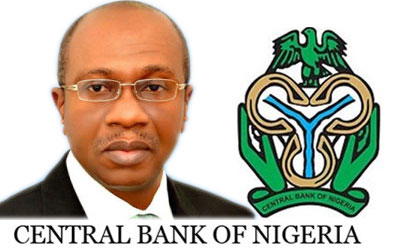
CBN Governor, Mr Godwin Emefiele
By Emma Ujah, Abuja Bureau Chief
Nigeria can save N860 billion in import bills from the decision of the Central Bank of Nigeria, CBN, to deny importers of the recently announced 41 items from accessing foreign exchange from the nation’s foreign exchange market.

CBN Governor, Mr Godwin Emefiele
This was the position of the president of Miners Empowerment Association of Nigeria, Mr. Sunny Ekozin, contained in a statement issued in Abuja.
According to him, 27 of the 41 items were solid minerals-based on which the nation had been spending the equivalent of N860 billion in foreign exchange annually, over the years.
His words “By simple arithmetic, Nigeria imports N860 billion worth of solid minerals annually. This is scandalous. Imagine the jobs that can be created annually from solid minerals with the injection of this huge sum. It is time for our government to put the political will to bear and save the nation from this shameful and systemic destruction of our economy.
“Nigeria must benchmark with other developing countries like Indonesia that have successfully used policies on export and import to curb job losses to other nations and have mobilised about $18 billion in investment in processing plants towards their industrialisation.
“Nigeria’s solid minerals sector is in coma and the change agenda of President Muhammadu Buhari is urgently needed to revamp this sector and re-position it for global competiveness.”
Ekozin said Nigerians were spending huge money importing things that could be produced locally and unnecessarily depleting the nation’s foreign reserves.
President Muhammadu Buharui, he said, must not allow the situation to continue and should therefore even go a step further by placing the affected items on the import prohibition lists.
His words, “If a total ban or prohibitions of these items are not urgently promulgated, it will lead to an increase in the cost of these items locally for consumers and ultimately inflation. Already, this has led to increased currency speculation and rent seeking at the parallel market.
Disclaimer
Comments expressed here do not reflect the opinions of Vanguard newspapers or any employee thereof.