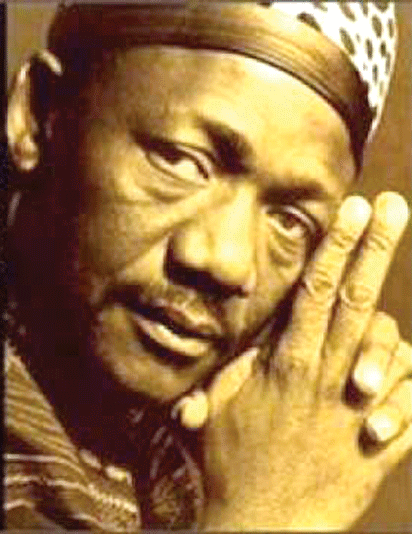
Sunny-Okonsun
By Juliet Ebirim
Music legend, Sunny Okosun would have been 76 years on January 1, this year, having been born in 1947. Okosun was one of the nation’s most celebrated musicians of yesteryears whose bodies of work have continued to keep their names alive.

While he lived, he towered among the giants of contemporary Nigerian musicians with his signature fusion of reggae, highlife, Afro-funk, traditional melodies and rhythms. The catch-hall description, Özziddi” , Okosun was a major influence as far as the nation’s music scene was concerned. He used his music to tackle head-on the most critical political and social issues gripping the African continent, especially the abolished apartheid in South Africa.
He joined forces with other African singers including Hugh Masekela, Miriam Makeba, the legendary South African singer and civil rights activist, Peter Gabriel, Bruce Springsteen, Steven Van Zandt and Stevie Wonder among others who spoke or sung out on behalf of late Nelson Mandela’s cause. His “Fire in Soweto”received a world acclamation just as his “Papa’s Land” took on South African abuses was a masterpiece. “Holy Wars” (1978) addressed liberation movements throughout southern Africa.
His other songs include ‘Mother and Child’, ‘Which way Nigeria’, ‘Togetherness’, amongst others. But Okosun who launched into stardom in the early 70s with his fiery Öziddi”music was a strong voice and an advocate of a popular ideology geared towards liberating the oppressed people in Africa. It was on record that the Edo State born music legend used his last days on earth to win souls for Christ as an evangelist.
His warm, genial voice effortlessly carried a moral authority that suited the social and political commentary of his lyrics. He called his ever-changing mix of reggae, highlife, Afro-soul, rock, funk and various indigenous elements “Ozziddi”, meaning “there is a message”. Best known for his anti-apartheid reggae anthem “Fire in Soweto”, he also espoused Pan-Africanism and Black Pride, singing about the need for honest leadership in Africa, and the plight of the continent’s children.
By the late 1980s, his popularity began to ebb, but he reinvented himself as a gospel performer under the name Evangelist Sunny Okosuns. His 1994 album “Songs of Praise” reportedly sold almost a million copies. His death, which shook the music industry on May 28, 2008, in Washington DC after battling colon cancer marked the end of an era in the Nigerian music scene. Okosun will forever be remembered for using his music to promote African unity and black pride.
Disclaimer
Comments expressed here do not reflect the opinions of Vanguard newspapers or any employee thereof.