By Udeme Clement
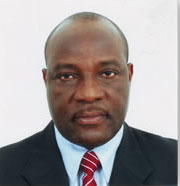
Dr. Babatunde Obada is Group Managing Director and Chief Executive Officer, Global Biofuels Limited, a biofuels company in Nigeria. He speaks on the passage of 2015 Budget by the Senate without allocation for fuel subsidy, recurring fuel scarcity crisis in the country, the controversy trailing privatisation of the refineries and the need for the incoming government to invest massively in fuel ethanol to stop excessive importation of refined petroleum products.
 Is it wise for the out-going government to remove fuel subsidy allocation from 2015 budget?
I am not sure if the out-going government truly removed fuel subsidy allocation from the 2015 budget. The budget is yet to be published for general consumption. Be that as it may, It is clear that fuel subsidy retention is not sustainable with the present state of our economy. It has to be withdrawn at a certain stage. The out-going Administration must be thinking its unwise to put such a huge burden on the in-coming government. Remember that subsidy removal almost truncated Jonathan’s regime? Having said that, the in-coming administration after taking over must decide whether or not to continue with fuel subsidy. It is a very hot topic capable of making or unmaking any administration in Nigeria. Nigerians must at some point learn to live without the subsidy considering our very lean purse and the fact of its opaque nature.
What are the economic implications of removing fuel subsidy allocation from the budget?
Right now our economy is experiencing low revenue inflow due to declining oil prices. Removing subsidy now will therefore give the incoming government more money to channel into other areas of need to enhance productivity. There is no doubt that the increased cost of fuel importation will be passed on to the consumers. People will feel the immediate impact negatively. It will impact on the cost of transportation of goods and services from the hinterland to the urban centers. The cost of food items may skyrocket. The cost of living may increase generally. Nigerians who have been used to this easy life will groan loudly. It could be short lived however if white products importation into the country is liberalised.
Can the incoming government run the economy without re-instating subsidy?
Buhari’s government should first of all look at the economic implications of removing subsidy and the effects on ordinary Nigerians, in order to decide whether or not to continue to pay fuel subsidy. If the removal is such that the masses can cope, then government should let it go. But if the impact is so severe and unsettling, then government should review the policy as a direct dividend of democracy. All will however depend on how quickly we are able to diversify our means of production.
Fuel scarcity, importation of refined petroleum products and subsidy allocation have been nagging issues in the economy. Experts are advising the incoming government to invest massively in fuel ethanol production. How will this help the county?

Fuel scarcity
Fossil fuel that is consumed globally is very injurious to the atmosphere. Nigeria is a signatory to the Kyoto Protocol on climate change. This requires that every country must blend a certain percentage of biofuels with gasoline to reduce carbon emission. In Nigeria for example, it is possible to make an E-5, E-10 or even E-20 blend without modifying any component of the cars presently plying our roads. An E-10 blend will remove approximately 900 metric tonnes of carbon from our environment. Again, E-10 blend translates to 10 percent less gasoline importation plus 10 percent less subsidy payment, all of which leaves more Naira in the purse of government. Also, E-10 blend means establishing 15 fuel ethanol refineries and business clusters across the country and the development of farm estates for sustainable cultivation of the raw materials for ethanol production. The leaves of the raw materials are used to fatten cattle housed in modern feedlots. The stem is crushed and the extracted juice is refined into fuel ethanol, while the biomass wastes are burnt to generate electric power. 15 of such industrial clusters will remove approximately 50 million Nigerians from poverty.
President Obama focused on biofuels production as a deliberate national strategy but the Americans relied on corn as raw material. This strategy drove up the price of corn in the US and across the globe before it was de-emphasized in favour of shale oil production. We have no such concerns in Nigeria because our local raw material will not compete with the food chain. If the in-coming government is desirous of driving down the price of fuel, closing the electric power infrastructure gap, stemming the herdsmen/farmers clashes, creating employment, diversifying the economy, reducing our carbon footprint and spreading goodwill across the board, they must focus on biofuels production.
Some people are urging government to privatise the refineries. Is privatisation the solution to the inactive state of these plants?
If the refineries were working efficiently, we won’t be importing refined petroleum products. Turn Around Maintenance (TAM) that used to happen within 45 days now takes up to two years or more. Sometimes you wonder why we got to this sorry state.
If government goes ahead to privatise the refineries in their present state, they will be sold as scraps. The private investors will revamp the plants and begin to charge market rate for their products. I wonder if the average Nigerian will be able to pay the pump price. But Buhari himself was once our petroleum minister. We all worked under him. He worked with people like Dr. Thomas John, Engineer Mohammed Sanni Bello, Engineer Babajide Soyode, Engineer Gbenga Oshonowo, Engineer Jide Anubi, Engineer Sina Onabule and a host of other very capable hands. These people are still around, well and kicking. Let him invite them and ask them to proffer a solution. They will not disappoint.
Do you also take cognisance of the fact that these plants were built many years ago?
Yes I know. Refineries built over 100 years ago are still up and running. As a trainee Technician, I worked at the Rafineria Del Po, Sannazarro De Burgundi, which was built in the 20s. That refinery is still up and running. The oldest of our refineries was built in the 60s while others were built between the 70s and 80s and none of them is producing at half the stalled capacity at present.
Buhari said his government will probe the alleged missing $20million from Nigerian National Petroleum Corporation (NNPC). Do you see anything tangible coming out of such probe?
I think people are misinterpreting the issue of the alleged un-remitted funds. The former governor of the Central Bank of Nigeria (CBN), HRH Lamido Sanusi Lamido, who raised alarm about the issue did not say the money was missing. Rather, he said that NNPC did not account for a certain amount of money. A forensic audit has been ordered and the report has been published. That is a good starting point, isn’t it? The audit report contains certain revelations about the operations of the Corporation, which the incoming administration should correct. Beyond that, it is really not advisable for the new President to waste too much time and resources on probes. He cannot afford that kind of luxury, even if it will titillate some Nigerians.
He should instead, focus on moving the system and the economy forward. The new team should look at the inherent structures. For instance, whether it is proper for NNPC to retain some of their earnings and use it to run their operations without going through appropriation. The new government may decide that every kobo made from the sales of crude oil must go straight into the federation’s account and NNPC may not be allowed to retain any part of the money. As simple as it sounds, even that cannot be done by executive fiat. It must go through legislation and the amendment of the NNPC Act.
Why are there so many controversies trailing NNPC?
It is really unfortunate that NNPC is passing through this rough patch. It is a Corporation we felt so proud to belong. It is the cash cow of the entire nation of 170 million people. It is susceptible to attacks from everybody, militants, petty thieves, miscreants, organised robbery, mobbing crowds, name it. Their pipelines are routinely vandalised. Their operations are deliberately sabotaged. Through all of these, they are expected to be up and running 24/7 and 365 days. You can see how easy it is for them to get into trouble with virtually every Nigerian.
What measures will you advise the incoming government to take in order to restructure the petroleum downstream sector and the economy holistically?
Like I said before, the incoming President worked in NNPC before and he had a reputation for firmness. Without as much as pronouncing a word, I am sure that everyone will sit up. He can bestride on the novelty of that popularity and move quickly to put things in order and restructure the downstream sector. This is imperative because if within 100 days he does not make any positive impacts, Nigerians will start to grumble. Instead of focusing on probes that will arouse much litigation, he should assemble a group of technocrats to sit and deliberate on the challenges facing the economy and how to tackle them proactively. We heard from the social media that he is bringing back the likes of Tam David West and such other competent professionals. It is a welcome development.
It is equally important for the incoming government to encourage the Central Bank of Nigeria (CBN) to continue to assist the real sector of the economy.
Disclaimer
Comments expressed here do not reflect the opinions of Vanguard newspapers or any employee thereof.