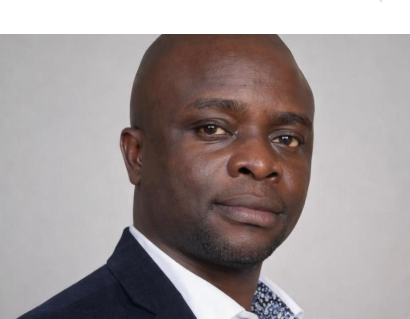
By Engr. Olusoga Obasanya, MNSE, R.Eng
As Abuja accelerates toward megacity status, the sustainability of its growth is being tested not only by visible infrastructure such as roads and housing, but by the largely unseen systems beneath the ground.
Across Gwarimpa, Katampe, Kubwa, and the Idu Industrial Area, the rapid expansion of large housing estates has exposed a critical weakness in conventional urban development practice: the fragmented design of sewage reticulation and treatment infrastructure.
Engineering professionals now agree that this challenge demands a fundamentally different approach—one that integrates sewage collection networks and treatment systems into a single, coordinated engineering solution capable of supporting long-term urban growth.
Urban Expansion and the Infrastructure Gap
Rapid urbanization and large-scale housing developments have placed unprecedented strain on traditional sewage systems in developing economies. In Abuja, estates such as Gwarimpa Estate, widely recognized as the largest housing estate in Africa, comprise thousands of residential units generating substantial volumes of domestic wastewater on a daily basis.
Historically, sewage reticulation networks and sewage treatment plants (STPs) have been designed independently. This separation has repeatedly resulted in mismatched capacities, hydraulic bottlenecks, excessive pumping requirements, environmental pollution, heightened public health risks, and escalating lifecycle costs.
Engineering assessments across Katampe, Kubwa, and Idu reveal that such fragmented design approaches are no longer fit for purpose in a modern capital city.
A New Engineering Standard for Large Housing Estates
An integrated engineering design framework—one that unifies sewage reticulation and treatment planning—has emerged as a proven solution. This approach aligns wastewater collection networks with treatment capacity, operational philosophy, energy efficiency goals, regulatory compliance, and future expansion strategies from the outset.
The framework emphasizes:
Hydraulic optimization across entire estate catchments
Careful treatment process selection based on actual wastewater characteristics
Constructability and phased implementation
Energy-efficient mechanical and electrical systems
Long-term operational sustainability
Crucially, the framework demonstrates that early and strategic collaboration among civil, mechanical, electrical, and plumbing (MEP) disciplines significantly improves system reliability while reducing both capital and operational expenditure.
Engineering Challenges in Abuja’s Large Estates
Large housing estates present unique and complex design challenges. Wastewater flows vary significantly throughout the day and across seasons, often leading to poorly coordinated systems that oversize treatment plants or undersize trunk sewers. These errors increase failure rates and operational inefficiencies.
Topographic conditions in districts such as Katampe frequently limit gravity flow, making lift stations unavoidable. Without integrated planning, however, excessive pumping leads to high energy consumption and accelerated equipment wear. At the same time, land constraints within dense estates restrict the footprint available for treatment facilities, necessitating compact and high-performance solutions.
Stricter effluent discharge standards further demand that advanced treatment processes be considered at the earliest stages of reticulation design—rather than as an afterthought.
Integrated Reticulation: Designing for Performance and Growth
Effective sewage reticulation design begins with accurate wastewater generation modelling based on population density, water-use patterns, infiltration allowances, and projected growth. This data guides the selection of pipe sizes, gradients, and materials that ensure self-cleansing flow conditions while minimizing excavation depth and construction costs.
Dividing large estates into functional zones or catchments enables phased development and smoother integration with treatment facilities. Strategically positioned lift stations reduce pumping demand and extend equipment lifespan, while corrosion-resistant pipelines, watertight manholes, and odor-control systems enhance durability and reduce infiltration and inflow over time.
Treatment Systems Matched to Urban Reality
Integrated sewage treatment system design ensures that treatment processes are precisely matched to the influent delivered by the reticulation network. In Abuja’s estates, flexible and space-efficient technologies—such as Sequencing Batch Reactors (SBRs) for variable flows, Moving Bed Biofilm Reactors (MBBRs) for compact sites, and Membrane Bioreactors (MBRs) for high-effluent-quality and reuse applications—have proven particularly effective.
Modular treatment plant configurations allow capacity to expand in line with estate development, reducing initial capital investment while maintaining compliance. MEP integration—through variable frequency drives, automated monitoring, and energy-efficient aeration—further lowers operating costs and improves reliability.
Governance, Policy, and Public–Private Delivery
With Abuja’s population projected to exceed five million, integrated sewage engineering is no longer optional, it is essential. Technical excellence must be supported by strong policy frameworks and governance structures that define service standards, effluent quality requirements, and asset ownership responsibilities.
Transparent approval processes, clearly defined stakeholder roles, and lifecycle performance monitoring enable informed decision-making and long-term system success. When these frameworks promote early collaboration, critical design decisions—such as treatment capacity, effluent reuse, and expansion allowances—can be optimized.
Public–private partnerships (PPPs) are increasingly central to delivering large-scale sewage infrastructure in residential and industrial districts such as Idu. Integrated engineering design strengthens PPP outcomes by reducing risk, clarifying performance expectations, and delivering scalable, cost-effective infrastructure.
A Lasting Contribution to Sustainable Urban Development
The experience drawn from Gwarimpa, Katampe, Kubwa, and Idu Industrial Area demonstrates that integrated engineering design of sewage reticulation and treatment systems is a cornerstone of sustainable urban development. By coordinating collection networks, treatment processes, MEP systems, and construction planning from inception, engineers can deliver resilient, environmentally responsible, and economically efficient wastewater infrastructure.
This integrated approach protects public health, supports regulatory compliance, enables effluent reuse, and ensures long-term scalability which position it as a nationally relevant engineering contribution and a defining standard for modern urban development in emerging economies.
Disclaimer
Comments expressed here do not reflect the opinions of Vanguard newspapers or any employee thereof.