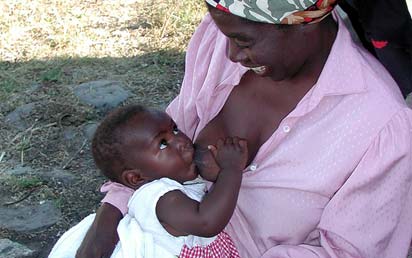
How do you expect me to feed my baby with breast milk alone? Will she cope all through the six months period? She asked. Mmmm, my sister breast milk is enough for your baby during those periods.

All you need is to make it available. Please don’t deceive yourself! I am a working class mother. How will I cope with work and exclusive breast feeding? Please count me out.
Hahahaha, she laughed. But you can make it, Mama Blessing responded.
Okay, if I should do that what is the benefit to my baby because there are other infant formulars that are almost the same as the breast milk.
You think so? Mama Blessing said: “If it is not breast milk it will never be like breast milk.”
Whether you are breastfeeding, using formula, or doing both, you want to make sure your baby is getting all of the vitamins and nutrients he needs to grow big and strong.
Breastmilk offers all the nutrition a baby needs until she is six months. By about that age, she’s ready for her first spoonful of solids.
However, breastfeeding is great for your baby. According to health experts, breast milk is all your baby needs until she is six months old. Unfortunately, many mothers are shying away from it. But the fact remains that it is worth making every effort to breastfeed, and most problems can be overcome with information and support.
Why exclusive breastfeeding is recommended
Breast milk is ideal for any baby, for the best growth and development mentally, emotionally and physically.
It is not only important for baby, but has many benefits for mom, namely…helping her lose the postpartum pounds easily after birth and it also helps prevent postpartum depression.
Benefits
Exclusive breastfeeding means that an infant receives only breast milk with no additional foods or liquids, not even water. The benefits on child survival, growth, and development are well documented. Exclusive breastfeeding also provides health benefits for mothers. It impacts on neonatal and infant survival and health
It is the single most effective intervention for preventing child deaths, yet less than 40 percent of infants under six months old receive the benefits of exclusive breastfeeding. Diarrhoea and pneumonia are the leading causes of death among infants in developing countries.
Studies have shown that infants under two months old who are not breastfed are six times more likely to die from diarrhea or acute respiratory infections than those who are breastfed.
Breast milk, especially the first yellow thick milk called colostrum, contains anti-bacterial and anti-viral agents and high levels of vitamin A that protect infants against disease.
•To be concluded next Saturday
Disclaimer
Comments expressed here do not reflect the opinions of Vanguard newspapers or any employee thereof.