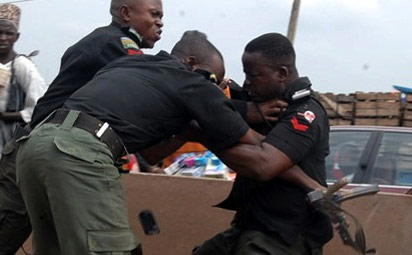
File: Policemen allegedly fighting over largesse
THE tragedy of the clash between the Police and the Navy in Warri would soon be consigned to a long list of similar incidents. Yet, no effort has been made to stop the dangerous re-occurence of such events.
Clashes among security agencies are not new. They no longer bewilder the public as used to be the case. Why would those meant to secure us set on themselves with such ferocity that results in the types of injuries naval personnel inflicted on a policeman at the Warri hotel?
Warri was only a part of it. Sometimes, the Police and Air Force or Army clash. Different arms of the military also fight over matters that are sometimes indiscernible. Each wants to show its superiority, and the best way it seems, is by unleashing excessive force on the other.
When the Air Force and Police clashed in Lagos, both sides fought for days, taking turns to fight not only identifiable personnel from both sides, but anyone with a sticker that aligned with either side.
Do the security agencies hate each other so much? The answer could be distilled from the incident in Warri, which by all accounts centred on the refusal of a naval officer to pay bills for foods and drinks he consumed with his party at the hotel. He said he had paid.
The intervention of a policeman who worked for the hotel angered the naval personnel who returned with a vehicle load of colleagues to brutalise the policeman and other staff of the hotel, including the owner.
All that seems to matter during such incidents is that if a colleague is disgraced and the disgraced party fails to retaliate with more excessiveness, then the arm of the security agency he represents has also been disgraced. The individual’s offence is unimportant in fighting for the group.
In Aba, the other week, the Army fought the Police over a minor traffic incident. It led to soldiers invading a police station before superior officers on both sides intervened.
Each arm of the security agencies thinks it is superior to the other and never misses an opportunity to show it. Unfortunately, when these incidents occur, senior officers support their men. It is doubtful if the security authorities punish their personnel, where they are the offending party.
These fights could be minimised without the ease the ravaging parties access assistance from their colleagues. There always appears to be troops on standby to carry out these invasions, with an acumen that suggest they are critical to their career.
It is important the authorities deal with these matters thoroughly. If security agencies fight themselves, we should not be wondering why they are not cooperating to manage national security.
Disclaimer
Comments expressed here do not reflect the opinions of Vanguard newspapers or any employee thereof.