By Obi Nwakanma
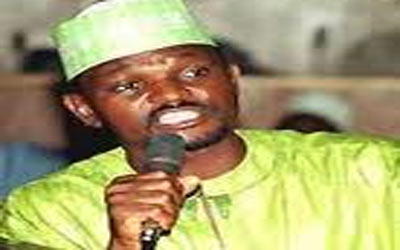
Hamza Al-Mustapha, former Chief Security Officer to General Sani Abacha, Nigeria’s erstwhile Military Dictator, opened his defence this week on the murder trial for the death of Kudirat Abiola in 1996.
Two things are not right in this case and constitute an indictment of the Nigerian justice system.
The first is the length in time it had taken to arraign Al-Mustapha and give him his day in court.
This delay is fundamentally prejudicial to just outcomes and constitutes a breach of his rights. The second is that the prosecution of Mustapha after a whole decade casts doubts on the court and heightens the feeling that Al-Mustapha is not really standing a murder trial but a political witch-hunt.
There are those who are also likely to be swayed by Al-Mustapha’s past and his public reputation as Sani Abacha’s brutal enforcer in a regime that was famous for the brutal persecution of the dictator’s political opponents. Here is not the place, nor would it in fact be worth our while to rehash the brutalities of the Abacha years and Al-Mustapha’s alleged place on the food chain of that regime. We must, in keeping with civilized conduct, be fair and just irrespective of whomever is involved.
One of the fundamental reasons for the struggle for democracy was also to affect changes in the judicial system to reflect its capacity to protect the rights of the citizen. Basically we hoped to move away from the military era “justice as torture” mindset in which the courts were used not as temples of justice but as torture chambers doing the bid of dictators. One of the ways in which justice is denied happens to be when justice is delayed.
Mustapha had no business in detention for this length in time. It was incumbent on the courts under a civil administration to ensure that he received, as should all citizens, prompt justice. There are those who would insist that Al-Mustapha deserves it all given his own past involvements in denying people their own rights. No, he does not deserve it. We fought for a better society not for the continuation of the years of Abacha and other military brutalities. We struggled for democracy in order to demilitarize, among the most important institutions, not only our political administration, but our court or justice system.
Of course,Nigerians did not get a full disclosure and closure of the events that shaped and defined the trauma of the Abacha regime. Much of what happened remains a secret, sealed by the powerful silence that was placed on the crucial last days and immediate end of the Abacha regime.
Few have the insider’s views like Al-Mustapha. That is why his statements this past week in court are already riveting, capturing attention, and threatening to open up the proverbial can of worms. A number of revelations may come, and may prove crucial to the public’s understanding of the roles played by certain key figures in the moments of the death of Mr. M.K.O Abiola, who is presumed to have won the now controversial June 12, 1993 elections and who died under mysterious circumstances in July 1998.
Al-Mustapha is standing trial for the assassination of Abiola’s wife, Kudirat, who was among those spear-heading the campaign to restore what had become a toxic mandate to her husband.
As Al-Mustapha opens his defence, he has started, basically to sing; to name names and point at those whom he insists are complicit in the death of Abiola and the abortion of his mandate at the eventual death of Sani Abacha in 1998.
Some have wondered about the relevance of the events of 1998 to the murder of 1996, and whether it is not a waste of the court’s time to admit evidence that seem at face value abstract from the case on which Al-Mustapha is standing trial, which is specifically his alleged involvement in the murder of Mrs. Abiola.
Mustapha has fully and expectedly denied the charges, and has introduced a line of evidence in which he wants to show the intriguing connection of Kudirat Abiola’s death with a complex level of intrigue and subversion at the highest levels of power in which he as the most visible face of Abacha’s regime, though innocent, has been roped in. As I have said, Nigerians do not know, not even the media have a complete picture of events behind the curtain in one of the most secretive administrations that governed Nigeria.
But Mustapha’s revelations might prove to be key, and in fact important in understanding, and perhaps in providing further grounds to open up the Abiola case and prosecute those who committed heinous crimes against this country. Among Al-Mustapha’s more startling claims is that General Abdulsalami Abubakar as Head of State ordered the withdrawal of huge sums of money in various tranches and denominations from the National account used to bribe key leaders from the South-West of Nigeria to betray the democratic mandate and douse the tension in the South-West following Abiola’s mysterious death after Abacha.
In Al-Mustapha’s allegation, Abdulsalami Abubakar used unseemly methods to secure himself in power. Given the circumstances of power transfer in that moment, he, Hamza Al-Mustapha had necessarily to be thrown under the bus by Abubakar. There may be no surprises here, but the surprise may just be in the allegation that national resources were expended in unseemly ways as political bribe to regional leaders who were expected to play the game of dogs: you fall for me, I fall for you.
Mustapha has submitted a tape recording of the visit of prominent leaders of the South-West, the late Bola Ige and Abraham Adesanya, specifically, to support his claim. I do not know what the tape is expected to prove, since the visits are already well known and the facts in the public domain. The tape certainly did not show Ige and Adesanya discussing bribe or money for pay-off; it showed them at the courtyard of the Presidential Lodge talking with journalists after their alleged meeting with Abdulsalami Abubakar.
So, what is the aim of introducing the tape if it does not graphically show these men taking money or discussing pay off and secretly filmed in the act? I hope the defence makes the connection for us in this interesting and potentially explosive case. In the main, Al-Mustapha’s letter to the late Mr. Bola Ige sums up two issues: one is that Bola Ige became complicit inadvertently in denying justice to the Abiola family, and secondly, that his appointment as Attorney-General was the reward for the roles he played. This is all interesting cloak and dagger stuff. And it is true that there was much cloak and dagger activity between 1998 and 2008.
As we know, Attorney-General Bola Ige was murdered execution style in his Bodija home in Ibadan and his assassins have not been found. That case has grown cold. Mustapha’s testimony potentially introduces a significant angle to the Ige murder. The question then is: are they all connected, these murders, from Kudirat Abiola’s to Bola Ige’s? If Al-Mustapha claims he did not order the assassination of Kudirat Abiola, then who did?
Al-Mustapha also has laid accusing fingers on Nuhu Ribadu, whom he alleged had been primed to assassinate him but for the intervention of Mike Okiro, then Commissioner of Police in Lagos. The attempt was to officially, permanently silence him before he could make his revelations. Cloak and dagger stuff. Of course, Ribadu has denied these. It is important to let the court exhaust this process. Al-Mustapha has made very weighty accusations, including against dead men who no longer can defend themselves. But it is incumbent on the court to subpoena the living – including former military Head of State to answer to these allegations. May justice be done.
Disclaimer
Comments expressed here do not reflect the opinions of Vanguard newspapers or any employee thereof.