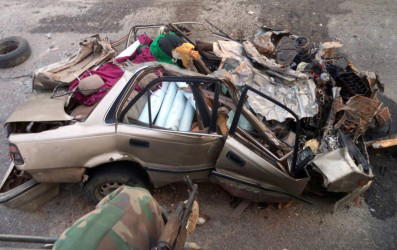
An handout picture taken on July 26, 2015 and released by the Nigerian Army shows a vehicle of Boko Haram fighters destroyed with IED (improvised explosive device) by soldiers following clashes to take control of the town of Dikwa, northeastern Nigeria in the Borno State.
There are fears that Boko Haram, the Islamic State-affiliated terror group, might be engaging the services of children and mentally handicapped to carry out terrorist attacks in the country, according to The Telegraph.
A 12-year-old girl and a “mentally handicapped” woman were among those who carried a weekend wave of suicide bombings by suspected Islamic militants in northern Nigeria and Cameroon that left more than 60 people dead and hundreds fleeing their homes.
The attacks were widely blamed on Boko Haram, the Islamic State-affiliated terror group that has carried out widespread atrocities in the region since 2009.
The most recent bombing came on Sunday morning in a crowded market in north-eastern Nigerian town of Damaturu when a “mentally handicapped” bomber struck, killing 15 and injuring 47 others.
That attack came just hours after a 12-year-old girl killed 20 people in a Saturday night attack on a bar in the Cameroonian city of Maroua, a commercial hub of the extreme north of Cameroon close to the Nigerian and Chadian borders.
It came a day after Boko Haram were blamed for a series of attacks on villages across the border in north-eastern Nigeria that left at least 25 dead and forced hundreds more to flee their burning homes.
Over the past two years Boko Haram fighters have carried out several cross-border raids and abductions in northern Cameroon but the country, which is engaged in a regional fightback against the jihadists, had previously been spared from suicide attacks.
A new, five-nation force – from Nigeria, Niger, Chad, Cameroon and Benin – is due to deploy by July 30 to take on the militants, whose six-year insurgency has left at least 15,000 dead and increasingly threatens regional security.
Earlier this month the new Nigerian president Muhammadu Buhari visited Washington and received pledges for greater US assistance, however the US continues to refuse to provide arms shipments to Nigeria citing its poor record on corruption and human rights.
Disclaimer
Comments expressed here do not reflect the opinions of Vanguard newspapers or any employee thereof.