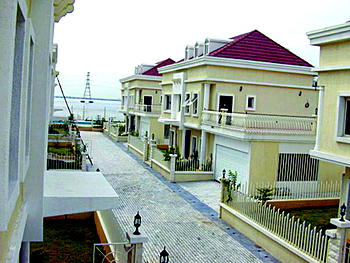

Ondo Ogun Festival: The biggest street carnival in Africa
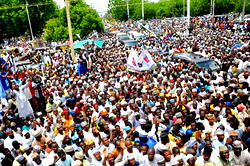
By Yomisaint Adebayo Ancient tradition, modern spectacle and a sea of white and blue converge in Ondo City in a breathtaking celebration of heritage, love, peace and unity. There is a particular time of the year when Ondo City seems to remember itself. As August gives way to September and the signs of the annual […]




Ita Faaji, a culture of ‘No Consequence’
AS is commonplace in Nigeria, we have again witnessed another avoidable tragedy that has claimed lives – including children – and left many heavy hearted. ItaFaaji was not the first of its kind, whether in Lagos or in Nigeria, or the first where children are losing their lives. In fact, one could easily read a news item from one of the earlier collapses and it will fit right into the story of ItaFaaji. Lagos, particularly, has become a hub for collapsed buildings.
What is your take on frequent cases of building collapse (1)
There is usually unholy connivance between builders and some government agents on the one hand, and incompetence on part of builders. The government should be more interested in the quality of buildings. Also, many of the dilapidated buildings must be examined in the spirit and tenets of urban renewal. Where they need to be pulled down they should not hesitate to do so.
Saraki and the Tragedy of Victory
Since the National Assembly elections ended in Kwara on March 9, and the current Senate President, Dr Bukola Saraki, lost at the polls, those who have lived in mortal fear of one of Nigeria’s finest Senate Presidents ever in history, have not relented in their infantile attacks against a man who, against all odds, wrestled official tyranny to the ground and eventually became one through whom God has preserved what is now our fragile democracy from being turned into a full blown dictatorship.
Pius Adesanmi: The human oxymoron politicians must learn from
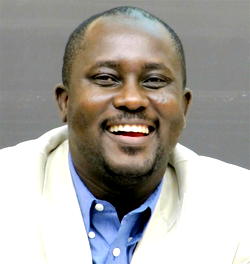
PROFESSOR Toyin Falola has put it most concisely: Pius Adesanmi is the man who leaves and lives. He argues that although Adesanmi is leaving the scene, still he lives. He’s gone, but he’s not done. He’s gone, but he’s still on. He’s dead, but not dust. There is more to Falola’s dirge than the lyrical alliteration. There’s also more to the oxymoron of a departure that yet defies an exit. To capture or press a point, you must confront it with its alter ego. To prove Adesanmi ‘lives’ on, you challenge his death with the greater fact of what he has left behind that offers the assurance of his being alive, as it were. You put the two opposite each other: Adesanmi’s death and his works and life that touched many he seems to have left orphaned.
Atiku and the court option
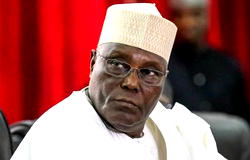
The decision of the presidential candidate of the Peoples Democratic Party, PDP, Atiku Abubakar, to wage a legal challenge against the proclamation of President Muhammadu Buhari the winner of February 23, 2019, presidential election has not received the encouragement of a few informed minds in the country. One respected voice, for instance, thinks that Atiku should instead join hands with other well-meaning Nigerians, the civil society and like-minded politicians to help to properly set up and strengthen democratic structures capable of hamstringing the repeat in future elections of the large-scale malpractices that allegedly marred the last elections – an issue that constitutes the main plank of Atiku’s suit.